Video-Game-Case / Style prompt
SNES 16-Bit Keyart-Over-Pixel-Inset Box Frame
The Super Nintendo box at peak 16-bit confidence. A vibrant painted hero illustration up top, a small in-game pixel-art screenshot inset below, the cartridge promised inside. The package as testimony.
Customize this prompt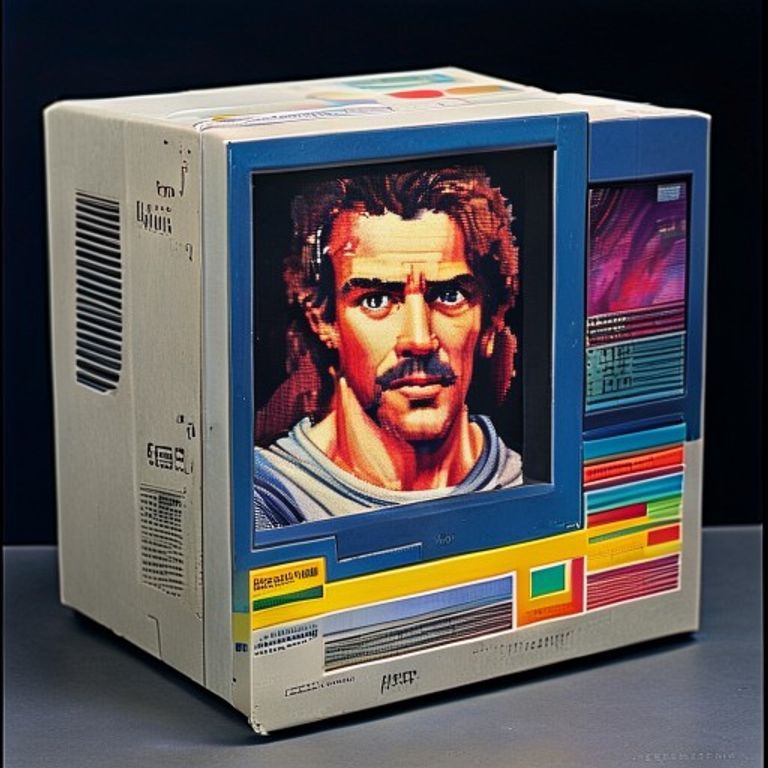
The prompt
Re-render this image as a 1991 to 1996 Super Nintendo Entertainment System video game package in the canonical North American grey-cardboard-box era, the apex 16-bit keyart register. Box format: vertical rectangular package, full-color illustration covering most of the front face. Upper two-thirds: hero keyart painted in vibrant gouache and acrylic by a working illustrator, saturated palette (deep magenta, electric cyan, sun yellow, blood crimson), dramatic lighting, dynamic action staging, the kind of painting that promises the cartridge inside is more than its 16-bit reality. Lower portion: a single rectangular inset window showing an in-game 16-bit pixel-art screenshot, pixels visible and unashamed, the inset framed by a thin white line and labeled with a small color-bar strip (suggest as colored rectangles, no legible text). Top edge of the package: a thin colored band where the title would sit (render as a colored stripe with no legible lettering). Outer border: thin coloured line tracing the package edge. Print quality: 1992 offset litho on greyboard, slight halftone visible, registration tight, colors slightly oversaturated as the era preferred. Painted illustration style: hand-painted, brush-stroke texture visible in the highlights, no airbrush smoothness, the illustrator's hand is present. Mood: the package as testimony, the keyart-painting as the promise that the pixel-art evidence below confirms is worth your forty-nine dollars and your weekend. No on-canvas legible text, no logos, no specific brand marks, no franchise lettering. Preserve the subject, pose, and composition of the source image exactly, change only the medium and rendering. Aspect ratio is standard SNES box vertical portrait (roughly 5:7).
What it is doing
The SNES box is the high-water mark of the keyart-as-promise + screenshot-as-evidence contract. The painter painted a hero. The pixel inset said: here is the literal thing inside the cartridge, scaled down, no lies of omission. That contract has collapsed. The 2026 storefront shows you a 4K render that the game cannot match and hides the gameplay until you have already paid. The 16-bit box was honest: hero painting on top, real pixels below, decide. It is the sovereign-object grammar at its commercial peak.
Ways to change it
Pick any of these in the gallery and the choice is added to the prompt you copy.
- Keyart-painter register: glossy muscular heroic fantasy vs bright expressive cartoon action vs dramatic aerospace realism
- Palette dial: electric saturated 1992 (peak) vs deeper-jewel 1995 (late-cycle) vs muted-photoreal 1996 (transition to 32-bit)
- Inset count: single pixel-screenshot inset (canonical) vs three-screenshot strip (later variant) vs no inset, full-keyart-bleed (deluxe / collector edition)
- Border treatment: thin colored hairline (canonical) vs bold double-color band (variant) vs painted-bleed-no-border (rare)
- Wear dial: mint sealed (collector) vs rental-store sticker scar (lived-in) vs corner-crush + price-tag residue (childhood-real)
- Print-finish dial: matte uncoated (canonical) vs light gloss varnish (later) vs holofoil title-strip (special edition)
Style lineage
Learn the visual culture this draws from: Jane's SNES Boxes.
Related prompts
See all 26 prompts in the Video-Game-Case grammar