Samizdat-Zine / Style prompt
Czech Charter 77 Carbon Petition
The signed-petition register of late-Husak Czechoslovakia, carbon-copied and circulated wrist to wrist.
Customize this prompt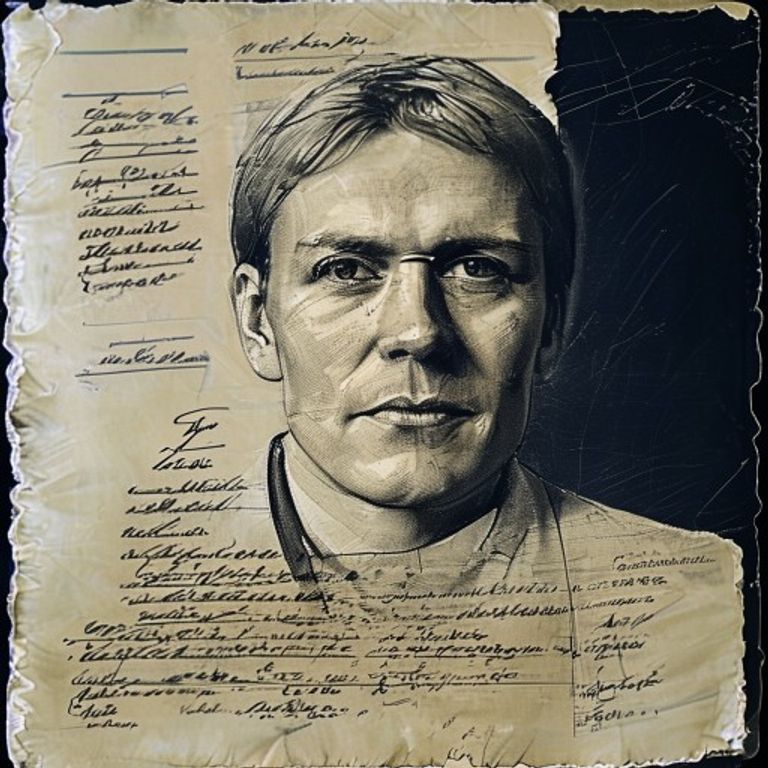
The prompt
Render in the visual register of a Czech Charter 77 era dissident document, late 1970s through 1980s normalization. Medium: typewritten petition page on cheap recycled bond paper, struck through carbon paper to produce a slightly soft-edged secondary copy. Add hand-inked signatures along the bottom margin and continuing onto a stapled second sheet, signatures rendered as abstract pen flourishes only, never legible names. Palette: bone-white-yellowing paper, charcoal-grey typewriter ink fading at letter edges, deep navy or black fountain pen for the signature register, occasional red pencil margin tick. Texture: paper has the slight pulpiness of Comecon-era stock, visible fiber inclusions, a single horizontal fold crease across the middle from being passed inside a folded coat. Lighting: dim apartment-lamp tungsten, soft and forgiving. Mood: collective courage encoded as a list of risks taken, the bureaucratic register weaponized against the bureaucracy. Do not render any legible words, headlines, slogans, logos, watermarks, named hate symbols, or defamatory likeness of real persons; all text-feel and signatures are abstract ink texture only. Preserve the subject, pose, and composition of the source image exactly, change only the medium and rendering.
What it is doing
A signature on a petition is not a request, it is a wager. Charter 77 worked because each name made the next name cheaper to add, until the regime had to choose between jailing thousands or admitting the petition existed. The carbon copy is the receipt of that wager. Authoritarianism breaks on collective documented dissent in a way it never breaks on anonymous samizdat alone. The signature is the medium and the message.
Ways to change it
Pick any of these in the gallery and the choice is added to the prompt you copy.
- Signature density: sparse early-signers vs dense after-Havel page
- Paper grade: Comecon bond vs office-pilfered onionskin vs school-notebook lined
- Folding history: crisp vs pocket-creased vs water-damaged
- Annotation: clean vs marginal corrections vs red censor markings
- Carbon copy generation: crisp original typescript, sharp black letterforms with clean edges vs second carbon copy, slightly soft charcoal letters with faint halo (signature) vs third carbon, blurred gray letters, smudged edges, uneven ink density vs ghost-faint fourth carbon, pale gray type barely visible, bleeding into paper fibers
- Mounting: loose page vs stapled multi-page vs glued booklet
Style lineage
Learn the visual culture this draws from: Britannica.
Related prompts
See all 10 prompts in the Samizdat-Zine grammar
Read the full free book. All thirty-six chapters and the companion 657-prompt image library are free.