Photography / Style prompt
Henri Cartier-Bresson Decisive-Moment Street
Re-render as a Leica M3 35mm frame, full negative including rebate edges, geometry locked at the precise instant a figure crosses the golden ratio.
Customize this prompt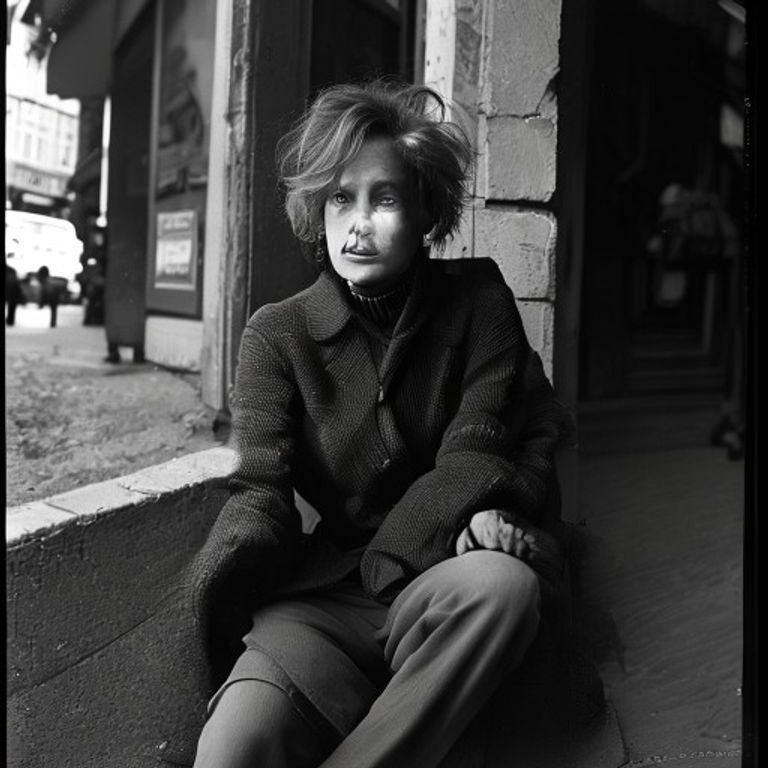
The prompt
Re-render this image as a black-and-white 35mm photograph by Henri Cartier-Bresson, exposed on Kodak Tri-X 400 through a Leica M3 with a 50mm Summicron lens at f/8, hyperfocally focused, available light only, no flash, no cropping (full frame including the black rebate edges of the negative). Tonality: rich mid-gray dominant, deep but detailed shadows, controlled highlights, the characteristic Tri-X grain visible as fine texture throughout, slightly more pronounced in shadow areas. Composition is the soul of the image: the subject must sit on a geometric line, a diagonal, a golden-section intersection, or in conversation with a background shape (window, doorway, poster, puddle) that rhymes with the subject's gesture. Figure caught at the precise instant of motion arrest, foot lifted, hand extended, mouth opening, the split-second before or after the obvious moment. Background characters do not pose, they are caught mid-life, oblivious to camera. Lighting: directional natural light, midday hard or late-afternoon raking, no studio. Setting: street, square, market, station, the public space as theater. Mood: humanist, attentive, the photographer invisible, the world arranging itself for one twenty-fifth of a second. Print quality: matte fiber paper, full-frame black border showing film perforations is acceptable as Cartier-Bresson convention. Forbid: any color, any blur except gentle motion-blur on a single moving element, any visible text overlay, any watermark, any logo, any HDR look. Preserve the subject, pose, and composition of the source image exactly, change only the medium and rendering.
What it is doing
Cartier-Bresson never cropped. The discipline of full-frame composition forces the photographer to see the geometry before the shutter falls, which means the eye does the work, not the cropping tool. In an era of phone-camera "fix it in post," re-rendering in this register asserts that composition is a moral act decided in the half-second before the click.
Ways to change it
Pick any of these in the gallery and the choice is added to the prompt you copy.
- Geometry dial: golden-section subject placement vs diagonal lead-in vs frame-within-frame architectural
- Motion dial: frozen at peak action vs slight motion blur on one limb vs static figure against moving background
- Light dial: Paris midday hard shadow vs Provence late raking vs Marseille rain-wet diffuse
- Subject dial: single figure in geometric setting vs two figures in conversation vs crowd with one anchor figure
Style lineage
Learn the visual culture this draws from: TheArtStory.
Related prompts
See all 10 prompts in the Photography grammar
Read the full free book. All thirty-six chapters and the companion 657-prompt image library are free.