Photography / Style prompt
Ansel Adams Zone-System Black-and-White Landscape
Re-render any source as a Yosemite-school silver-gelatin print: full Zone 0 to Zone X tonal scale, 8x10 view-camera contemplation, granite as moral structure.
Customize this prompt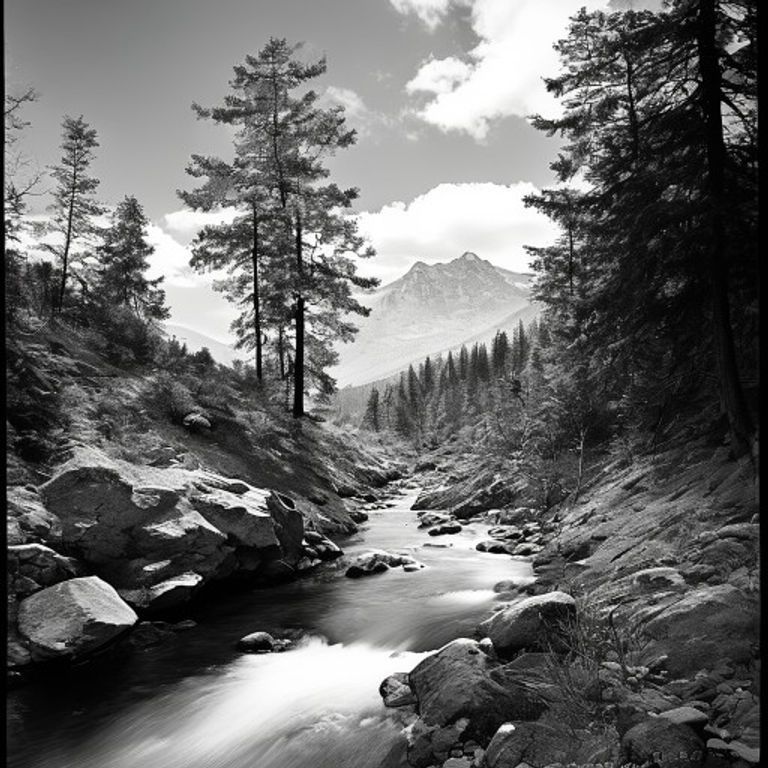
The prompt
Re-render this image as a black-and-white silver-gelatin photograph in the manner of Ansel Adams, exposed on 8x10 inch large-format sheet film, contact-printed on fiber-base double-weight paper with selenium toning for cool blue-black shadows. Apply the full Zone System tonal map: Zone 0 (paper-black, no detail) in deepest shadows, Zone V (middle gray, 18 percent reflectance) anchoring midtones, Zone IX (textured white, just below paper-base) in brightest highlights, with detail held in both extremes. Tonal separation must be extreme: granite reads as carved sculpture, foliage as a thousand discrete leaves, sky from Zone VI graduated through Zone III at zenith via deep red filter effect. Resolution: extreme, every needle on a distant pine countable, every crystal in granite visible at 100 percent crop. Lighting: late afternoon side-light from the west, raking across textured surface, casting long architectural shadows that describe form. Composition discipline: foreground (rock, stream, branch) in sharp focus at f/64 hyperfocal, middle ground (tree line, ridge) sharp, far distance (peak, cloud) sharp, depth carried through tonal weight not blur. No grain visible (large format, slow film, Plus-X or FP4). Print quality: glossy fiber paper, dry-mounted, museum-archival. Mood: silent, contemplative, the land as a moral fact, no human presence, no civilization, geologic time. Forbid: any visible text, any watermark, any color tint, any cropping into square unless source is square. Preserve the subject, pose, and composition of the source image exactly, change only the medium and rendering.
What it is doing
Adams' Zone System was not a technical trick; it was a moral claim that the photographer chooses every value in the print. The American West he photographed was framed as scripture, not scenery. Re-rendering a casual snapshot in this register converts the subject into something worth contemplating for an hour, which is itself a critique of phone-scroll image consumption.
Ways to change it
Pick any of these in the gallery and the choice is added to the prompt you copy.
- Contrast dial: grade 2 normal vs grade 3 punch vs grade 4 dramatic with red-filter sky
- Toning dial: neutral vs selenium cool blue-black vs sepia warm-brown
- Format dial: 8x10 contact print look vs 4x5 enlargement vs 35mm Tri-X grainy variant
- Time-of-day dial: pre-dawn flat vs late side-light vs moonrise long-exposure
- Subject-as-monument dial: intimate detail (Edward Weston pepper register) vs mid-scale landscape vs Half-Dome-from-Glacier-Point monumental
Style lineage
Learn the visual culture this draws from: Mr. Alvandi Photography.
Related prompts
See all 10 prompts in the Photography grammar
Read the full free book. All thirty-six chapters and the companion 657-prompt image library are free.