Numismatic-Coin-Medal / Style prompt
Art Deco Commemorative Medallion (1930s Expo)
The Art Deco commemorative medal of the 1930s, struck in brass or aluminum, celebrating progress, industry, and geometric form. No portrait is needed. The machine is the hero. The relief is abstract and angular.
Customize this prompt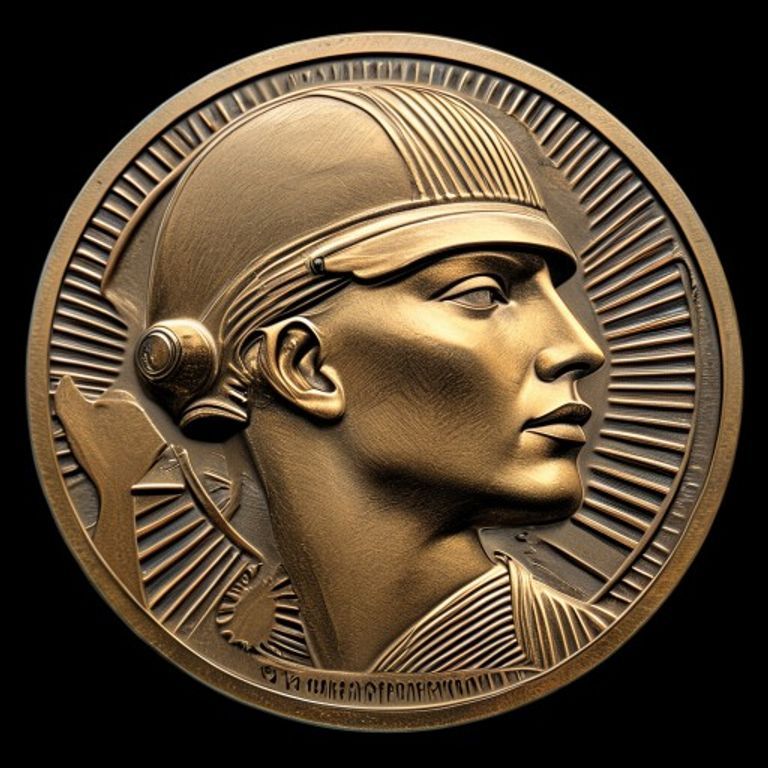
The prompt
Re-render this image as a 1930s Art Deco commemorative medallion, struck in brass or aluminum alloy, approximately 50 to 60mm diameter. Obverse: geometric forms celebrating industrial progress or an exposition, rendered in sharp linear relief, the forms suggesting machinery, speed, or technological advancement. The composition may include stylized human figures (worker, aviator, engineer) rendered in the angular Art Deco vocabulary of the 1930s, with sharp planes and reduced forms suggesting motion and modernity. Elements might include gears, lightning bolts, sunburst motifs, streamlined forms suggesting speed or aviation. No realistic portrait, but possibly a symbolic head or heroic silhouette. The legend band around the rim: render as text-free incised cartouche (no legible lettering). Reverse: either a complementary geometric composition or an inscription panel rendered as blank relief bands (no readable text). The entire surface rendered in parallel linear striations and flat planes typical of 1930s machine-age aesthetics, showing the deliberate geometric simplification that Art Deco demanded. Patina: brass showing natural oxidation, a warm honey-brown to deeper brown with perhaps slight verdigris in recesses, or aluminum showing silver oxidation and light gray patina from decades of storage. Edge: reeded or smooth, typical of the era's striking. Strike quality: precise and clean, showing industrial manufacturing pride. The mood: optimism about progress, faith in the machine, celebration of the modern. Aspect ratio 1:1 circle. Preserve the subject, pose, and composition of the source image exactly, change only the medium and rendering.
What it is doing
The Art Deco medal abandoned the portrait because the machine replaced the individual as the subject of celebration. In the 1930s, progress was geometric. The future was speed, efficiency, and the reduction of all form to its essential planes. A commemorative medal for a world's fair or an industrial exposition showed gears and lightning bolts instead of faces because the argument was that the human being was less interesting than the invention. This is the moment when the medal stops asserting individual greatness and starts asserting civilizational greatness. The portrait had always been about who. The Art Deco medal was about what and how fast. The geometric abstraction is not aesthetic choice, it is ideological choice. The machine-age is the moment when beauty becomes efficiency.
Ways to change it
Pick any of these in the gallery and the choice is added to the prompt you copy.
- Deco-motif dial: gears and industrial machinery vs streamlined speed forms suggesting aviation vs sunburst and lightning suggesting electricity and power
- Figure-style dial: stylized angular worker or engineer vs heroic aviator in profile vs abstract human form reduced to planes
- Metal-material dial: brass with honey-brown oxidation vs aluminum with light gray patina vs bronze with darker oxidation
- Striating-intensity dial: heavy parallel linear striations throughout vs minimal striations, mostly flat planes vs heavy striations on reverse, clean planes on obverse
- Commemorative-register dial: exposition or world's fair theme vs industrial or engineering achievement vs technological progress abstract
- Edge-treatment dial: reeded edge from the collar die vs smooth edge vs beveled or rolled edge
Related prompts
See all 7 prompts in the Numismatic-Coin-Medal grammar