Numismatic-Coin-Medal / Style prompt
Soviet State Table Medal (Achievement Register)
The Soviet commemorative table medal of the 1950s through 1980s, struck in heavy brass or bronze with a wide ribbon loop, designed to sit on a shelf as proof of state achievement. Mass-produced recognition. The portrait is Stalin or Lenin. The rhetoric is inevitability.
Customize this prompt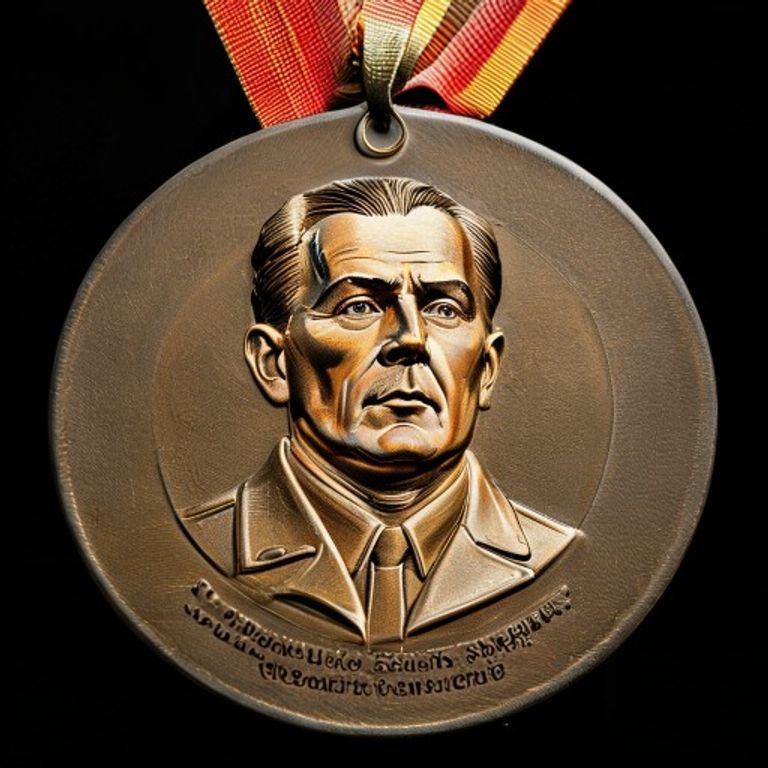
The prompt
Re-render this image as a Soviet commemorative table medal, struck in heavy brass or bronze (approximately 50 to 65mm diameter), from the 1950s to 1980s period. The medal is designed to hang from a cloth ribbon and sit on a shelf, not to be carried. Obverse: a portrait of a Soviet leader or a symbolic figure representing state achievement (worker, cosmonaut, soldier, or abstract heroic figure) rendered in high relief with socialist realist conventions, the face idealized and heroic, the gaze directed forward with confidence and determination. The hair and facial features rendered with sharp detail intended for shelf inspection. Legend around the obverse rim: render as incised text-band (no legible lettering). Reverse: either a symbolic emblem or a large inscription panel representing the achievement commemorated (space program, industrial output, military strength, anniversary date) rendered as blank relief bands and cartouche spaces (no readable text). The mounting: a heavy ribbon loop (approximately 15mm wide, the ribbon rendered in the obverse field, no legible ribbon text or graphics). The ribbon material: heavy cloth-like texture in a color typical of Soviet medals (red with gold edges, or pure gold cloth). The edges and rim: sharp and precise from industrial striking, no wear. Patina: on bronze, a warm brown with darker recesses; on brass, honey-gold oxidation with lighter highlights from recent polishing. The back and sides: visible casting or striking marks that show this is an industrial product, not a hand-crafted object. The mood: absolute certainty, achievement proven, state power visible in metal. Aspect ratio 1:1 circle (medal front) or taller if ribbon visible above. Preserve the subject, pose, and composition of the source image exactly, change only the medium and rendering.
What it is doing
The Soviet table medal is a recognition object that never circulates. It sits on a shelf in an official's home as proof that the state saw them. The ribbon loop makes it clear this is worn on ceremonial occasions, not carried in the pocket. The portrait on a Soviet medal is not individual achievement, it is alignment with the state. The worker's portrait is there because the state says workers are heroes. The cosmonaut's portrait is there because the state says the space program proves socialism works. The table medal is mass-produced recognition. The state could make thousands of them at minimal cost and distribute them to loyal functionaries. This is why Soviet medals are heavy and brass or bronze, not precious metals. The cost is unimportant. The quantity matters. The message is: you served the state, the state acknowledges you, here is metal to prove it. The shelf is the museum.
Ways to change it
Pick any of these in the gallery and the choice is added to the prompt you copy.
- Portrait-register dial: Lenin profile (heroic, idealized) vs Stalin profile (authoritarian, determined) vs anonymous worker or soldier silhouette
- Reverse-motif dial: space program/cosmonaut achievement vs industrial or agricultural output vs military strength or defense
- Ribbon-color dial: red cloth with gold edges vs pure gold or silver cloth vs combination colors for rank variants
- Patina-finish dial: deep rich brown on bronze vs honey-gold brass with light highlights vs darker oxidized patina suggesting age
- Relief-depth dial: high relief, portrait very dimensional vs moderate relief, heroic but flattened vs shallow relief on reverse, deep on obverse
- Striking-precision dial: clean perfect centering vs slight off-center (typical Soviet production) vs heavy die-marks visible
Style lineage
Learn the visual culture this draws from: Collect Russia.
Related prompts
See all 7 prompts in the Numismatic-Coin-Medal grammar