Movie-Poster / Style prompt
Bond Gunbarrel Graphic Silhouette
The 007 gunbarrel sequence and Maurice Binder title-design register. A single silhouette inside a circular aperture. The poster as license to enter the spectacle.
Customize this prompt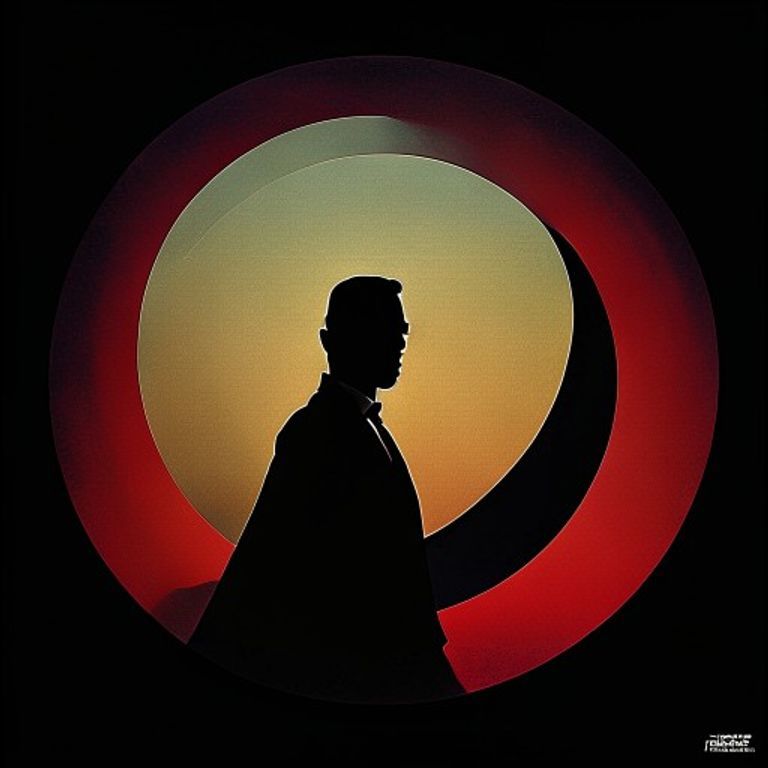
The prompt
Re-render this image in the visual register of James Bond gunbarrel-sequence and Maurice Binder title-design graphic art (1962 through 1980s, Dr. No through Licence to Kill era). A single subject silhouette rendered inside or against a circular aperture composition. The aperture itself is the primary graphic element: a clean dark circle or ring against a contrasting field, with the silhouette either centered inside the aperture, partially framed by it, or stepping across its edge. Silhouette treatment: pure black or near-black flat shape with no interior detail, occasionally a single sharp highlight on one feature, the rest reduced to confident outline. Background: a flat saturated color field (crimson, deep ultramarine, electric ochre, or a graduated dawn-sky vertical gradient), no photographic detail, no texture beyond a clean print register. Composition holds the aperture confidently in upper or center frame, with the subject occupying the lower interior of the aperture or breaking its lower edge, large negative space surrounding. Optional secondary element: a single diagonal of color suggesting motion, blood drip, or descending line crossing the field. Mood: confident menace, glamorized violence at a graphic remove, the spectacle invited rather than depicted. Strictly no on-canvas text, no 007 logo, no Bond title typography, no legible lettering, no signature, no watermark. Preserve the subject, pose, and composition of the source image exactly, change only the medium and rendering. Aspect ratio matches source.
What it is doing
The gunbarrel opening was a contract: the audience accepts that they will watch a man kill people for ninety minutes because the aperture frames it as ritual. Bernays would call it the engineered symbol that licenses what follows. The silhouette inside the circle is permission, not just decoration. Strip the typography away and the contract still holds, which is why the form survives every reboot.
Ways to change it
Pick any of these in the gallery and the choice is added to the prompt you copy.
- Aperture dial: centered full circle vs partial arc from upper edge vs aperture broken at lower frame
- Palette dial: crimson on black vs cobalt on cream vs ochre-to-black graduated
- Silhouette detail dial: pure black flat vs single highlight on face or weapon vs silhouette with one interior color plane
- Secondary element dial: clean aperture only vs diagonal motion line vs blood-drip vertical
- Era dial: early 1960s: stark black aperture on white, minimal flat color, sparse graphic vs late 1960s: cool restrained silhouette, deep ultramarine field, thin crisp ring vs late 1970s peak: saturated gradient sky, bold glossy rings, dramatic red diagonal
Style lineage
Learn the visual culture this draws from: Men's Journal.
Related prompts
See all 34 prompts in the Movie-Poster grammar