Fine-Art / Style prompt
Goya Black Paintings Dread
The Quinta del Sordo wall-painted dread register of Goya's late-life black-painting cycle.
Customize this prompt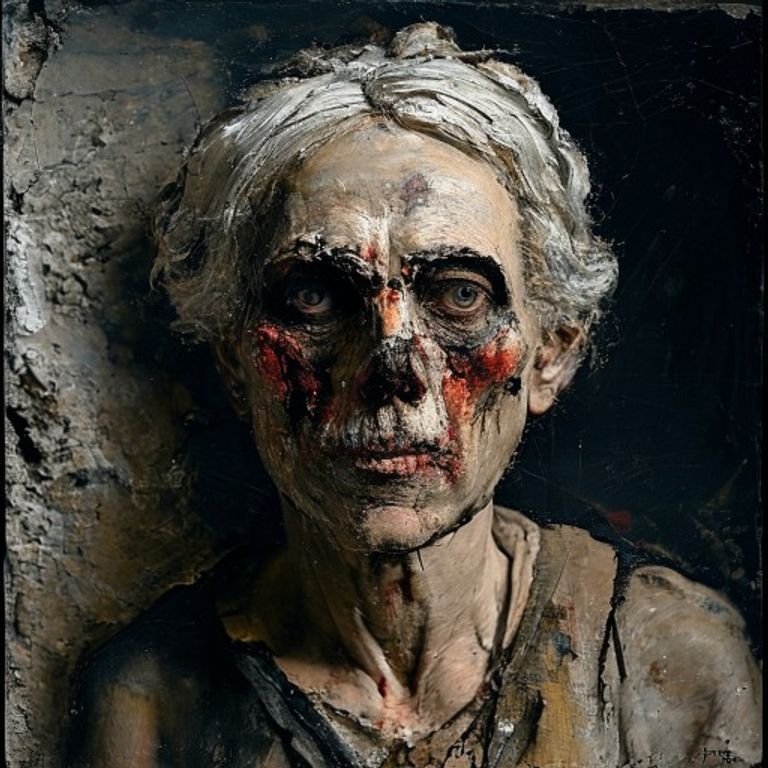
The prompt
Render in the medium and register of Goya's Black Paintings (the murals painted directly onto the plaster walls of the Quinta del Sordo between 1819 and 1823): oil paint applied with brush and palette knife onto a rough plaster wall surface (later transferred to canvas, with the transfer-mounting damage visible as faint horizontal cracks and surface losses), palette restricted to bone-black, lead-white, bitumen-brown, dirty Naples-yellow, ochre, and a single muted dried-blood red, no bright color anywhere, lighting is dim and uncertain (the figures emerge from the murk rather than being illuminated), brushwork loose and aggressive (visible knife-scrape marks, palette-thumb prints, paint dragged across the plaster grain), faces grotesque and contorted with no idealization, eyes rendered as black holes, composition often asymmetric and unstable, total absence of decorative pleasure, the visual register of a deaf old man painting on his own walls for no buyer and no patron and no audience, paint surface aged and damaged from a century of plaster cracking, the dread of a private apocalypse rendered without consolation. Do not render legible on-canvas text, logos, watermarks, named hate-symbols, or any real person depicted defamatorily. Preserve the subject, pose, and composition of the source image exactly, change only the medium and rendering.
What it is doing
Goya painted the Black Paintings on his own walls in his seventies, deaf and isolated, with no intention of ever showing them. They were discovered only after his death and transferred to canvas decades later. The work is the highest example of art made without an audience. The reason most painters get worse after success is the audience starts dictating. Goya was deaf; he literally could not hear the audience. The audience-deafness produced the most honest late work in the Western canon. Every artist should consider becoming functionally deaf to their market.
Ways to change it
Pick any of these in the gallery and the choice is added to the prompt you copy.
- plaster-substrate-feel: subtle-rough vs prominent-plaster-grain vs heavily-cracked-transfer
- palette: bone-and-bitumen vs adds-dried-blood-red vs adds-dirty-naples-yellow
- brushwork: thin-loose vs heavy-impasto vs palette-knife-scrape
- face-treatment: grotesque-distortion vs muted-uneasy vs deeply-shadowed
- Light source: diffuse brownish murk, no visible source, figures half-dissolved into gloom (signature) vs one faint pale glow from the left, faces lit, rest sinking in shadow vs near-total black, only eyes, hands, and face edges barely surfacing
- damage-patina: fresh-paint vs century-aged vs transfer-damaged-with-loss
Style lineage
Learn the visual culture this draws from: Spanish painter (1746–1828).
Related prompts
See all 20 prompts in the Fine-Art grammar