Fine-Art / Style prompt
Caravaggio Tenebrism Redux
Counter-Reformation oil-painted tenebrism, single hard raking light cutting through near-total darkness in the Baroque-violent register of Caravaggio.
Customize this prompt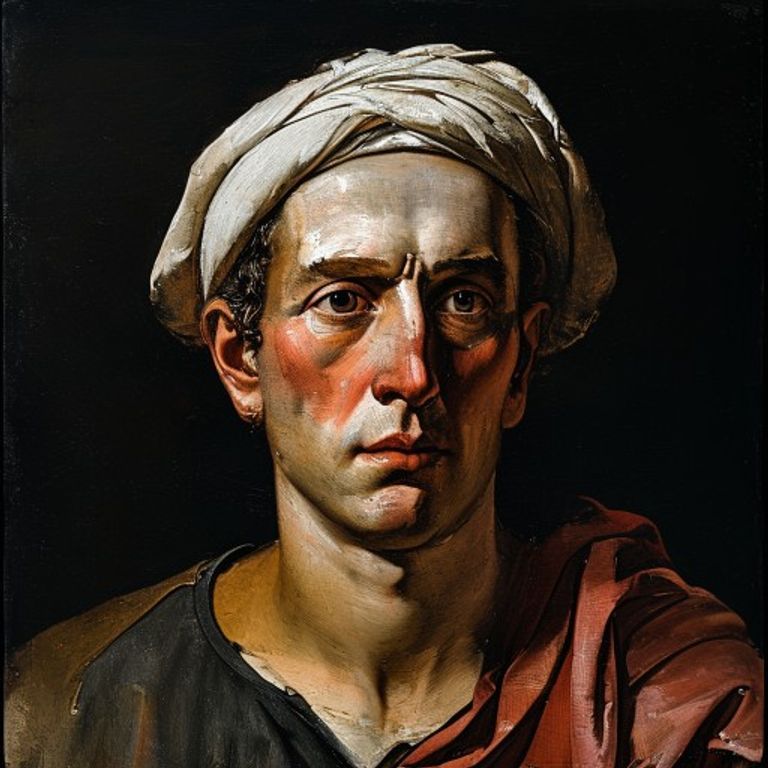
The prompt
Render in the medium and register of Caravaggio's late Roman and Maltese paintings: oil paint on canvas with the canvas weave faintly visible in the lit highlights, palette of bone-white, lead-flesh-pink, oxblood-red, dirty-ochre, raw-umber, and total Mars-black, lighting strategy of a single hard raking light source entering from the upper left and striking only the most morally significant surface of the subject (face, hand, single object) while everything else collapses into pitch black with no fill light and no atmospheric perspective (tenebrism, not chiaroscuro), shadow is opaque void not modeled darkness, modeling on the lit surfaces is sculpted in butter-thick impasto in the highlights and thin glaze in the half-tones, no decorative background (the background is darkness itself), figures cropped close to the picture plane so they feel within arm's reach, working-class realism in faces (dirty fingernails, weathered skin, peasant complexions used as saints), the moral weight of seventeenth-century Roman streetlife rendered as if it were sacred history, varnish slightly yellowed with four-hundred-year-age, paint craquelure faint in the darkest passages. Do not render legible on-canvas text, logos, watermarks, named hate-symbols, or any real person depicted defamatorily. Preserve the subject, pose, and composition of the source image exactly, change only the medium and rendering.
What it is doing
Caravaggio used street prostitutes as Virgins and dock workers as apostles. The Counter-Reformation establishment was outraged and then made him the most-copied painter in Europe. The lesson: the establishment always rejects the artist who tells the truth about the social composition of holiness, then adopts the work once the artist is safely dead. Tenebrism is not stylistic preference; it is moral architecture. Light falls on what matters. Darkness covers the rest. Most contemporary painting uses even illumination because the maker cannot decide what matters. Caravaggio always decided.
Ways to change it
Pick any of these in the gallery and the choice is added to the prompt you copy.
- light-angle: upper-left-45 vs upper-right-30 vs near-vertical-overhead
- shadow-opacity: total-black-void vs near-black-with-faint-fill vs deep-but-modeled
- palette-warmth: classic-warm-flesh-and-oxblood vs cooler-bone-and-lead vs near-monochrome-umber
- canvas-age: fresh-just-painted vs century-of-varnish-yellow vs four-hundred-year-craquelure
- figure-distance: close-cropped vs half-length vs near-full-figure
- realism-grit: idealized-saintly vs working-class-realist vs peasant-rough
Style lineage
Learn the visual culture this draws from: Italian Baroque painter (1571–1610).
Related prompts
See all 20 prompts in the Fine-Art grammar