De-Stijl / Style prompt
Mondrian Neoplastic Grid Primary (Style-Only, Image-Conditioned)
Style register: Piet Mondrian 1921 to 1938 Composition-series neoplastic grammar, black orthogonal grid lines on chalk-white ground, asymmetric rectangles flooded in cadmium red, chrome yellow, and ultramarine blue, total reduction to horizontal and vertical.
Customize this prompt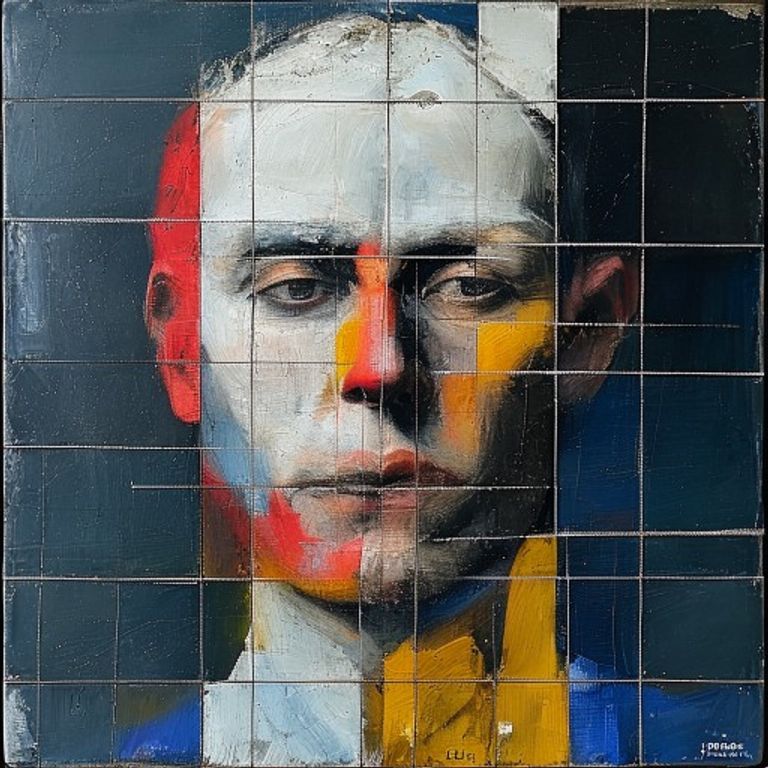
The prompt
Re-render this image in the visual register of a Piet Mondrian mature Composition painting, circa 1921 to 1938. Treat the picture surface as a strict neoplastic grid: heavy lampblack horizontal and vertical lines (no diagonals ever) dividing the canvas into asymmetric rectangles of different sizes. The underlying subject is dissolved into this grid logic, its volumes, silhouettes, and contours re-read as boundaries between rectangular fields. Fill the rectangles using only four possible values: chalk white (most cells), cadmium red, chrome yellow, ultramarine blue. Color cells are rare and load-bearing, never more than 3 to 5 colored cells per composition, the rest left white. Color application is flat, unmodulated, slightly chalky as if painted in oil on primed linen with a stiff bristle brush, faint brushwork visible in raking light but no atmospheric blending. Black grid lines vary in weight from 4mm to 12mm, never thin or hand-trembling, always rule-straight and confident. Edges of grid lines and color cells are crisp, slight oil-paint ridge at boundaries. Mood: meditative, doctrinal, the composition as proof that the visible world reduces to relations of horizontal, vertical, and primary. Strictly no on-canvas text, no legible lettering, no signature, no watermark, no logos. Preserve the subject, pose, and composition of the source image exactly, change only the medium and rendering. Aspect ratio matches source.
What it is doing
Mondrian is treated as a designer of pleasing rectangles. He was a theosophist who believed reduction to horizontal, vertical, and primary color was a literal spiritual discipline, that figuration and diagonal were forms of impurity. Neoplasticism was a religion with paintings as scripture. When he and Theo van Doesburg fought to schism over whether the diagonal was permissible (Mondrian said no, Van Doesburg said yes, Mondrian left De Stijl), it was a doctrinal split as serious as any council of bishops. The grid is not decoration. It is a claim that the universe can be reduced to right angles and three colors, and that this reduction is morally improving. To use this register is to invoke that asceticism, whether you mean to or not.
Ways to change it
Pick any of these in the gallery and the choice is added to the prompt you copy.
- Color-cell density: 3 to 5 cells colored, rest white (signature) vs single primary accent (rarest) vs dense primaries (early-De-Stijl)
- Line weight: 4mm to 12mm varied (signature) vs uniform 8mm vs extreme heavy 20mm
- White-cell tone: warm chalk white, faintly creamy and matte (signature) vs cool pale gray-blue white, like his later canvases vs aged yellowed ivory with fine craquelure across the white cells vs stark bright optical white, smooth and glossy
- Primary saturation: Mondrian-specific cadmium and ultramarine (signature) vs pure CMYK process vs muted dusty primaries
- Brushwork: faint stiff-bristle visible (signature) vs flat industrial paint vs heavy textured impasto
Style lineage
Learn the visual culture this draws from: The Art Story.
Related prompts
See all 6 prompts in the De-Stijl grammar