Blueprint-Patent-Schematic / Style prompt
Da Vinci Codex Sepia Mirror Ink Sketch
The Renaissance technical sketch: sepia iron-gall ink on aged paper, mirror-script margin notes, geometry as the language of water, light, and mechanism. This is the private notebook of someone inventing the future.
Customize this prompt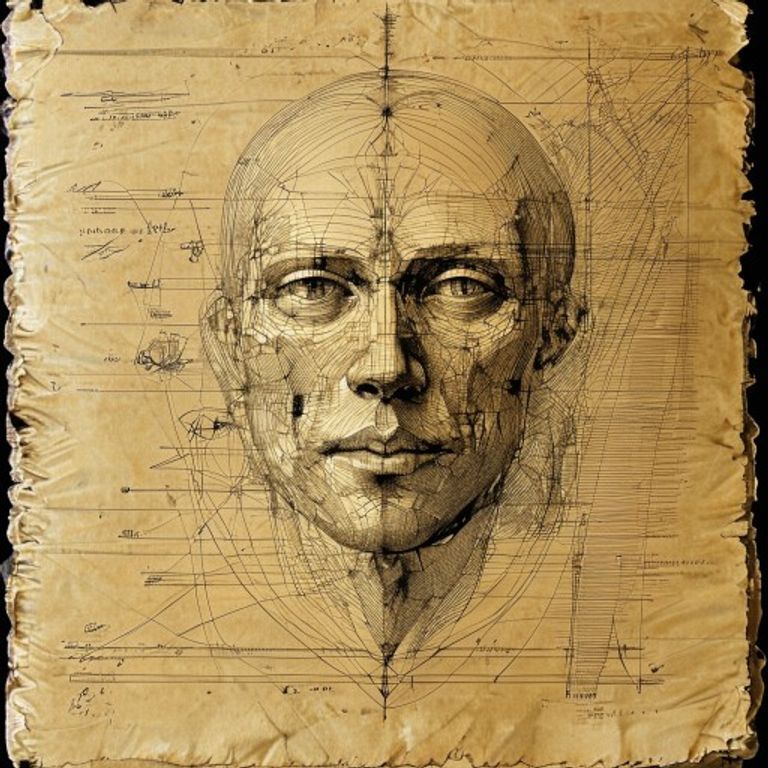
The prompt
Re-render this image as a page from a Renaissance technical codex, specifically the visual language of Leonardo da Vinci's mechanical and scientific sketches. The support is aged cream or tan paper, laid paper grain visible with subtle horizontal wire-marks showing through. The primary drawings are rendered in sepia-brown iron-gall ink (the characteristic warm brown-black of medieval and Renaissance manuscripts), applied with a quill pen or pointed metal nib. Primary technical subjects are drawn in fine continuous line work with subtle variation in line weight depending on the tool angle. Mechanical subjects show perspectival accuracy and functional geometry, with water flows indicated by curved parallel lines and spiral patterns, light rays suggested by fine radiating lines, and structural forces implied through thickened stress-bearing elements. Margin notes surround the central drawings in a small cramped hand, rendered as illegible (mirror-script or mirrored text that appears as pure calligraphy form without legible letters). Geometric construction lines are left visible, showing the planning process and compass-point circles where curved geometry was developed. There is no rule or straight-edge perfection; the hand of the draughtsman is evident in every line. Background: warm aged paper tone with slight foxing spots and time-staining. Aspect ratio approximately square or slightly wider. Preserve the subject, pose, and composition of the source image exactly, change only the medium and rendering.
What it is doing
Leonardo's notebooks were thinking made visible. He drew in mirror script to keep his ideas private, not for mystique. He sketched because drawing forces precision in a way that words cannot. A description of a mechanical principle can be vague. A drawing must commit to exact angles and proportions. The spiral of water flow, the angle of light reflection, the stress distribution in a arch, all emerge from the discipline of drawing from observation and geometric logic. The sepia ink was not chosen for aesthetics, it was the permanent ink available in his era. The fact that it aged into something that looks golden and noble is accidental beauty. The drawings mix invention with observation: actual anatomical studies from dissection, water studies from rivers, mechanical devices imagined and partially built. The codex page is a document of someone using drawing as the primary technology of thinking. The margin notes, even rendered illegible in our rendering, remind us that the drawing was paired with language, but the drawing came first. This is the ancestor of every technical drawing that follows. The line weight variation that appears artless is actually the record of the hand moving at different speeds through different degrees of certainty.
Ways to change it
Pick any of these in the gallery and the choice is added to the prompt you copy.
- Ink-tone dial: bright warm sepia, fresh from the quill vs deep brown-black sepia, aged 400 years vs oxidized edge-darkening, older at margins
- Paper-character dial: pristine cream laid paper vs aged cream with foxing spots vs heavily used, water-stained and brittle-edged
- Margin-script dial: tight cramped mirror-script illegible vs scattered geometric notation and proportion marks vs mixed mirror-script and partial legible observations
- Line-quality dial: precise compass-drawn geometry vs hand-drawn curves with visible quill variation vs deliberate sketch-quality, constructive lines left visible
- Geometric-documentation dial: detailed measurement annotations visible vs construction circles and proportion lines evident vs pure drawing with planning-process fully visible
- Subject-layering dial: single coherent technical study vs multiple subjects on page showing research direction vs dense overlapping studies suggesting sequential thinking
Style lineage
Learn the visual culture this draws from: V&A.
Related prompts
See all 7 prompts in the Blueprint-Patent-Schematic grammar