Blueprint-Patent-Schematic / Style prompt
Nineteenth Century Cyanotype Blueprint
The engineering cyanotype: white lines on prussian blue, the industrial revolution's visual language. This is how knowledge moved from the architect's drawing board into the factory floor.
Customize this prompt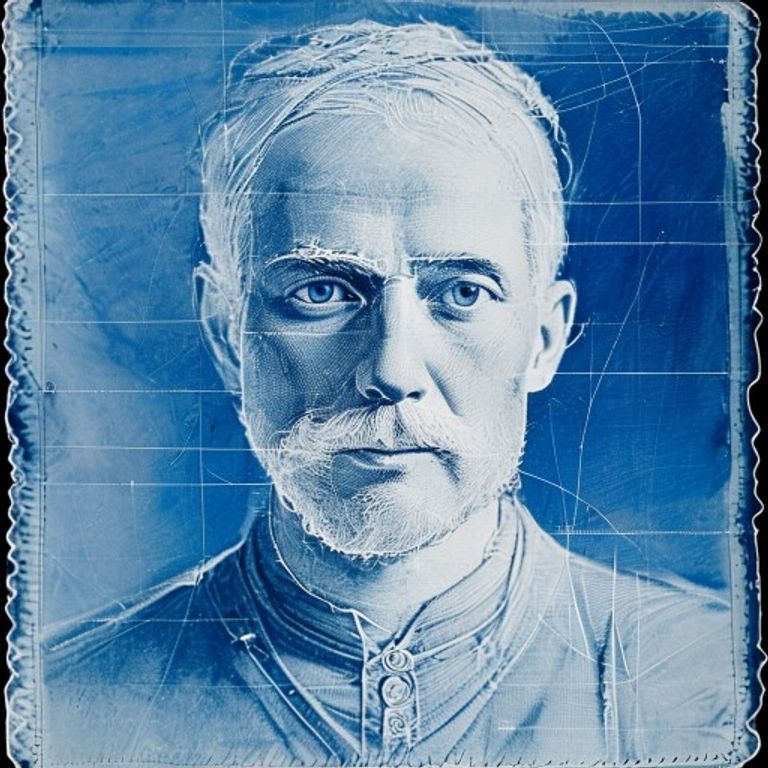
The prompt
Re-render this image as a 19th-century cyanotype blueprint. The support is heavy cotton rag paper or linen, aged prussian blue from the ferric salt process, the color slightly variable across the sheet showing the hand-coating technique and exposure time variation. All lines are crisp white, rendered with the fine precision of a mechanical drafting pen or ruling compass. Dimension lines extend from subject edges with perpendicular terminator ticks, call-out leaders point to critical features with circled or boxed reference numbers (no legible text). The background field shows the characteristic texture of the cyanotype process: subtle mottling from uneven sensitizer application, slight color variation indicating age and light exposure, fine creases and handling marks appropriate to a working technical document that lived in a draughtsman's portfolio or rolled in a map case. Borders: simple ruled frame line around the perimeter, possibly with a cartouche area for title block (leave as color block, no legible text). Surface: matte, paper-absorbing finish with no gloss or varnish. The lines should show the micro-variations of hand-drawn work, not machine-perfect precision. Aspect ratio 16:9 or 4:3 depending on source composition. Preserve the subject, pose, and composition of the source image exactly, change only the medium and rendering.
What it is doing
The cyanotype was not primarily an art medium. It was a democratic accident. A drawing that took hours on vellum could be contact-printed onto cheap cotton rag in minutes, then rolled up and shipped to a factory floor three hundred miles away. The engineer no longer controlled the interpretation. Ten workers could hold the same plan. The blueprint became the first truly mass-produced engineering document. The prussian blue was deliberate: high contrast against dust and light damage, visible in dim factories under gaslight or naked flame. The white lines are pure information, stripped of every ornamental impulse except the ones the engineer needed to survive. This is the medium of people who build things that must not fail. The marks are not art, they are liability transferred into geometry. The blueprint is the ancestor of every technical standard that follows.
Ways to change it
Pick any of these in the gallery and the choice is added to the prompt you copy.
- Blue-depth dial: bright periwinkle cyanotype, early batch vs deep prussian saturation, long exposure vs faded colonial-blue, decades in tropical sun
- Paper-character dial: crisp fine-linen finish vs rough cotton-rag showing weave vs age-spotted with foxing and water stains
- Line-quality dial: mechanical precision ruling compass vs hand-drawn variation, human tremor visible vs blunt or worn drafting pen, slight fuzz at edges
- Reference-system dial: circled numerals 1-12 vs boxed callout letters A-K vs simple leader ticks with no labels
- Aging-dialect dial: fresh from the darkroom, uniform color vs 20-year portfolio document, creased and worn vs excavated from a factory archive, brittle and brittle-edged
- Format-architecture dial: single unified technical drawing vs multi-part exploded assembly layout vs roll-unfolded section plan with margin annotations
Style lineage
Learn the visual culture this draws from: AlternativePhotography.
Related prompts
See all 7 prompts in the Blueprint-Patent-Schematic grammar