Album-Cover / Style prompt
Acid House Rave Glasnost Soviet (Perestroika Futurism Register)
Style register: Late Soviet constructivism collided with acid-house aesthetics, 1989-1992 Glasnost-era rave sleeves, neon Cyrillic typography, Soviet geometric optimism infected with electronic-dance urgency and anarchic color.
Customize this prompt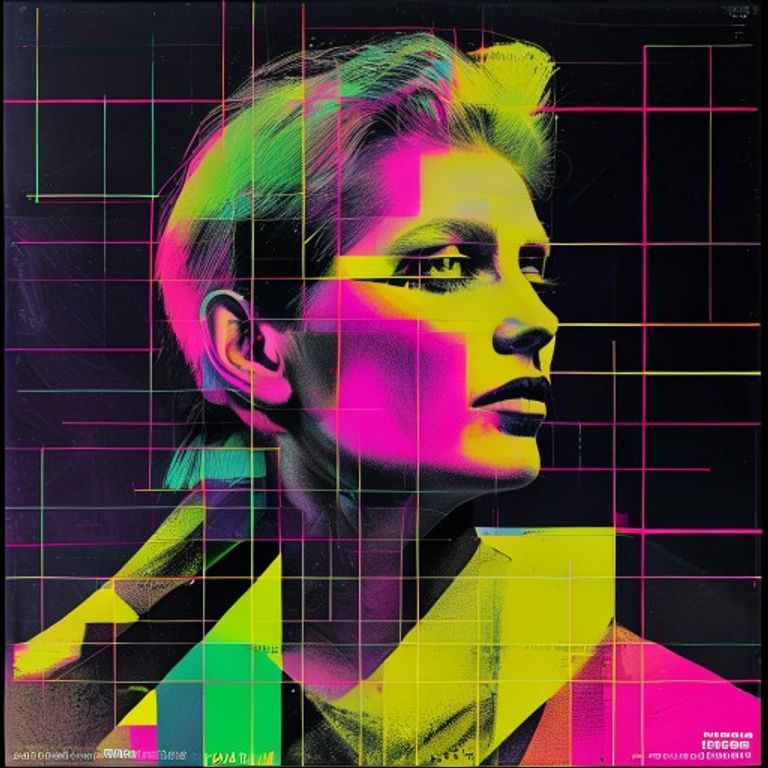
The prompt
Render the source image as an acid-house rave compilation sleeve from the late Soviet Union and early post-Soviet period, 1989-1992, channeling the visual collision of constructivist geometry with acid-house neon urgency. Composition built on Soviet-modernist grid structure: bold geometric shapes (diagonal bars, angular rays, circular motifs), but rendered in acid-house color palette: hot magenta, electric cyan, lime green, toxic yellow, deep purple, all simultaneously present, clashing rather than harmonizing. Typography: band or DJ name rendered in geometric sans-serif (Futura, Avant Garde, or custom Soviet-era modernist face), possibly with added Cyrillic characters or pseudo-Cyrillic letterforms even if the text is not in Russian, the aesthetic is Glasnost-futurism regardless of actual language. Text should be stacked, angled, overlapping, the constructivist order interrupted by the chaotic simultaneity of rave promotion. Source image treated as either (a) a geometric abstraction using the source's silhouette deconstructed into constructivist planes, (b) a photograph cropped and rotated into angular compositions, integrated into the grid as one element among equal-weight geometric shapes, or (c) a background texture heavily pixelated or halftoned, then layered with geometric overlays. Material: printed on matte uncoated board (Soviet production quality implied), color registration slightly off (constructivist print-shop authenticity), the ink edges slightly rough. Square 12-inch LP-jacket aspect ratio. Mood: optimistic and chaotic simultaneously, the moment when Soviet design's machine-age geometry collided with Western dance-floor urgency and realized the machine was becoming obsolete, electric urgency masking the awareness that this brief moment would not last, Perestroika-before-the-collapse. Preserve the subject, pose, and composition of the source image exactly, change only the medium and rendering.
What it is doing
In 1989, acid house from Detroit and Chicago reached Moscow through bootleg vinyl and cassettes. Soviet youth grafted it onto constructivism. For three years, there was a brief fusion: a moment when the machine-age optimism of Soviet design met the frequency-based ecstasy of electronic dance music. The neon magenta over constructivist geometry was not nostalgia, it was the future as it actually appeared, for a moment, before the system collapsed and the West imported its own past as the future. These sleeves document that three-year window when the old world's optimism and the new world's urgency occupied the same frame.
Ways to change it
Pick any of these in the gallery and the choice is added to the prompt you copy.
- Soviet geometry dominance: pure constructivist (minimal color chaos) vs balanced (geometry and neon equal weight) vs neon-dominant (geometry as substrate for acid-house color)
- Color intensity: restrained (primary colors only) vs full spectrum (all colors simultaneously) vs sickly-palette (toxic color mixing)
- Text register: all lettering in real Russian Cyrillic words, correctly spelled vs Latin words faked with Cyrillic lookalikes, like backwards R and N (signature) vs Cyrillic and Latin words stacked together, alternating line by line
- Image treatment: geometric-abstracted (source deconstructed) vs photographic-with-geometric-overlay vs pure geometry (no source)
- Grid structure: rigorous orthogonal (1980s Soviet) vs angular and rotated (rave chaos) vs hybrid
- Print quality register: precision (ideal Soviet production) vs offset-registration error (authentic Soviet print-shop imperfection)
Related prompts
See all 28 prompts in the Album-Cover grammar