Album-Cover / Style prompt
Chicago House Paradise Garage (Glossy Synthetic Neon Register)
Style register: Chicago house and Paradise Garage DJ sleeve aesthetic, circa 1985-1995, airbrushed synthetic bodies, neon chrome, glossy laminate, the visual promise of pleasure divorced from all reality.
Customize this prompt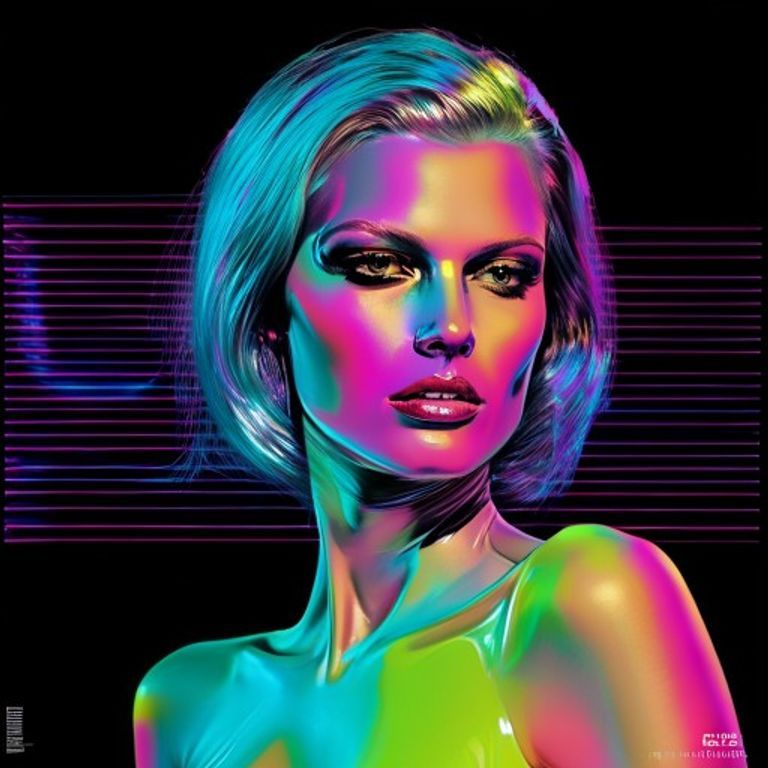
The prompt
Render the source image as a Chicago house or Paradise Garage DJ sleeve from the mid-1980s to mid-1990s, in the visual register of warehouse rave compilation covers, glossy dancewear advertising, and early synthpop aesthetics. Palette: hot neon cyan, magenta, electric lime, chrome silver, deep shadow-black, occasionally a blast of acid yellow or burnt orange. Subject transformed into an airbrushed synthetic form: skin rendered as smooth plastic or latex, surfaces gleaming with specular highlight, every edge rounded and chrome-reflected, androgynous or queer-coded body forms, occasionally partially obscured by geometric planes of chrome or holographic refraction. Background: either pure gradient (cyan fading to magenta to black) or constructed from neon light tubes, digital geometric patterns (grids, waves, refracted light maps), occasionally silhouettes of dance-floor bodies frozen mid-movement. Airbrushed throughout, glossy laminate finish, the kind of cover that sticks to your hand and shows every fingerprint. Typography: DJ name, label name, and track titles rendered in bold geometric sans-serif (Eurostile, Avant Garde, or futuristic custom font) stacked in the remaining compositional space, the type acting as a second neon element. Material: ink on glossy coated board with matte-varnish spots creating the intended grab-hold. Square 12-inch LP-jacket aspect ratio, occasionally portrait or landscape if the DJ compilation demanded it. Mood: pleasure-without-consent, synthetic-as-honest, queer-joy-as-pure-surface, the black box of the bass as the only environment that matters. No legible detail on the bodies (face detail erased, body rendered as surface only), no representation of actual space, the cover as a portal to the dark room where the record would play. Preserve the subject, pose, and composition of the source image exactly, change only the medium and rendering.
What it is doing
Paradise Garage and the Chicago house underground did not ask for representation in the media. They built their own media. The airbrushed synthetic bodies on these sleeves were not escapism, they were documentation of what actually happened in the dark room. The neon and chrome were honest about pleasure: surface only, no interiority required, the body as a frequency the DJ was controlling. This is not cynicism, it is refusal to let the mainstream frame what joy looks like when you are queer and alive in 1987.
Ways to change it
Pick any of these in the gallery and the choice is added to the prompt you copy.
- Body rendering: smooth synthetic flesh (latex) vs pure geometric chrome planes (abstracted) vs hybrid synthetic-organic (flesh with reflective inlays)
- Color intensity: restrained two-color neon (cyan-only) vs full-spectrum chrome-rainbow vs monochromatic with single accent
- Background: pure gradient vs geometric digital patterns vs silhouetted dance-crowd
- Typography dominance: text-heavy (label/track-listing driven) vs minimal text vs text as graphic element equal to body
- Figure styling: voguing ballroom pose, glitter lashes, mesh crop top, sculpted chrome finger waves vs smooth latex-skinned figure, shaved head, bare face, unreadable gender (signature) vs no person, only chrome body-like curves among neon light tubes
- Glossy register: maximum gloss (grabby fingerprint magnet) vs matte varnish overlay vs holographic foil accent
Style lineage
Learn the visual culture this draws from: MusicOrigins.
Related prompts
See all 28 prompts in the Album-Cover grammar