Album-Cover / Style prompt
Designers Republic / Warp Sleeve (Sheffield 1992-1998 Register)
Source-image rendered as a 1992-1998 Designers Republic sleeve for Warp Records: hyperflat vector geometry, fake-Japanese corporate iconography, fluorescent palette, post-human IDM clinical sensibility.
Customize this prompt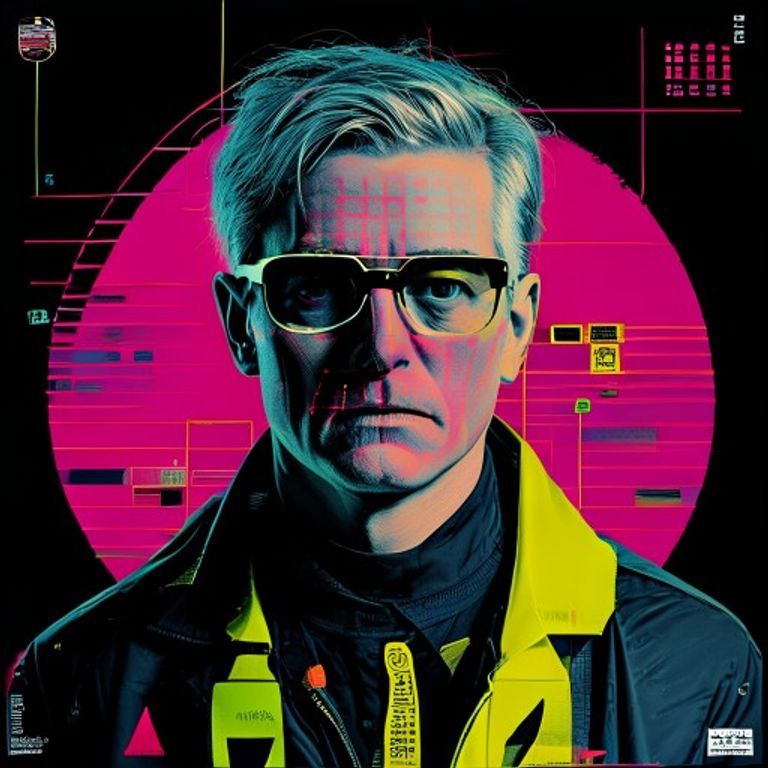
The prompt
Render the source image in the visual register of a 1992-1998 Designers Republic sleeve for Warp Records, combining Sheffield studio typography, corporate parody, and bright geometry. Palette built on fluorescent magenta, electric cyan, hazard yellow, deep black, and clinical white. Compositional logic built on flat vector graphics, no rendering, no gradient, no photographic depth. Subject reduced to a vector silhouette and combined with mock-corporate iconography: fake-Japanese characters (without forming actual readable text), pictogram safety symbols, technical roundels, isotype-style figures, version-number-like fragments, mock barcode patterns. Background flat color field with hazard-tape diagonals or grid overlay. Square 12-inch LP-jacket framing where source aspect allows. Mood: clinical, satirical, post-human, corporate-mimicry-as-critique, mid-nineties techno-Orientalism. No legible text in any human language, no band name, no logos, no catalog marks; pictogram and fake-character elements permitted as long as they form no readable words. Preserve the subject, pose, and composition of the source image exactly, change only the medium and rendering.
What it is doing
The Designers Republic invented the visual language of late-twentieth-century irony about late-twentieth-century corporations. By mimicking Japanese consumer-electronics packaging with fake characters and fluorescent isotypes, the studio simultaneously celebrated and satirized the global-brand image-economy. The cover was a working prototype of a brand that did not exist, attached to music that resisted being a brand. Borrowing this register today is borrowing satire whose target (corporate globalism) has so fully won that the satire reads as celebration.
Ways to change it
Pick any of these in the gallery and the choice is added to the prompt you copy.
- Fluorescent intensity: muted (1992 early) to full hazard-saturation (1996 peak)
- Pictogram density: sparse (one roundel) to dense (full mock-packaging field)
- Fake-character presence: absent (pure vector) to dominant (full mock-Japanese composition)
- Hazard-tape diagonals: absent (clean grid) to dominant (industrial warning surface)
- Vector flatness: strict (no rendering anywhere) to relaxed (slight gradient permitted)
Style lineage
Learn the visual culture this draws from: The Designers Republic Official.
Related prompts
See all 28 prompts in the Album-Cover grammar