Video-Game-Case / Style prompt
Neo-Geo AES Premium Luxury-Cart Frame
The colossal SNK Neo-Geo AES home-cart in its oversized clamshell case with the matching glossy snapshot card. The most premium home-game object ever sold, three hundred dollars per title at retail in 1990 dollars.
Customize this prompt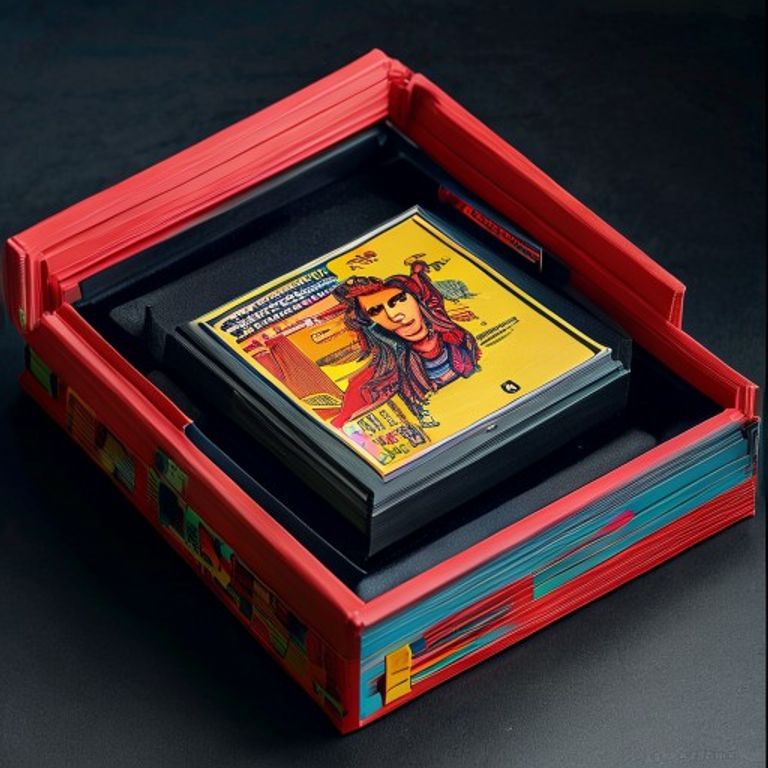
The prompt
Re-render this image as a 1990 to 1997 SNK Neo-Geo AES retail home-game package, the largest and most premium cartridge format the consumer home-console market ever shipped. Package format: an oversized rigid clamshell case roughly the size of a small hardback book (approximately 20cm tall, 18cm wide, 4cm deep), constructed of high-grade dense polystyrene plastic in a single bold color (red, blue, or black depending on SKU and region), opening on a center hinge to reveal a foam-cradle interior holding a single colossal cartridge. The cartridge itself: visibly larger than any other home-console cart ever made (approximately 15cm by 12cm, twice the linear dimensions of an SNES cart), heavy molded plastic shell in a matching bold color, glossy printed label on the face covering most of the cart surface. Insert artwork: a hero illustration printed on the inside-front-cover of the clamshell, painted-keyart register in the 1990 to 1993 SNK arcade-art style, hand-painted character or action composition, saturated arcade-grade color palette, the look the company used because every Neo-Geo title was a direct arcade port and the home-cart was sold as "arcade in your house." A separate glossy snapshot-card insert (approximately A5 size, four-color heavy stock) sits in a sleeve inside the case showing screenshots and feature copy (render as a card with abstract colored screen-rectangles, no legible lettering). Top edge of the inside cover: a thick colored title-band (render as flat solid colored rectangle, no legible lettering). The case exterior: bold solid color (red, blue, or black), embossed or screen-printed front graphic, the package register a premium home-cart manufacturer chose because the unit retailed for two hundred to three hundred 1991 US dollars per title and the buyer had to feel the weight of what they bought. Print quality: 1991 high-end Japanese offset litho with gloss varnish on the keyart and snapshot card, screen-print on the case exterior, foam-cradle interior. Mood: premium, weighty, arcade-grade, the package that says "this is the most expensive home-game object you have ever bought and the price is correct because the object is correct." No on-canvas legible text, no logos, no franchise marks. Preserve the subject, pose, and composition of the source image exactly, change only the medium and rendering. Aspect ratio is Neo-Geo AES clamshell book-format (roughly 5:6 closed).
What it is doing
The Neo-Geo AES is the most underrated case study in pre-luxury consumer-tech economics. SNK sold a home console for six hundred dollars in 1990, with each cartridge at two to three hundred dollars on top. The market it served was real and stable: serious arcade-fluent buyers who wanted arcade-grade fidelity at home with zero compromise, and who would happily pay luxury-good prices for a luxury-good object. The package reflected this: oversized clamshell, dense plastic, foam cradle, glossy snapshot card, painted arcade-keyart. SNK proved that a small premium-tier within consumer electronics is sustainable when the product is honestly premium and the package is honestly premium. Today's "premium" digital edition is a license. The Neo-Geo cart on a collector's shelf is the platonic sovereign object.
Ways to change it
Pick any of these in the gallery and the choice is added to the prompt you copy.
- Case-color dial: bold red (canonical SNK arcade) vs cobalt blue (later SKU) vs jet-black (collector premium)
- Hero-render era: 1991 hand-painted-keyart (peak SNK arcade style) vs 1994 anime-cel-painted (mid-cycle) vs 1996 painted-with-cel-shaded-elements (late-cycle)
- Cart-color dial: matching case-color cart (canonical) vs gold-foil-label cart (collector limited) vs transparent-shell cart (Japan-only revision)
- Snapshot-card dial: single A5 glossy card (canonical) vs multi-page glossy booklet (deluxe SKU) vs card plus mini-poster fold (special)
- Case-surface dial: screen-printed graphic (canonical) vs embossed-blind front (luxury minimal) vs foil-stamped accent (limited)
- Shelf-wear dial: mint sealed in shrinkwrap vs light case-color scuffs (lived-in) vs cracked hinge + foam-cradle yellowed (relic)
Style lineage
Learn the visual culture this draws from: Video Game Console Library.
Related prompts
See all 26 prompts in the Video-Game-Case grammar