Video-Game-Case / Style prompt
Sega Saturn Japanese Spine-Obi Frame
The Japanese-market Saturn jewel-case with the vertical obi paper strip, the side band that survived from book and record packaging. The most domain-specific Japanese-game-object register, intelligible only to people who've held one.
Customize this prompt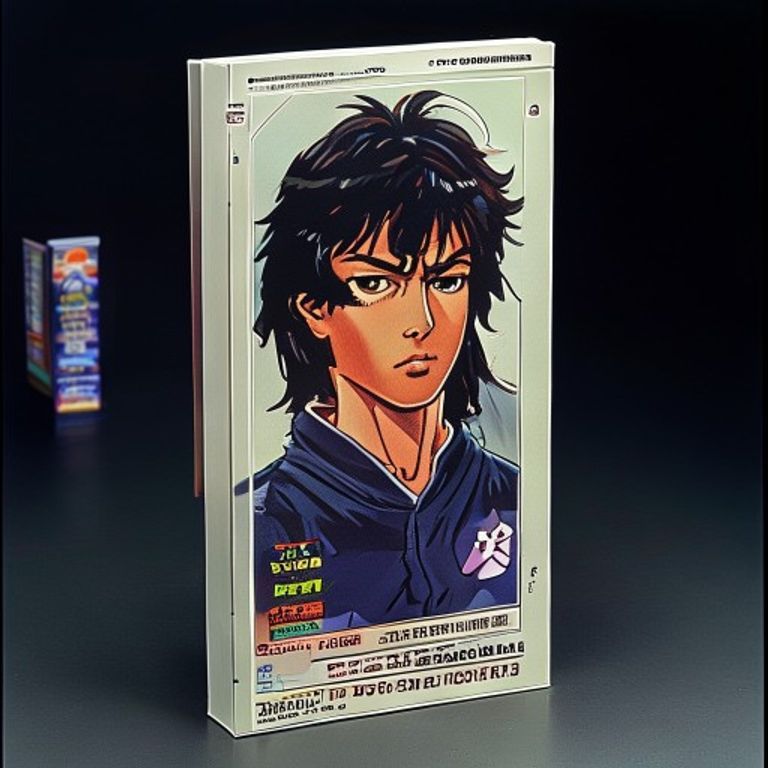
The prompt
Re-render this image as a 1995 to 1998 Sega Saturn Japan-market retail video-game package, the canonical Japanese jewel-case format with the vertical paper obi side-strip. Package format: a CD-sized clear jewel-case with internal black or white tray (Japanese Saturn used both spec variants depending on publisher), printed paper insert visible through the clear front, and the defining feature: a separate printed paper obi strip running vertically down the left side of the front cover, wrapping around the spine, printed on lightweight uncoated paper in a register that contrasts with the main keyart (often solid bold color with hierarchical text-block layout, render as flat colored bands with no legible lettering). Insert artwork behind the obi: a Japanese-market hero illustration in the 1996 to 1997 register, often painterly anime-influenced keyart for character titles or polygon-rendered hero shots for action titles, executed with the saturated punchy color palette and tight composition Japanese publishers favored. Top edge of the insert: a thin colored title-band stripe (render as solid colored rectangle, no legible lettering). Bottom edge: a thin platform-branding band and CERO-equivalent rating area (render as small colored rectangles). Side spine: visible through the jewel-case, dark or white depending on tray spec, with the obi paper strip wrapping the spine and clearly continuing onto the back. The obi paper: uncoated, slightly textured, contrasting bold color, deliberately separate from the laminated insert behind it. The case itself: clear polycarbonate jewel-case, classic four-pivot hinge, may show light Japan-market shelf wear. Print quality: 1996 Japanese offset litho, sharp registration, slight gloss on the insert, matte on the obi. Mood: domain-specific, collector-aware, the package that signals "Japanese release, not the western SKU." No on-canvas legible text, no logos, no franchise marks. Preserve the subject, pose, and composition of the source image exactly, change only the medium and rendering. Aspect ratio is Japanese Saturn jewel-case vertical portrait (roughly 5:6).
What it is doing
The Japanese obi strip is a packaging convention older than video games. It came from Japanese books and vinyl records, where the obi (literally "sash") was the publisher's own copy-band that wrapped the spine and front edge. When the obi survives intact on a used copy, it doubles or triples the resale value to collectors, because the obi is removable and most owners eventually threw it away. The obi is therefore the watermark of an unmolested object. Western markets never adopted the convention, which is why Japanese-import collectors can spot an unmolested Japan SKU at twenty paces. The obi is the most domain-specific physical-object signal in the entire video-game packaging universe.
Ways to change it
Pick any of these in the gallery and the choice is added to the prompt you copy.
- Obi-color dial: bold red obi (canonical for action titles) vs pure-white obi with thin black rules (austere) vs metallic-silver obi (special edition)
- Obi-condition dial: mint never-removed obi (collector grail) vs light edge-wear (lived-in) vs obi missing, spine ghost visible (sad but common)
- Tray-color dial: black tray (canonical) vs white tray (publisher variant) vs transparent tray (later run)
- Hero-render era: 1995 polygon-launch (early) vs 1996 painted-anime-keyart (peak) vs 1998 high-poly-render (late-cycle)
- Insert-finish dial: glossy varnished insert + matte obi (canonical contrast) vs both matte (austere) vs gloss obi + matte insert (inverted special)
- Shelf-wear dial: mint sealed in cellophane vs light obi-edge-yellowing (decades-old) vs cracked hinge + price-tag residue (relic)
Style lineage
Learn the visual culture this draws from: Fandom.
Related prompts
See all 26 prompts in the Video-Game-Case grammar