Toy-Packaging / Style prompt
LEGO Box Build-Scene Render Frame
The LEGO retail box. Photographic-grade studio-render of the completed build dominating the front face, the constructive contract every brick fulfills. The most honest package in the toy aisle.
Customize this prompt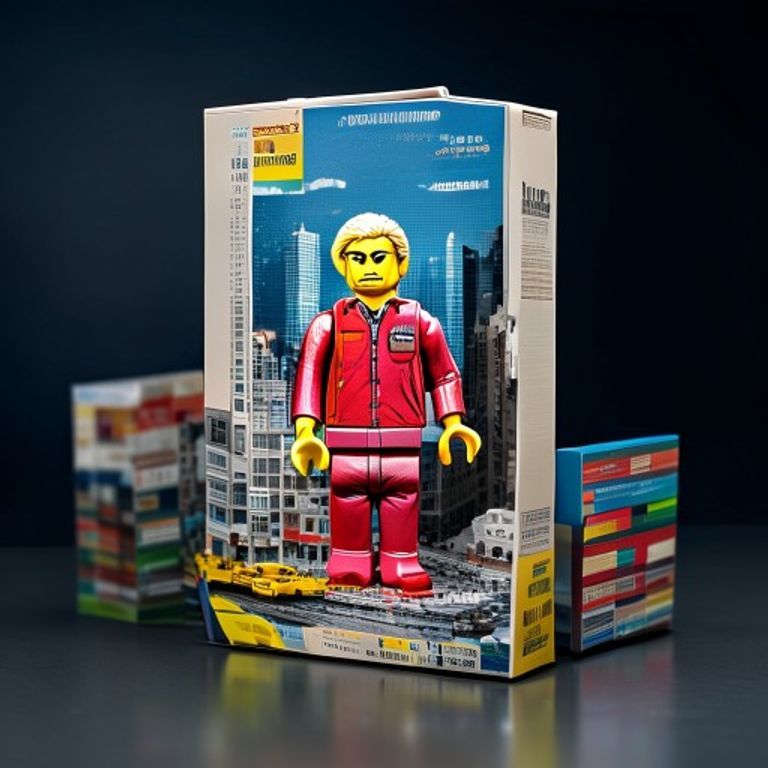
The prompt
Re-render this image as a contemporary 2010 to present LEGO retail set package, the canonical rectangular box format used across the LEGO portfolio (City, Creator, Technic, Star Wars licensed, Ideas, Architecture). Package format: a rigid corrugated-cardboard rectangular box, dimensions vary by set scale (small sets approximately 14cm by 19cm by 5cm, medium sets approximately 26cm by 38cm by 7cm, large flagship sets up to 48cm by 58cm by 12cm), full-color offset-litho printed on all six faces with hierarchical composition. Front face (the primary dominant face): a high-resolution studio-photographic render of the completed build in dynamic context, the full assembled model rendered as if photographed in a constructed scene (city street, alien planet, race track, architectural setting) with depth-of-field, soft directional studio lighting, and subtle environmental detail. The render quality should appear as either: (a) high-end CGI render with photorealistic lighting and accurate plastic-surface material response, or (b) actual studio photograph of a built physical model on a constructed set with practical lighting. Top edge of front face: a colored brand-stripe band running the full width (render as flat solid colored rectangle, no legible lettering), color varying by sub-line (LEGO yellow for City, blue for Technic, dark grey for Architecture, black for adult-collector sets). Lower portion of front face: a thin band with small icons indicating piece count, age range, scale, and sub-line identifier (render as a row of small colored rectangles, no legible imagery). Side panels: continuation of the front composition wrapped onto the side, plus a smaller secondary render showing the build from a different angle or showing alternate-build configurations. Back face: a multi-render composition showing the build from multiple angles, action play-features called out with arrow-and-detail-callouts (render callouts as flat colored arrow-shapes and small detail circles, no legible imagery), and sub-build configurations. The box itself: matte-laminated UV-coat finish (premium adult-collector sets) or gloss-laminate (children's sets), sharp four-color offset registration, slightly reinforced corners for shipping durability. Mood: an honest contract, the package register that says "here is exactly what you will build when you open this box." No on-canvas legible text, no logos, no franchise marks. Preserve the subject, pose, and composition of the source image exactly within the build-render, change only the medium and rendering of the surrounding package. Aspect ratio is LEGO box front-face horizontal rectangle (roughly 4:3 or 3:2 depending on set scale).
What it is doing
The LEGO box is the most honest package in the toy aisle. The completed-build render on the front face is a literal contract: the buyer can see exactly what they will construct when they open the box. There is no aspirational gap, no painted promise that exceeds the physical product, no airbrushed fantasy that cannot be delivered. The LEGO render says "this is the thing, here is what it looks like assembled, here is how the play-features work." LEGO has run this honest-contract package format for decades and the brand has compounded into one of the strongest physical-toy positions in the world precisely because the package promise is always fulfilled by the physical bricks inside. The lesson is that honest packaging compounds. Aspirational packaging that exceeds the product creates one-time sales and lifetime cynicism. The LEGO box is the proof that mass retail can run honest and win.
Ways to change it
Pick any of these in the gallery and the choice is added to the prompt you copy.
- Render-style dial: high-end CGI studio render with depth-of-field (modern flagship register) vs practical studio photograph of physical built model (classic register) vs mixed CGI build with photographic environmental backdrop (hybrid)
- Box-scale dial: small impulse-purchase box (14 by 19 by 5cm) vs medium retail flagship box (26 by 38 by 7cm) vs large adult-collector display box (48 by 58 by 12cm)
- Sub-line palette dial: LEGO-yellow City register vs cool-grey-and-blue Technic register vs matte-black Architecture and adult-collector register
- Environmental-context dial: built scene with environmental backdrop (canonical) vs studio-isolated build on clean colored background (austere) vs multi-build composition with secondary models (deluxe)
- Box finish: soft matte coating, muted low-glare colors, no reflections on the cardboard vs high-gloss laminate with bright saturated colors and crisp light reflections vs matte box with raised glossy varnish on the model, catching highlights
- Action-callout-style dial: arrow-and-detail-circle callouts on back face (canonical) vs bare back face with multi-angle renders only (austere adult register) vs full-comic-strip play-feature illustration (children's register)
Style lineage
Learn the visual culture this draws from: Official LEGO Building Instructions.
Related prompts
See all 8 prompts in the Toy-Packaging grammar