Toy-Packaging / Style prompt
Kenner Star Wars Blister Cardback Frame
The original 1977 to 1985 Kenner Star Wars action-figure blister card. The mint-on-card grail. The package that, when preserved unopened, became worth more than a car.
Customize this prompt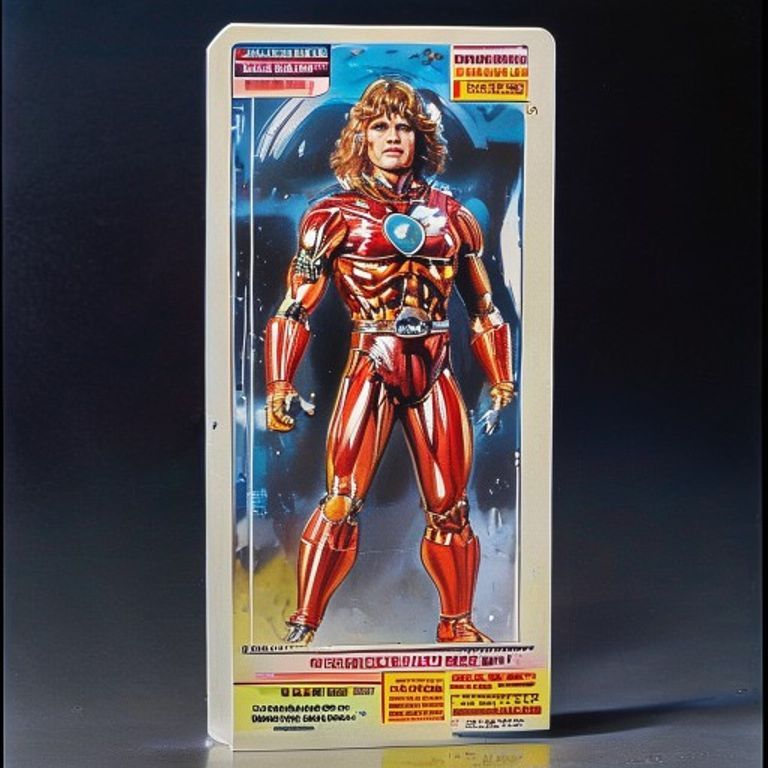
The prompt
Re-render this image as an original Kenner Star Wars action-figure blister-card package from the 1977 to 1985 production run, the canonical 3.75-inch-scale figure format that established the modern action-figure category. Package format: a rigid printed cardback (approximately 14cm wide by 23cm tall, made of dense coated cardboard) with a clear vacuum-formed plastic blister bubble heat-sealed to the front face, the bubble shaped precisely to cradle a single 3.75-inch action figure visible through the clear plastic. Cardback design: full-color offset-litho printed front face dominated by a hero illustration in the late-1970s Kenner Star Wars register (painted movie-poster keyart with a glowing layered ensemble composition and sweeping dramatic faces, color-saturated, painterly with airbrush highlights, evoking the theatrical one-sheet), top portion carrying a thick colored title-band stripe across the width (render as flat solid colored rectangle, no legible lettering). Lower portion of cardback: a smaller secondary illustration showing the figure in scale or in action context, plus a colored character-name band beneath the blister bubble (render as flat colored rectangle, no legible lettering). Bottom edge of cardback: a thin colored band with a small printed scene grid showing the other available figures in the wave (render as a row of small colored rectangles, no legible imagery). The blister bubble: clear PVC vacuum-form, heat-sealed at the perimeter to the cardback, the seal line visible as a thin pressed border around the bubble. Cardback color register: predominantly warm desert tones (sand, ochre, gunmetal gray) for the original 1977 wave, shifting to cooler blues and blacks for The Empire Strikes Back wave (1980) and forest greens for Return of the Jedi (1983), depending on era variant chosen. Cardback finish: high-gloss UV-coat over offset litho, slight reflection. The cardback should appear as a flat planar object photographed straight-on, the blister bubble protruding toward the viewer in clear plastic relief. Mood: original-1978-retail-rack, the package preserved exactly as it sat in the toy aisle of a Sears or Toys-R-Us during the original theatrical run. No on-canvas legible text, no logos, no franchise marks, no recognizable studio identifiers. Preserve the subject, pose, and composition of the source image exactly within the blister bubble, change only the medium and rendering of the package surrounding it. Aspect ratio is Kenner blister-card vertical portrait (roughly 3:5, taller than wide).
What it is doing
The Kenner Star Wars blister card is the absolute platonic ideal of the mint-on-card sovereign object. The original 1977 to 1985 production run figures, when preserved unopened with the bubble intact and the cardback unflexed, trade today at four to six figures per piece at major auctions (a sealed 1977 Luke Skywalker on the original twelve-back card cleared two hundred thousand dollars at a collectibles auction house in 2023). The intact card is frozen time: it is a physical proof that one specific 1978 child did not get to play with this toy, that one specific parent bought it for an investment or a hoard, that one specific Kmart end-cap stocked it and it never sold. The card preserves not just the toy but the moment, the wave, the regional distribution, the print register, the punch-out hang-tab condition, and the corner-flex history. The mint-on-card is the most direct physical-object proof we have that scarcity plus craft plus story plus time produces value the digital economy cannot replicate. There is no mint-on-card NFT. There is no thirty-year-frozen-blister Spotify track.
Ways to change it
Pick any of these in the gallery and the choice is added to the prompt you copy.
- Wave-era dial: 1977 twelve-back original Star Wars wave (the absolute grail) vs 1980 ESB wave with new figures (cooler palette, action-scene cardback) vs 1983 ROTJ wave with green-forest register (later but still original-trilogy)
- Keyart-style dial: glowing layered-ensemble painted-keyart cardback (canonical hero composition) vs sweeping dramatic-face movie-poster register (1977 original) vs action-scene illustration with multiple characters (mid-cycle waves)
- Blister-condition dial: mint sealed unyellowed bubble (collector grail) vs light bubble yellowing (lived-in but unopened) vs bubble crushed or detached from cardback (relic, drastically reduced value)
- Cardback-flex dial: pristine flat cardback (collector grail) vs light corner-flex (acceptable) vs heavy creasing plus price-sticker residue (relic)
- Hang-tab dial: original die-punched hang-tab intact (canonical) vs hang-tab clean-punched-out by retailer (acceptable) vs hang-tab torn raggedly through cardback (damage)
- Wave-grid size: single row of twelve small figure squares along the bottom edge (1977 first wave) vs two stacked rows of twenty small figure squares on a wider bottom band (mid-cycle) vs dense grid of dozens of tiny figure squares filling the lower third (late-cycle full roster)
Style lineage
Learn the visual culture this draws from: Mr. Vintage Star Wars Database.
Related prompts
See all 8 prompts in the Toy-Packaging grammar