Tattoo-Flash / Style prompt
Woodcut Engraving-Style Tattoo Flash Frame
Pre-photographic engraving register translated to tattoo. Parallel hatching, cross-hatch shadow, Dürer-Hogarth lineage. The oldest mass-reproducible image grammar marked into the most permanent medium.
Customize this prompt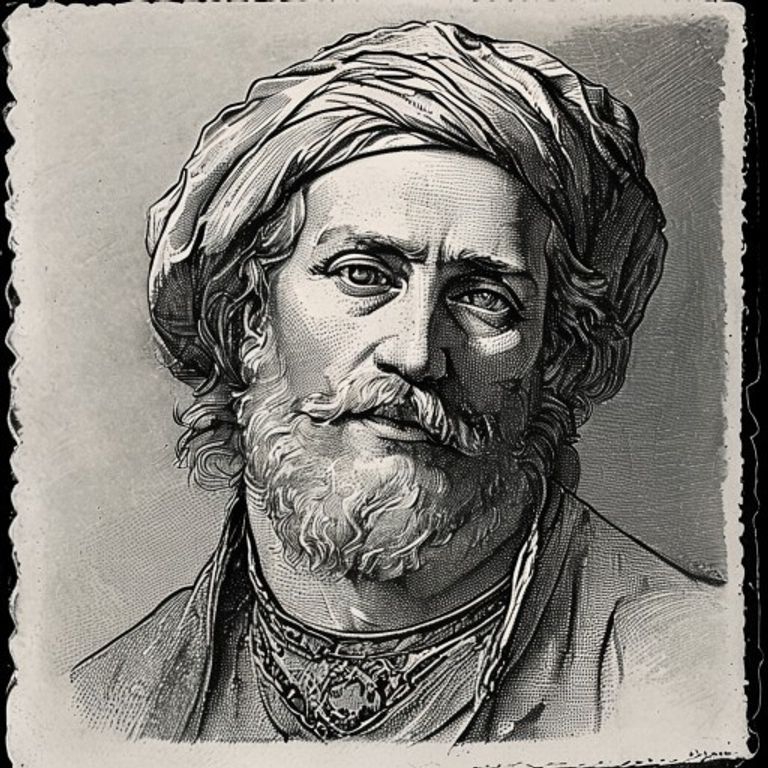
The prompt
Re-render this image in the visual register of woodcut and copperplate engraving translated into tattoo flash, the canonical pre-photographic illustration grammar of Albrecht Dürer, Hans Holbein, William Hogarth, and Gustave Doré, applied as a reference design for a fine-line black-ink tattoo. Medium: pure black ink on aged off-white card stock, the visual language drawn from engraving and woodcut techniques, finished as a flash sheet for tattoo reference. Drawing register: every tonal value and every shadow constructed entirely from parallel-line hatching and cross-hatching, no solid black fill larger than a small accent, no grey wash, no halftone, no stippling, the line as the only tonal carrier. Hatch direction: lines follow form, curving across rounded surfaces, parallel and even on flat planes, cross-hatched (two-direction overlay) where deeper shadow is required, triple-hatched only at the darkest accents. Line weight: uniform thin black line throughout, the only modeling variable is hatch density (sparse for light, dense for shadow), the technique mathematical and patient. Outline: thin confident contour line at the same weight as the interior hatching, the figure built from the inside out by hatch rather than enclosed by a bold outer line. Composition: subject centered on the sheet, slight ornamental border-line at the page edge (a single thin rectangle frame), generous margin of aged paper around the figure. Background: where any background is suggested, it is rendered as parallel-line cross-hatched shadow in the same technique as the figure (no environmental scene). Paper: aged off-white card stock, slight cream tone, soft paper-grain visible, occasional age-spot or yellowing at the edges, the look of a 16th-century engraving plate proof. Surface treatment: matte, no gloss, the printed paper of a historical-reference sheet. No on-canvas text, no caption, no Latin inscription, no studio signature, no franchise marks. Mood: the engraving mark as the oldest mass-reproducible image grammar in Western culture, translated into the most permanent medium humans have, the line-by-line patience as the visible discipline. Preserve the subject, pose, and composition of the source image exactly, change only the medium and rendering. Aspect ratio is flash sheet vertical portrait (roughly 4:5).
What it is doing
The woodcut and engraving grammar is the oldest mass-reproducible image tradition in Western art, predating photography by four centuries. Translating it into tattoo flash collapses two long-time-horizon traditions into one image: the line-by-line patience of Dürer's engraving plate, marked into skin which is the most permanent medium humans have access to. The aesthetic asserts that an image worth carrying on the body should belong to a tradition older than the carrier. The hatch-and-cross-hatch grammar is the visible discipline: every shadow built by hand from individual lines, no shortcuts, the technique itself an act of patience.
Ways to change it
Pick any of these in the gallery and the choice is added to the prompt you copy.
- Master register: Dürer Renaissance-religious precision vs Hogarth 18th-century satirical-bold vs Doré 19th-century dramatic-cinematic
- Hatch density: sparse-airy classical (light-tone dominant) vs medium-density balanced (canonical) vs dense-dark dramatic (Doré-heavy)
- Cross-hatch dial: single-direction parallel only (austere) vs two-direction cross-hatch canonical vs three-direction triple-hatch shadow (deep accent)
- Outline weight: inside-out no-outline canonical engraving (purist) vs thin contour outline plus hatch (hybrid) vs medium contour with hatch interior (tattoo-friendly)
- Border treatment: single thin rectangle frame (canonical) vs decorative-border ornamental (Victorian-revival) vs no border, hatch fades to paper edge (austere)
- Paper-aging dial: mint reference card (collector) vs mellow-cream classical (canonical) vs heavy age-spot foxed paper (antique relic)
Related prompts
See all 10 prompts in the Tattoo-Flash grammar