Sci-Fi-Concept / Style prompt
Syd Mead Retrofuture Chrome Gouache Frame
The industrial-designer-as-prophet register. Chrome surfaces, optimistic-corporate volumes, gouache-on-board rendering, 1970s-to-1980s aerospace-brochure future. The future-image as the actual future contract.
Customize this prompt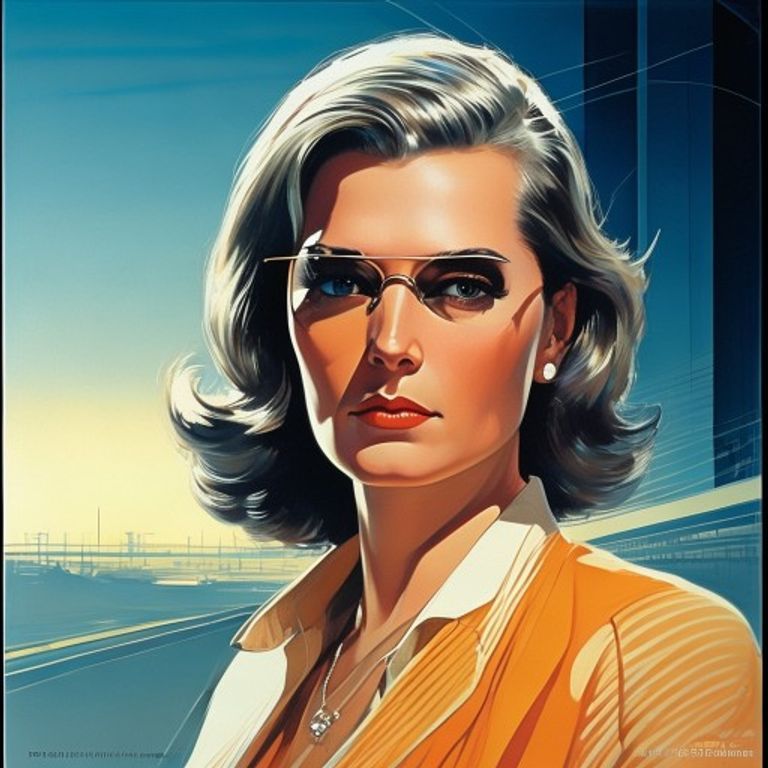
The prompt
Re-render this image in the style of Syd Mead concept illustration, gouache-on-illustration-board lineage from his US Steel, Ford, Sony, and Blade Runner production-design work circa 1970s through 1980s. Medium: gouache and airbrush on cold-press illustration board, hand-rendered curves, smooth chrome gradients with crisp specular highlights, soft penumbra shadows. Surface treatment: chrome-and-anodized-aluminum dominant, with secondary plastics in optimistic primary palette (corporate-orange, deep cobalt, warm cream, occasional vermilion accent). Lighting: studio-clean three-point with one strong rim-light at upper-left producing long horizontal specular streak across chrome surfaces, ambient fill from above producing soft gradient on undersides, no harsh shadows. Atmosphere: slight haze in middle distance suggesting scale, gradient sky from pale-cream horizon to soft-cobalt zenith, occasional distant geometric silhouette suggesting massive infrastructure. Architectural-industrial design language: confident curves and chamfered edges, oversized scale relative to small precisely-drawn human figures, every surface implying engineering intent rather than ornament. Rendering precision: hard-edge masking on geometric forms, soft-blend airbrush on volume modeling, fine pen-line for hairline detail, signature Mead curve-discipline. Color palette: chrome silver, warm cream, corporate orange, deep cobalt, occasional vermilion, never garish, always brochure-confident. Mood: corporate-optimistic future, the aerospace-brochure register, the world as the engineering proposal already approved, the future as already-rendered industrial-design contract. Composition: ample sky for caption insertion, hero subject mid-frame with environmental scale-cue. No legible text, no studio watermark, no company logos. Aspect ratio matching source. Preserve the subject and composition of the source image exactly, change only the medium and rendering.
What it is doing
Syd Mead did not predict the future. He drafted its purchase order. US Steel, Ford, Sony, and ultimately Blade Runner production hired him to render the corporate-optimistic future, and the actual built world followed the rendering. The simulation preceded the territory. Applied to any contemporary subject, the Mead register encodes the buried thesis that the future-image is the actual future contract, the rendering is the engineering proposal already approved, and the chrome-and-gouache surface is more load-bearing than any actual feasibility study. Baudrillard's first-order argument made literal: the brochure built the building.
Ways to change it
Pick any of these in the gallery and the choice is added to the prompt you copy.
- Chrome-dominance dial: full chrome-and-aluminum signature vs chrome plus matte-white secondary vs chrome with anodized-color accent
- Scale-cue dial: tiny human figures for massive-infrastructure scale vs no humans, pure object vs one human at middle scale for product-brochure register
- Era dial: 1970s US-Steel brochure register vs 1980s Sony-future product-rendering vs Blade Runner production-painting darker register
- Sky dial: pale cream-to-cobalt gradient optimistic vs deep dusk amber-magenta for cinematic vs clear cobalt for engineering-clean
- Surface-finish dial: mirror-chrome with crisp specular vs brushed aluminum with diffused highlight vs enameled paint over chrome substructure
- Composition register dial: three-quarter hero shot brochure-standard vs profile elevation engineering-drawing vs low-angle heroic mythic
Style lineage
Learn the visual culture this draws from: Official Syd Mead Website.
Related prompts
See all 5 prompts in the Sci-Fi-Concept grammar