Botanical Riso Plate Study (Style-Only, Image-Conditioned)
Style register: botanical specimen observation translated into fine contour stencil and broad leaf-shadow print, without inventing new plant forms.
The prompt
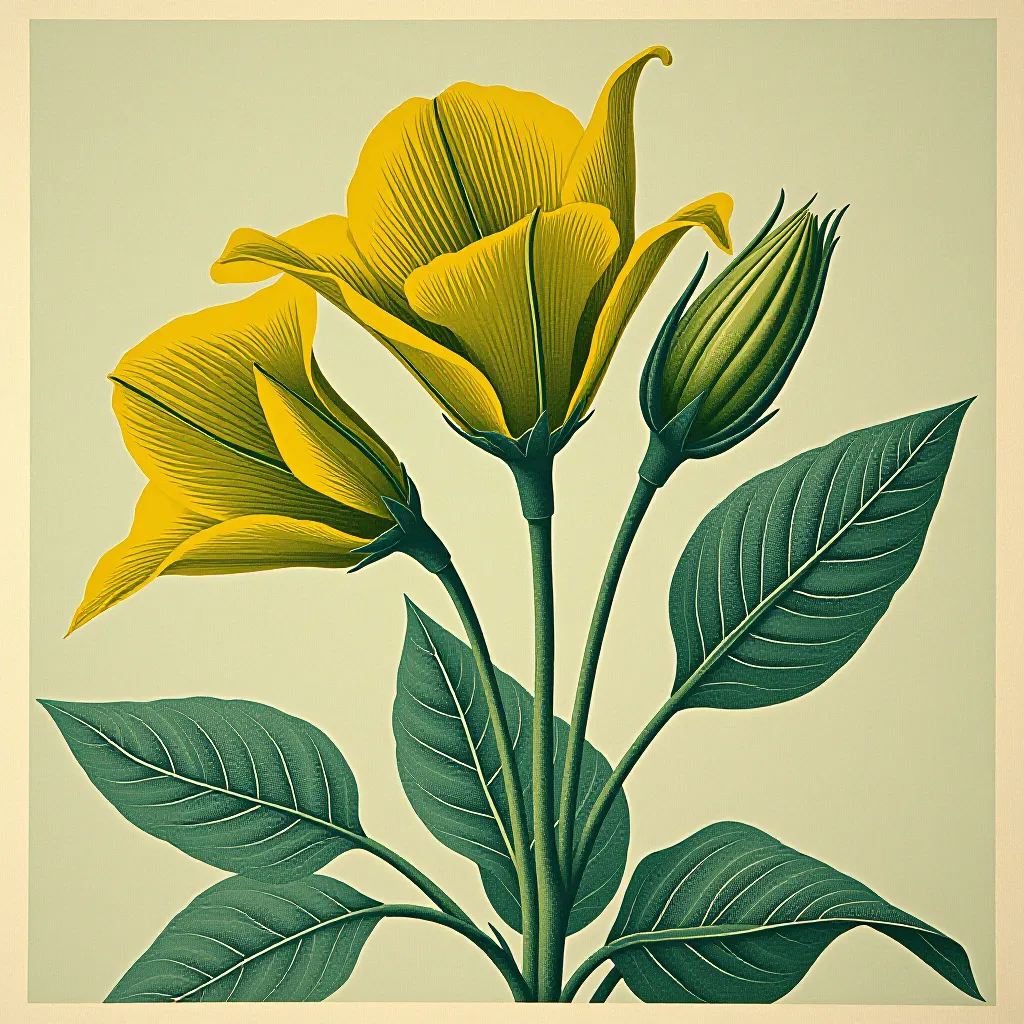
Re-render this image as a botanical risograph plate, recalling Maria Sibylla Merian's patient plant studies and the direct color separations of contemporary independent print studios. Keep every source form in place: render any existing foliage or flowers as observed structure, and if the image has no plants, apply the same specimen-study restraint to the subject actually present. Print a fine dark-green stencil for essential veins, stems, contours, and shadow boundaries only where the source supports them. Print a warm yellow-green second stencil as broad transparent areas of light, leaving paper visible within the smallest openings. Let the two inks overlap into a deeper olive inside established shaded regions. Preserve generous unprinted margins within the original composition, and avoid decorative vines, imaginary leaves, specimen labels, or a new surrounding border. A few broken lines should reveal how a slender feature can fail to transfer cleanly through the master. Give larger shapes soft absorbed edges while the finest lines remain thin, slightly interrupted, and legible. Uncoated ivory paper shows between the passes, with a few natural fiber flecks and localized variations in coverage. The print should feel like an attentive field observation translated through two affordable stencils, neither glossy illustration nor botanical wallpaper. Leave a calm, uncluttered band of negative space along the top or bottom edge where a title could sit. Strictly no on-canvas text, no legible lettering, no signature, no watermark, no logos. Preserve the subject, pose, and composition of the source image exactly, change only the medium and rendering. Aspect ratio matches source.
What it is doing
A scientific plate usually hides the cost of selection behind apparent precision. Two ink masters expose it: one records structure, the other chooses where light can remain. A broken line can be more truthful about the tool than a perfectly restored one.
Tuning knobs
- Contour weight: `thin interrupted green` (signature) vs `solid fine line` vs `bolder broad outline`
- Light ink: `transparent yellow-green` (signature) vs `soft celery` vs `pale ocher`
- Overlap: `olive in existing shade` (signature) vs `minimal intersection` vs `broad deep-green shadow`
- Line loss: `occasional transfer break` (signature) vs `unbroken line` vs `frequent fine-line gaps`
- Paper: `ivory with light fiber flecks` (signature) vs `plain cream` vs `warm gray recycled`
Related prompts
See all 10 prompts in the Risograph grammar · Open in the gallery
Get the free sample. The intro plus the first three chapters of The Liberation Engine, delivered as a PDF. The full book and the complete 642-prompt method are the paid edition.