Propaganda / Style prompt
Weimar Heartfield Photomontage (1924-1933)
The montage-as-truth-exposure register. Subject embedded in a constructed lie so precise the lie reveals the truth underneath. Photomontage as anti-fascist surgery.
Customize this prompt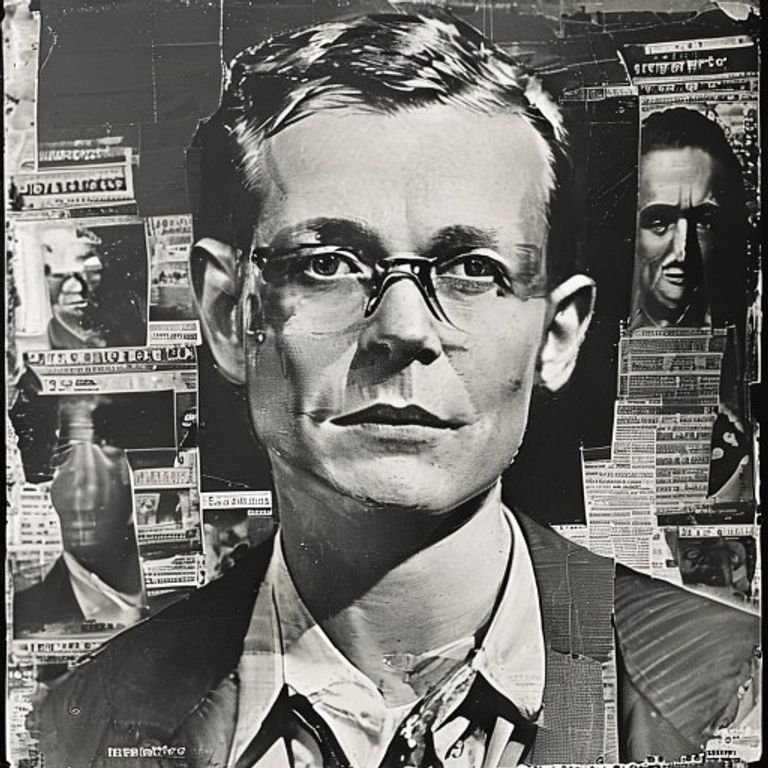
The prompt
Re-render this image as a John Heartfield photomontage in the Weimar anti-fascist visual register of 1924 to 1933. Hand-assembled photomontage from newspaper clippings, magazine photographs, printed text fragments, and hand-drawn elements, photographed and reproduced as a halftone print on newspaper stock or cheap glossy paper. Composition: the subject is embedded within or contrasted against a constructed surreal landscape built from incongruent photographic elements pasted together to create a visual argument. The image plays radical juxtaposition: scale reversals (tiny figure against massive object), embedded text fragments revealing hidden meanings, symbolic substitution (money where organs should be, machinery where flesh should be), photographic evidence rearranged to expose structural violence. Surface treatment: visible paste seams, slight registration misalignment between photograph and hand-drawn elements, newspaper halftone dot visible at magnification showing the cheap reproduction economy. Color treatment: black and white only, with occasional hand-applied red or black ink emphasizing key compositional points. Mood: surgical precision in the exposure of contradiction, the montage IS the argument, the form proves the thesis. No legible German text, no readable captions, no numbered sequences. Preserve the subject and compositional gesture of the source image exactly, change only the medium and rendering as a Heartfield-style photomontage construct.
What it is doing
Heartfield's genius was photomontage as surgical proof: the cut-and-paste technique allowed him to show contradictions the single photograph could never reveal. A banker's face grafted onto a machine revealed what the photographer could not. The regime banned him. The Cathedral later canonized him safe because his targets were dead fascists, not living capital. Applied to any present-day power structure, the register asserts: the montage's formal violence IS the argument, and the regime fears the montage more than the photograph because it cannot be framed as accidental.
Ways to change it
Pick any of these in the gallery and the choice is added to the prompt you copy.
- Central figure treatment: subject isolated and magnified against absurd surround vs subject miniaturized against dominant constructed landscape vs subject fragmented and reassembled
- Juxtaposition intensity: subtle scale reversals vs violent symbolic substitution vs grotesque hybrid anatomy
- Text integration: embedded fragments barely legible vs bold text overlays spelling out the argument vs hand-drawn arrows and annotations
- Photographic source style: newsprint photographs raw grain vs glossy magazine clippings vs scientific or industrial documentation
- Color accent: pure black and white vs hand-applied red emphasizing key points vs single-color tint overall
Style lineage
Learn the visual culture this draws from: TheArtStory.
Related prompts
See all 32 prompts in the Propaganda grammar