Propaganda / Style prompt
Polish Poster School (Cieslewicz / Tomaszewski / Lenica)
The 1950s-70s Polish Poster School developed a surreal painterly register precisely because direct political speech was unsafe. Allegory and visual metaphor became the format, which is exactly why the format still bypasses contemporary content-policing reflexes.
Customize this prompt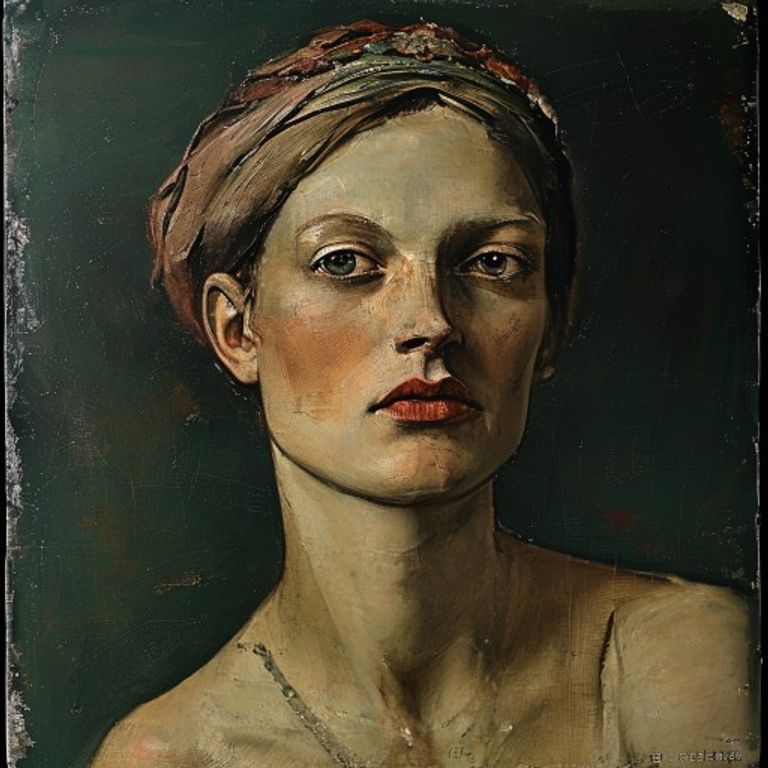
The prompt
Re-render this image in the visual register of the Polish Poster School circa 1955 to 1980, the lineage of Roman Cieslewicz, Henryk Tomaszewski, Jan Lenica, Waldemar Swierzy, and Franciszek Starowieyski. Composition built on a single arresting allegorical image painted with confident expressive brushwork on a flat or softly textured ground. The subject undergoes one visual metaphor: a body part becoming another object, a face composed of unexpected materials, a posture distorted into impossible elegance. Palette: muted earthy darks (deep umber, bottle green, ox-blood red, plum) punctuated by a single saturated accent color, all rendered with the painterly density of gouache or oil on heavy poster paper. Edges range from crisp graphic shape in some areas to soft painterly bleed in others, the contrast itself is part of the vocabulary. Background flat or softly atmospheric, never naturalistic. Surface treatment: matte poster paper texture, faint paint-handling brushstrokes visible at edge transitions, occasional dry-brush scumbling. Strictly no text, no Polish lettering, no Latin letters, no numerals, no script of any kind, only the painted image. Mood: surreal, melancholic, allegorical, witty in a quiet register, the visual language of intelligent indirection. No watermarks, no logos. Preserve the subject and pose of the source image as the anchor that the allegorical transformation builds from, change only the medium and rendering.
What it is doing
The Polish Poster School developed allegory and visual metaphor because the Polish state of the period punished direct political statement. The allegorical format does not state, it suggests. The viewer completes the meaning, which means the format bypasses any content-policing apparatus calibrated to direct claims. Applied to a 2026 subject, the surreal-painterly register grants the same cover: the image makes no prosecutable assertion, the viewer does the prosecuting.
Ways to change it
Pick any of these in the gallery and the choice is added to the prompt you copy.
- Master lineage: Cieslewicz photocollage-painterly vs Tomaszewski quiet-witty drawing vs Lenica geometric-surreal vs Starowieyski grotesque-baroque
- Allegorical move: material substitution vs body-part transformation vs scale distortion vs impossible juxtaposition
- Palette: umber and ox-blood dominant vs bottle green and plum vs near-monochrome with single accent
- Edge treatment: crisp graphic vs painterly bleed vs mixed contrast
- Brushwork density: dry-brush scumbled vs wet gouache flat vs oil-impasto built up
Style lineage
Learn the visual culture this draws from: International Vintage Poster Dealers Association.
Related prompts
See all 32 prompts in the Propaganda grammar