Propaganda / Style prompt
Indian Independence Swadeshi Textile (1920-1950)
The nationalist textile register. Subject woven into khadi, block-printed by hand on hand-spun cotton, the very production an act of economic resistance to British industrial domination.
Customize this prompt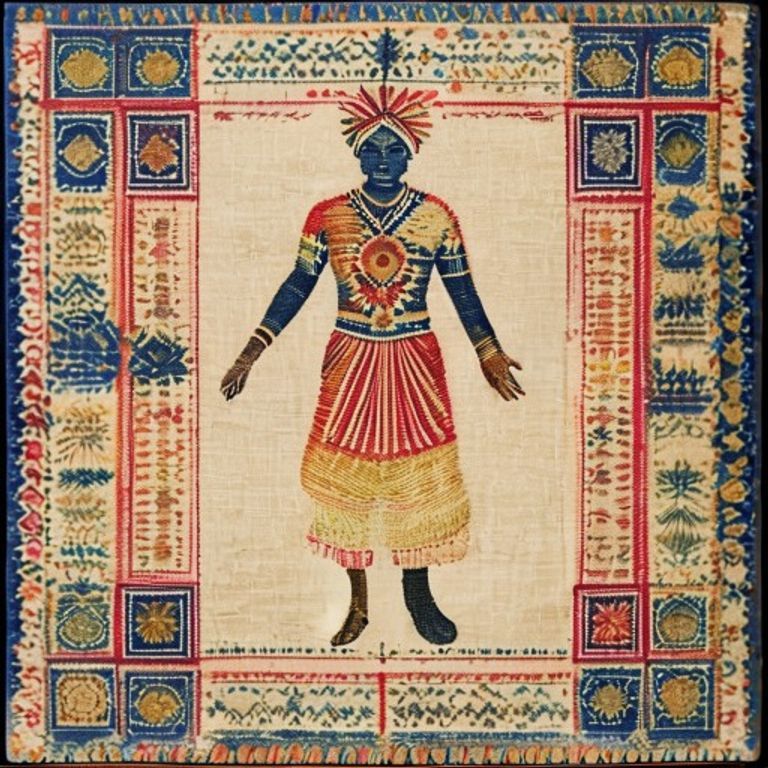
The prompt
Re-render this image as a Swadeshi nationalist textile pattern in the visual register of the Indian independence movement, 1920 to 1950. Hand-spun khadi cotton weave visible at 200% magnification, irregular nub and slub texture, natural undyed cream or pale ecru base with vegetable-dye colors applied by wooden block-printing. Palette: indigo blue, madder red, turmeric yellow, cochineal pink, mineral green, printed in layered registration showing hand-pressure variation and natural dye unevenness. Pattern: central figural subject rendered as a block-printed silhouette surrounded by repeating geometric borders inspired by traditional Indian textile motifs, concentric squares, meander lines, circular medallions, radiating sunbursts. The figure is rendered with decorative line detail and interior patterning consistent with hand-printing limitations. Border: repeat register marks visible where the block was pressed, slight ink bleed and color overlap showing the speed of hand-production. Surface: natural cotton irregularity, visible fiber structure, faint crease marks from folding and transport, aged patina suggesting decades of wear and display. Mood: nationalist pride through self-sufficient production, the textile IS the political statement, the medium carries the message of resistance. No legible text, no script, no English or Hindi lettering, no numbered sequence. Preserve the subject, pose, and composition of the source image exactly, change only the medium and rendering.
What it is doing
Gandhi's Swadeshi movement asserted that spinning khadi and wearing hand-woven cloth was a political act. The textile itself became the propaganda. Every thread rejected British industrial production. The Cathedral celebrates Swadeshi textiles in museum collections at prices that would buy a year of actual spinning wheels. Applied to any present-day production ethics question, the register asserts: the medium of production IS the message, industrial scale is the enemy, hand-labor has a politics that factory-scale cannot erase.
Ways to change it
Pick any of these in the gallery and the choice is added to the prompt you copy.
- Dye authenticity: vegetable dyes with natural fading vs bright synthetic period-early colors vs single-indigo-overprint austere
- Block-printing precision: relatively registered repeats vs heavy hand-pressure variation vs double-strike overlaps for depth
- Central subject detail: simple silhouette block only vs interior detail with secondary block-applied decoration vs portrait-scale figural complexity
- Border complexity: tight geometric repeat vs asymmetric sectional frames vs radiating medallion surround
- Base fabric visibility: smooth cotton with light texture vs heavy nub and slub completely visible vs linen-weave coarser feel
Style lineage
Learn the visual culture this draws from: Britannica.
Related prompts
See all 32 prompts in the Propaganda grammar