Propaganda / Style prompt
Iranian Revolutionary Mural (Tehran Wall, Martyrdom Aesthetic)
Renders the subject in the visual register of the post-1979 Tehran wall-mural tradition. The martyrdom aesthetic converts depicted suffering into mandate, a Bernays-grade transmutation of grief into political authority.
Customize this prompt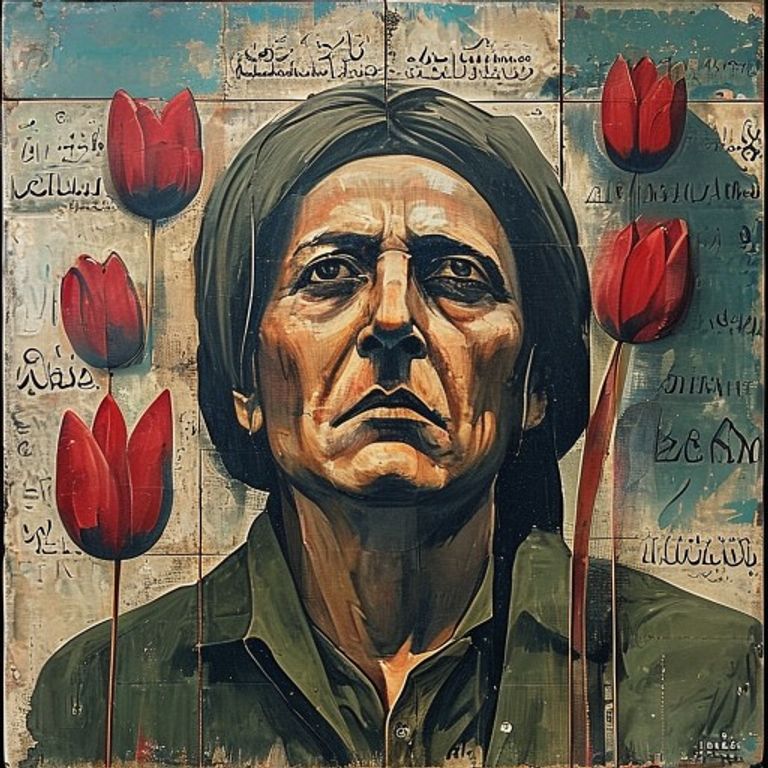
The prompt
Re-render this image in the visual register of post-1979 Iranian revolutionary wall murals, the Tehran building-side tradition produced by artists working for the Owj cultural organization and predecessor groups. Composition built around a central monumental figure rendered in painted realism on a flat plaster wall, scaled as if the canvas is a multi-story building facade viewed from below. Palette dominated by deep blood-red, charcoal black, dusty cream, occasional accents of olive green and gold. Figure rendered with serious mournful gravitas, gaze upward or middle-distance, posture of restrained dignity. Surround treated symbolically: stylized tulip silhouettes in dark red (the tulip is the standard martyrdom symbol in this register, render as abstracted floral form, not as cliched cartoon), abstract calligraphic ribbons that suggest Persian script without actually forming any readable letters or characters, decorative bands of geometric pattern at top and bottom of the wall. Surface treatment: matte exterior-wall paint with visible plaster texture, faint streaks of weathering from rain runoff, slight sun-fading, evidence of being seen from the sidewalk below. Mood: solemn, reverent, mournful-monumental, the visual register of state-sponsored grief converted into civic mandate. Strictly no readable text, no Persian script, no Arabic script, no Latin letters, no numerals, no calligraphy that forms actual words in any language, only abstract calligraphic gesture. No watermarks, no logos. Preserve the subject and pose of the source image translated into this monumental wall-mural register, change only the medium and rendering.
What it is doing
The Iranian revolutionary mural tradition converts personal death into political mandate through scale, palette, and iconographic surround. Applied to a 2026 subject, the format performs the same transmutation: it elevates suffering into authority without making any claim the viewer can falsify, the wall itself does the persuasion through its monumental presence and martyrdom-coded visual vocabulary.
Ways to change it
Pick any of these in the gallery and the choice is added to the prompt you copy.
- Wall scale: two-story facade view vs four-story full building vs intimate sidewalk-level panel
- Tulip density: single tulip motif vs scattered tulip field vs dense tulip border
- Palette warmth: blood-red dominant vs olive-green added (later-period) vs monochrome charcoal-and-cream
- Weathering: freshly painted vs several years sun-faded vs heavily weathered decade-old
- Calligraphic gesture: prominent ribbons vs minimal accent vs absent (pure figural)
Style lineage
Learn the visual culture this draws from: PBS/Tehran Bureau.
Related prompts
See all 32 prompts in the Propaganda grammar