Op-Art / Style prompt
Soto Kinetic Penetrable Vibration (Style-Only, Image-Conditioned)
Style register: Jesus Rafael Soto 1960s to 1980s kinetic-vibration grammar, fields of thin parallel vertical rods or lines suspended over a striped backdrop, the moire interaction producing apparent shimmer and dissolution of solid form.
Customize this prompt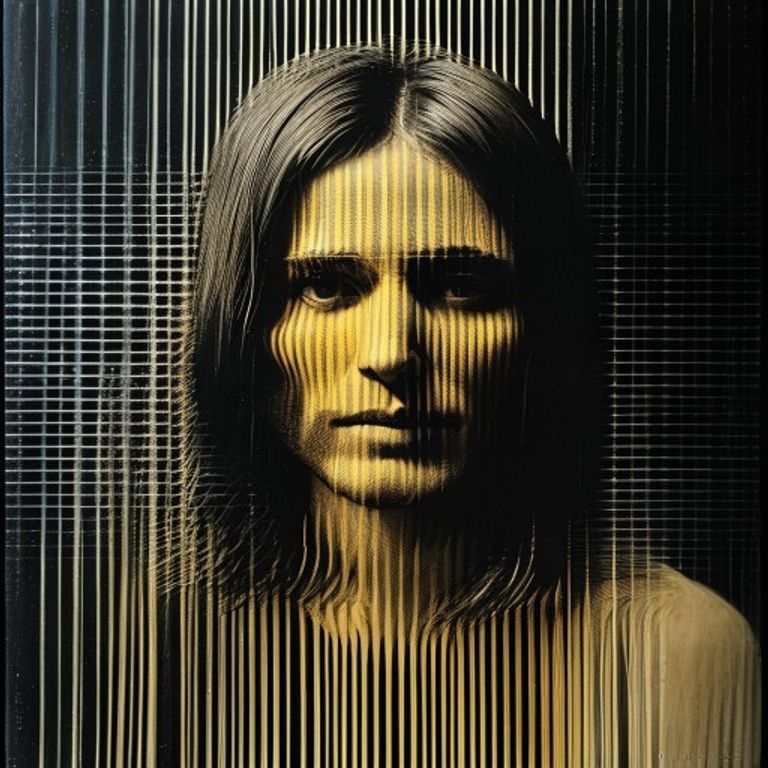
The prompt
Re-render this image in the visual register of a Jesus Rafael Soto kinetic-vibration work from the Venezuelan kinetic modernism of the 1960s to 1980s. Treat the picture surface as a layered field: a regular striped backdrop (thin alternating black and white vertical bands, very narrow, perhaps 4mm pitch) overlaid by a second field of thin parallel vertical rods or lines floating slightly in front of the backdrop, the rods rendered in a single accent color (cadmium yellow, vermilion, or pure black) and casting faint shadows on the striped backdrop. The underlying subject reads as a denser concentration of rods or as a region where the backdrop and rod fields fall into phase, the silhouette appearing to dissolve and vibrate against the striped ground. Slight implied depth between the rod plane and the backdrop plane, suggested by faint cast shadow. Edges are razor-precise, no anti-aliasing, no painterly softness. Mood: kinetic, dissolving, the picture suggesting it would shimmer further if the viewer walked sideways past it. Strictly no on-canvas text, no legible lettering, no signature, no watermark, no logos. Preserve the subject, pose, and composition of the source image exactly, change only the medium and rendering. Aspect ratio matches source.
What it is doing
Soto's kinetic work was never just about the optical pattern on the picture plane. It was about the moving viewer. A Soto only fully works when you walk past it, the moire shifts with your position, the rods seem to swim through the backdrop. The buried claim is that art is incomplete without the viewer's body in motion, that the still image and the seated observer are nineteenth-century conventions that twentieth-century painting could leave behind. The flattened still-image version is necessarily a partial document. Anything claiming to be a Soto in a single frame is an admission that the original was a piece of theater that did not survive the photograph.
Ways to change it
Pick any of these in the gallery and the choice is added to the prompt you copy.
- Backdrop stripe pitch: narrow 4mm (signature) vs medium 8mm vs wide 12mm
- Rod color: cadmium yellow vs vermilion vs pure black vs white on dark backdrop
- Rod density: dense overlay obscuring backdrop (signature) vs sparse rod field with backdrop dominant vs medium balanced
- Shadow depth: faint cast shadow under rods (signature) vs no shadow flat collage vs dramatic shadow heavy depth
- Vibration zone: subject dissolves where rods and stripes align, shimmering silhouette (signature) vs subject solid and crisp against a shimmering striped ground vs shimmer sweeps across canvas, subject sharp on left, dissolving on right
Style lineage
Learn the visual culture this draws from: WikiArt.
Related prompts
See all 6 prompts in the Op-Art grammar