Rolling Stone Music Icon (Leibovitz Era)
The musician rendered as immortal through light. Rock and roll preserved forever in the perfect frame.
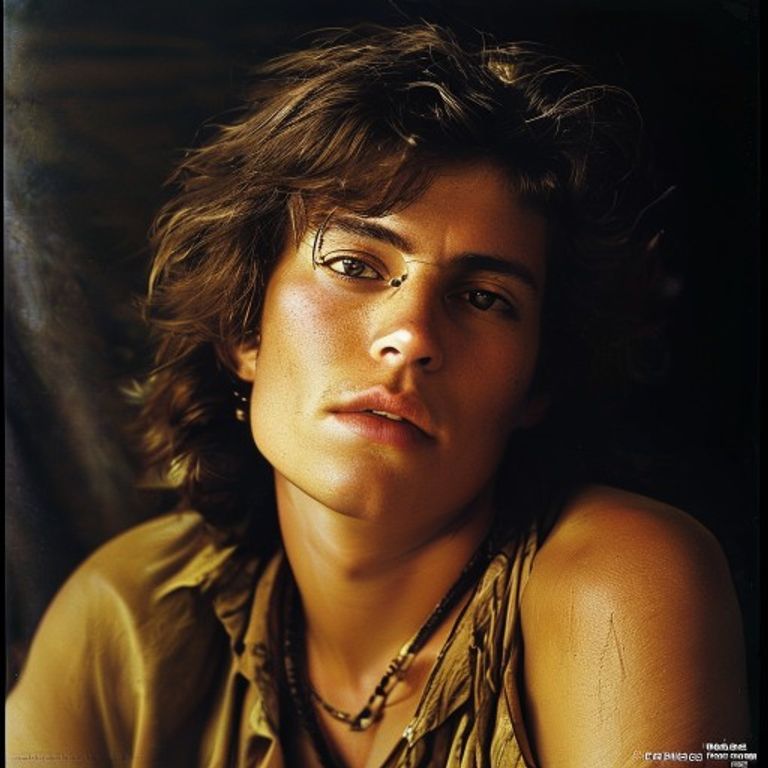
The prompt
Re-render this image as a Rolling Stone magazine cover in the Leibovitz tradition, circa 1980s to 1990s music portraiture. The subject is a musician or performer, rendered with the hallmarks of Leibovitz's style: intimate scale, soft natural or tungsten light, the subject often positioned in repose or an unguarded moment that paradoxically feels composed. Lighting: usually sidelit or top-lit, creating subtle modeling and dimension, the light suggesting emotion rather than describing form. Background: often simple, sometimes textured or draped, but never cluttered, focusing attention entirely on the subject's presence. Color palette: warm, often biased toward sepia or amber tones if color, or luminous black and white with rich blacks and detailed highlights. The subject may be partially clothed or in iconic style dress, posed with the kind of intimacy that suggests off-camera rapport, yet the composition is formally arranged. Hair and face are rendered with meticulous detail, every texture visible, eyes often with catch-lights suggesting the photographer is in the room, looking back. The masthead area is rendered as a subtle color or tone shift, no legible lettering. Cover text areas are rendered as thin bands or blocks, no readable words. The overall feeling is reverence and presence, as if this is the musician preserved in amber, the moment in which they were most themselves. Surface: matte or pearl finish, the photograph is sharp and richly printed. Aspect ratio 8.5:11 portrait. Preserve the subject, pose, and composition of the source image exactly, change only the medium and rendering.
What it is doing
Leibovitz made musicians into ancestors. Her photographs were not documents, they were monuments. The light she used was not the light of the moment, it was the light of eternity. Every image she made became the definitive image of that person in that era, the one that would be published after their death, the one that would stand in history. Rolling Stone understood this. When you were photographed by Leibovitz for the cover, you were being canonized. The magazine was declaring that you would outlive your own time, that your image would be the standard by which future generations understood who you were. The soft light, the composed unguardedness, the meticulous rendering, all conspired to make you look like you were the best version of yourself and also the most fragile. Immortality is always fragile.
Tuning knobs
- Lighting-temperature dial: `cool tungsten museum-quality` vs `warm amber golden-hour` vs `soft diffuse north-light studio`
- Background-treatment dial: `simple draped cloth` vs `natural environmental suggestion` vs `pure dark or light field`
- Pose-register dial: `intimate unguarded moment` vs `formally composed arrangement` vs `caught mid-movement-frozen`
- Color-palette dial: `rich sepia tones` vs `luminous black-and-white` vs `saturated color matte`
- Detail-specificity dial: `every texture and catch-light sharp` vs `selective focus on eyes only` vs `soft-focus dreamy`
- Fashion-emphasis dial: `iconic style clothing dominant` vs `minimal or partial dress` vs `natural undressed state`
Style lineage
Learn the visual culture this draws from: Annie Leibovitz (Rolling Stone chief photographer 1973-1983).
Related prompts
See all 7 prompts in the Magazine-Cover grammar · Open in the gallery