Graffiti-Mural / Style prompt
Freight-Train Hobo Monicker Chalk and Oil-Stick
The freight-train boxcar monicker register, hobo chalk and oil-stick signatures that crossed the continent on rolling stock, the original distributed network.
Customize this prompt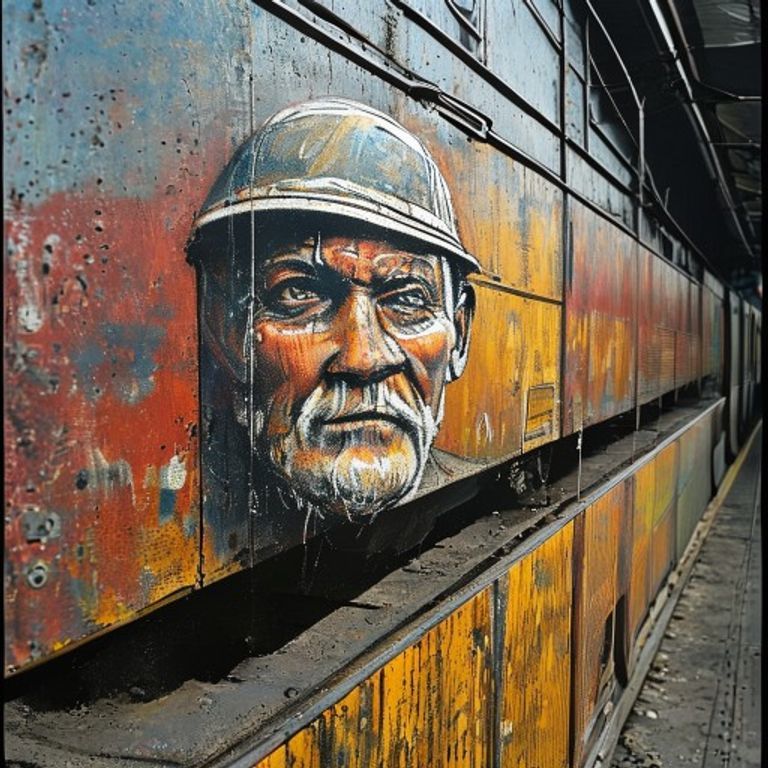
The prompt
Render in the visual register of a freight-train boxcar monicker, the small chalk or oil-stick signature mark that hobo and freight-hopping writers have applied to American railcars from the 1910s through the present (the lineage of freight-train graffiti monikers of uncertain identity and the contemporary moniker scene). Medium: oil-bar paint stick or sidewalk chalk applied directly to the weathered painted-steel side of a freight boxcar, the line work loose and gestural in the way only a writer working at speed in a railyard can produce, scaled small (subject area approximately the size of a person's torso on a wall the size of a building). Palette: weathered boxcar palette as background (rust-red of Conrail, faded boxcar-brown, oxide-green of Penn Central, the soft dust-gray of long-haul weathering with the original color half-bleached), white or yellow or black oil-stick for the mark, the warm earth-tone of accumulated rail-dust everywhere. Texture: visible rust pitting, multiple layers of old paint showing through where weathering has stripped surface, the slight relief of riveted seams, dust streaks running vertical from the roofline, the soft surface of oil-stick over rough painted steel. Lighting: harsh railyard daylight, raking from any angle, the high contrast of midday or the warm low-angle of golden-hour. Mood: the dignity of the smallest possible distributed publication, the mark that crosses three thousand miles by riding the substrate that is supposed to carry only freight, the original network where a writer in El Paso could be read by a writer in Chicago by next Tuesday. Do not render any legible text, names, dates, monicker signatures, logos, watermarks, named hate symbols, or defamatory likeness of real persons; the chalk or oil-stick mark must be an abstract gestural figure-form only without spelling any recognizable name or word. Preserve the subject, pose, and composition of the source image exactly, change only the medium and rendering.
What it is doing
The freight-train monicker is the original distributed publication network in North America. A writer in El Paso applied a mark, the railcar moved through twenty yards over six months, and writers and trainspotters across the continent saw and acknowledged it. This is a working pre-internet network with a documented latency, a documented spread function, and a documented community of readers who tracked each other's marks for forty years. The lesson is that distributed publication does not require Silicon Valley; it requires only the willingness to use someone else's logistics network as the substrate of your speech. Every modern complaint about platform centralization is one ride in a boxcar away from a working alternative.
Ways to change it
Pick any of these in the gallery and the choice is added to the prompt you copy.
- Boxcar color: rust-red Conrail vs oxide-green Penn vs faded brown
- Mark medium: white sidewalk-chalk vs yellow oil-stick vs black grease
- Mark age: fresh-yard-day vs weathered-six-months vs ghost-trace
- Weathering layer: light surface-dust vs heavy rust-pit vs paint-stripped
- Light hour: harsh-midday vs golden-hour vs blue-evening
- Era: 1940s classic chalk moniker vs 1990s oil-stick revival vs contemporary
Related prompts
See all 15 prompts in the Graffiti-Mural grammar