Ghibli-Meme / Style prompt
Princess Kaguya Ink-Wash Flight (Takahata, 2013)
Kaguya in mid-flight rendered as charcoal-and-ink-wash: line abandoning the cel, the body becoming a streak of motion. Takahata's formally most radical Ghibli image.
Customize this prompt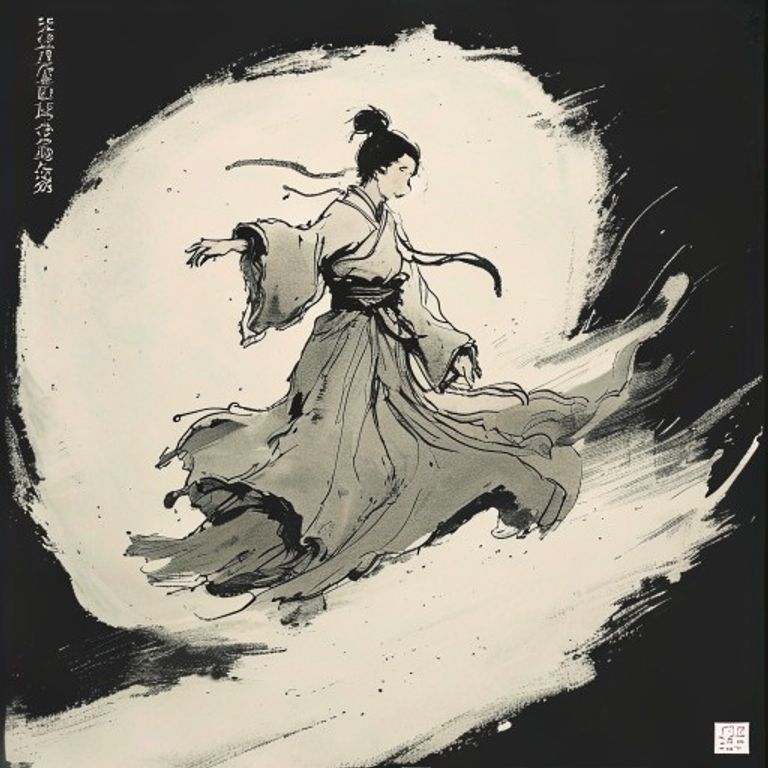
The prompt
Re-render this image as a key frame from Studio Ghibli's The Tale of the Princess Kaguya (2013), Isao Takahata direction, executed in the film's distinctive sumi-e-influenced sketch-and-wash animation style (not the conventional cel-paint fantasy register). Subject framed in wide horizontal or tall vertical orientation, the central figure rendered as a fleeing or flying body captured mid-motion, the body and trailing kimono described with loose confident charcoal-and-brush lines that vary dramatically in weight (thick at moments of impact or anchor, thinning to vanishing wisps at the trailing edges of fabric and hair). The figure rendered with deliberate incompleteness: some areas of the body left as bare paper with only contour suggestion, others built up with darker ink-wash for shadow and form, no flat color fill anywhere in the figure, the cel-paint discipline abandoned in favor of paper-and-brush directness. Background: spare painted environment (a single brushstroke suggesting a mountain ridge, a wash of color for sky, a loose indication of cherry-blossom petals or wind-streaks, or the figure flying through nearly-empty cream-paper space with only the barest hint of moon or cloud), the entire painted environment dominated by negative space and one or two confident wash-marks. Lighting: implied through value rather than rendered, the darker side of the figure carrying weight, no explicit highlight or shadow modeling. Cel-linework: not cel-linework in the conventional sense; replaced by visible brush-and-ink strokes with the painter's hand evident in every mark, line weight varying organically with brush pressure, occasional ink-splash or wash-pool acceptable as part of the medium. Color palette: predominantly cream-paper-white with charcoal and ink-black, with at most one or two soft watercolor wash accents (a pale-pink for cherry blossom, a soft-blue for sky, a faded-red for kimono lining), the entire frame trending toward sumi-e tonal restraint. Mood: vitalist motion, the figure escaping or arriving or simply being-in-motion, the formal abandonment of cel-paint convention being itself the emotional register. Composition leaves generous negative space (the empty paper around the figure) suitable for caption insertion almost anywhere without obscuring the central form. No legible text in image, no studio watermark, no fan-art signature, no hallucinated Japanese characters. Aspect ratio 16:9 or 2:3 vertical matching source. Preserve the subject and composition of the source image exactly, change only the medium and rendering.
What it is doing
The Tale of the Princess Kaguya is Takahata's formally most radical Ghibli image: an entire feature animated in loose sumi-e-influenced sketch-and-wash, abandoning the cel-paint convention that defined Ghibli for forty years. The flight sequence is the formal peak of that abandonment, line dissolving into motion. Re-rendering in this register imports Takahata's late-career formal courage and refuses the "all Ghibli is cel-paint kawaii" reduction.
Ways to change it
Pick any of these in the gallery and the choice is added to the prompt you copy.
- Density dial: extremely sparse, almost empty paper vs medium with one wash background vs denser with multiple environmental marks
- Motion dial: body trailing wisps mid-flight (signature) vs figure arrested at peak of leap vs figure landing with weight returning
- Color dial: pure charcoal-and-ink monochrome vs single pale-pink cherry-blossom accent vs pale-blue sky-wash accent vs faded-red kimono-lining accent
- Background dial: nearly empty cream paper vs single brushstroke mountain ridge vs wash for sky with cloud-suggestion vs loose petals or wind-streaks scattered
Style lineage
Learn the visual culture this draws from: Studio Ghibli / The Tale of the Princess Kaguya (2013) directed by Isao Takahata.
Related prompts
See all 15 prompts in the Ghibli-Meme grammar