Fashion-Editorial / Style prompt
Vivienne Westwood Punk Tartan-Chaos
Re-render as a Westwood Kings-Road 1976 punk editorial: ripped tartan, safety pin, bondage trouser, the seam as protest.
Customize this prompt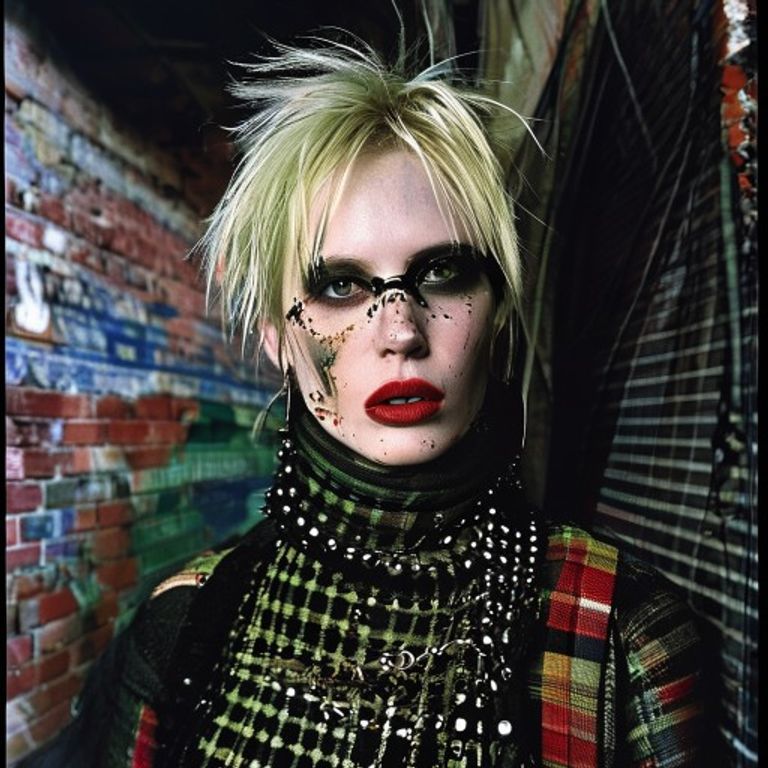
The prompt
Re-render this image as a fashion editorial or campaign photograph in the manner of Vivienne Westwood's punk-era output (1971 SEX boutique, 1976 Seditionaries era, 1981 Pirate collection), styled and shot in the visual register of gritty, candid British punk photography with raw contrast (late-1970s NME and i-D magazine documentation), with the model occupying a Kings Road or Camden-back-alley space rather than a clean studio. Wardrobe styling cue: ripped tartan (Royal Stewart, Black Watch, punk-era mismatched plaid), safety-pin closures, bondage straps and zippers, mohair sweater with deliberate holes, bumflap and parachute trouser, fishnet, Doc Martens or stiletto, deconstructed Edwardian tailoring crossed with bondage hardware. Hair and makeup styling cue: bleached or dyed unnatural color (acid green, peroxide white, magenta), spiked or razor-cropped, black eye makeup smudged not perfect, lipstick smeared or chalk-white, the deliberate refusal of conventional beauty. Setting: graffiti-tagged brick wall, council estate stairwell, pub backroom with stained carpet, Kings Road sidewalk with chip-shop window, basement squat with peeling wallpaper, anywhere the social fabric is visibly torn. Lighting: harsh flash directly from camera producing flat front illumination and sharp shadow on wall behind, or available-only window light with no fill, or fluorescent overhead with green cast, no glossy beauty lighting. Color: muted gritty tones with single-saturated accent (the bright tartan red, the bleached hair, the lipstick), background dirtied and desaturated, slight cyan or green color cast. Subject: posture confrontational, defiant, scowling or smirking, not posing-for-camera in fashion-model way, the body language of refusal. Composition: close cropped, hand-held casual angle, sometimes deliberately badly composed (punk-era publications often used misframed or off-balance shots as part of the aesthetic). Mood: angry, contemptuous, generative, the no-future thesis as creative engine. Forbid: any clean fashion-glamour lighting, any retouched skin, any glossy product-shot feel, any visible legible text (slogans on clothing should be unreadable or partial), any watermark or signature. Preserve the subject, pose, and composition of the source image exactly, change only the medium and rendering.
What it is doing
Westwood's safety pin was a political position about the seam: that visible repair, broken construction, and contempt for the finished surface were arguments against the late-capitalist polished product. The punk aesthetic was a fashion thesis that fashion itself was a fraud worth dismantling. Re-rendering in this register restores the conflict to a category that has been thoroughly commodified since.
Ways to change it
Pick any of these in the gallery and the choice is added to the prompt you copy.
- Era dial: 1971 SEX boutique early vs 1976 Seditionaries peak vs 1981 Pirate collection romantic-punk vs late-1980s mini-crini
- Setting dial: graffiti brick wall vs council stairwell vs pub backroom stained carpet vs Kings Road sidewalk chip-shop
- Hair color dial: bleached peroxide white vs acid green spike vs magenta razor-crop vs black tangled
- Light dial: harsh direct flash vs available window only vs fluorescent green-cast overhead
Style lineage
Learn the visual culture this draws from: British fashion designer and punk pioneer.
Related prompts
See all 7 prompts in the Fashion-Editorial grammar