Vogue Italia Steven Meisel Conceptual
Re-render as a Steven Meisel Vogue Italia spread: high-production conceptual editorial, narrative implied, the fashion as costume in a film-still that does not exist.
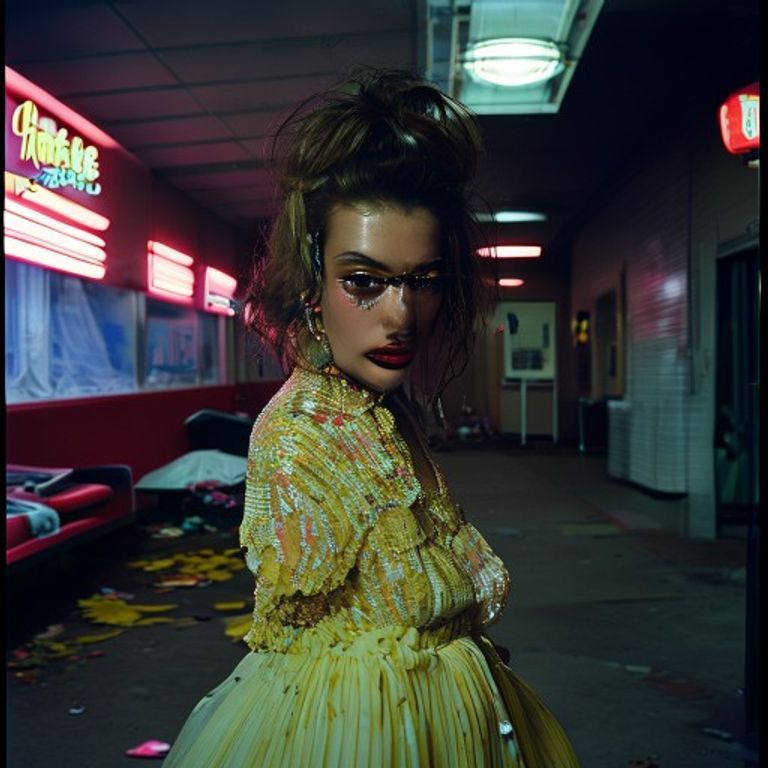
The prompt
Re-render this image as a fashion editorial photograph in the manner of Steven Meisel's Vogue Italia work in the franca-Sozzani era (1990s through 2010s peak: "Makeover Madness," "State of Emergency," "Water and Oil," "Haute Mess"), exposed on medium-format color negative through a Pentax 67 or Mamiya RZ67, lit with a full editorial-fashion crew load-in (multiple HMI heads with grids and flags, smoke machine where appropriate, practical environment lights integrated). Production design: elaborate constructed environment that carries the narrative load (1950s motel parking lot at night with neon-vacancy sign, hospital corridor with spilled medical waste, suburban kitchen with food-fight in progress, post-disaster cityscape with debris, surveillance-state interrogation room), every prop and surface chosen and styled, no accidental object in frame. Color: rich saturated print-film color, deep blacks, controlled highlights, slight magenta or cyan bias depending on the narrative mood, never the candy-saturation digital look. Wardrobe styling cue: high-fashion designer pieces (couture or runway-ready) styled in dialogue with the narrative environment, often the contrast between high-end clothing and gritty/uncomfortable setting being the central editorial argument. Subject: caught mid-action or mid-trance, posture composed but not posed-static, expression complicated (suspicion, exhaustion, suppressed laughter, ennui), the model treated as actress in a film-still rather than as mannequin. Composition: cinematic 16:9 spread layout or vertical single-page, depth-staged with foreground/midground/background plotted, key light dramatic from one side, generous environment shown so the story-setting reads. Mood: politically loaded, satirical, occasionally horrifying, the editorial as cultural commentary not as product promotion. Forbid: any speech bubble or caption text on canvas, any visible designer-logo text (no hallucinated brand name letters), any watermark, any flat product-photography lighting. Preserve the subject, pose, and composition of the source image exactly, change only the medium and rendering.
What it is doing
Meisel's Vogue Italia spreads under Franca Sozzani were among the only places in late-twentieth-century mass media where fashion was unapologetically political art. "State of Emergency" (2006) depicted models being detained and beaten by riot police; "Water and Oil" (2010) put models in oil-slicked Gulf coastline. The argument: editorial fashion can be cultural criticism if anyone is brave enough. Re-rendering in this register asserts the political dimension that the post-Sozzani fashion press has largely abandoned.
Tuning knobs
- Narrative dial: `surveillance-state interrogation` vs `1950s motel noir` vs `post-disaster cityscape` vs `suburban suppressed-domestic-rage`
- Wardrobe dial: `high couture in gritty setting` vs `streetwear in luxury setting` vs `1950s tailoring period-correct` vs `near-nude with single statement piece`
- Light dial: `dramatic HMI side-key with shadow` vs `practical-only available-light` vs `harsh fluorescent green-cast institutional`
- Mood dial: `satirical sharp` vs `melancholy heavy` vs `horror-adjacent unsettling` vs `composed defiant`
Style lineage
Learn the visual culture this draws from: Fashion photographer and Vogue Italia collaborator.
Related prompts
See all 7 prompts in the Fashion-Editorial grammar · Open in the gallery