Ex-Voto-Retablo-Devotional / Style prompt
Folk Reliquary Gilt Assemblage Nicho
The home shrine in a box: a nicho, a reliquary, a three-dimensional sacred space rendered in wood, gilt, cloth, and gathered objects. The devotion made spatial, made visible, made precious through accumulation.
Customize this prompt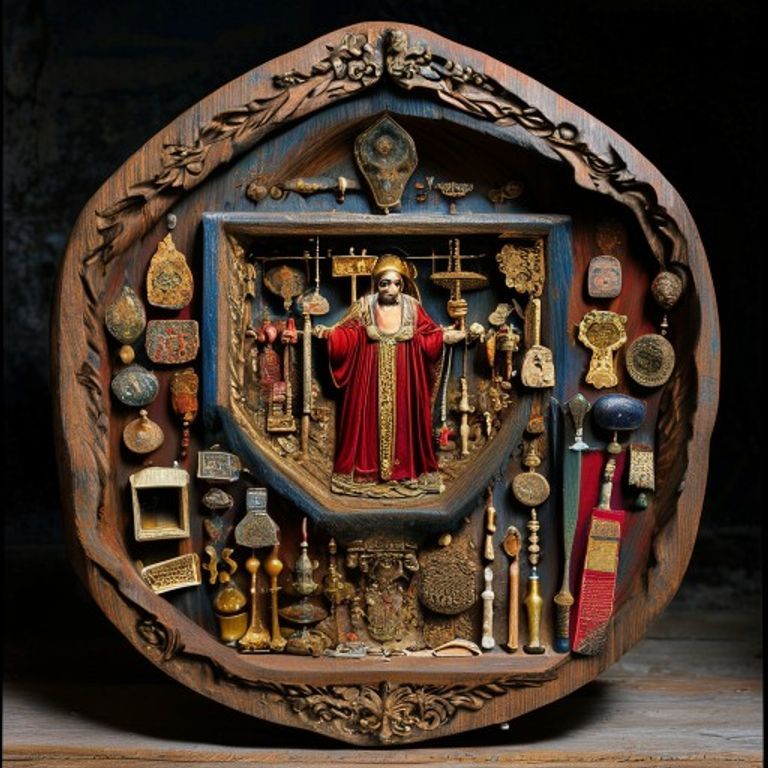
The prompt
Re-render this image as a folk reliquary nicho shrine, a three-dimensional devotional assemblage constructed from a recessed wooden box, wall niche, or carved frame (approximately 8 to 24 inches tall, portrait orientation, carved wood or formed from salvaged materials). The interior space is lined with a backing of faded fabric (velvet, damask, a prayer-worn cloth) or painted wood, rendered in deep colors: deep blue, dark red, forest green, or aged gold. The composition shows a central focal point (a carved wooden saint figure, a painted icon, a lithographic holy image pinned at the back) around which smaller objects are arranged with devotional precision: small milagro metal charms, dried flowers, candle stubs, beads, coins, pieces of coral or shell, small carved wooden figures, a tiny reliquary containing cloth or bone (suggested by a glass window or hint of interior), lengths of ribbon or cloth strip, a small bell or metal ornament. The frame or niche is gilded or decorated with thin gold leaf, carved wooden scrollwork, or applied metal ornament (tin or lead cast shapes). Candle-soot marks visible around the interior space, indicating centuries of votive candles burned in front of the shrine. The arrangement is not symmetrical; it is the product of decades of accumulated offerings, each object placed with devotion as it arrived. The lighting is dim and side-lit, as if from a chapel oil lamp or votive candle, creating shadows that emphasize the three-dimensionality and depth of the assembled objects. The wood frame is weathered, the gilt is tarnished and worn at the high points, the cloth is faded, the objects are small and worn from handling. The overall impression is of a sacred space that has been tended for generations, each layer of offering adding to the density and power of the shrine. Preserve the subject, pose, and composition of the source image exactly, change only the medium and rendering.
What it is doing
The nicho is the home shrine, the three-dimensional answer to the flat retablo. It is a box within which the sacred has been concentrated through accumulation. Every object inside was placed there by someone who meant it. The milagros were pinned in gratitude. The candle stubs are evidence of nights when someone stood in front of the shrine and asked for help. The flowers were fresh once. The cloth has absorbed fifty years of incense and candle smoke. The reliquary contains something that was believed to carry power: a saint's bone, a thread from a miraculous garment, a photograph of someone who did not survive. The gold leaf is tarnished now, but that is not decay, that is patina. That is time. That is how many people have stood in front of this shrine and prayed. The nicho is not portable like the holy card, not temporary like the retablo, not institutional like the Byzantine icon. The nicho is permanent. It is rooted. It is the sacred made spatial, the prayer made into a room within a room.
Ways to change it
Pick any of these in the gallery and the choice is added to the prompt you copy.
- Niche-depth dial: shallow recessed frame, objects flush to the surface vs moderate depth allowing layering of objects vs deep three-dimensional space with distinct foreground and background
- Backing-treatment dial: aged painted wood, simple color vs faded velvet or damask fabric vs elaborate textile with pattern and gilt detail
- Gilding-level dial: minimal gilt at edges or corners vs moderate gilt frame with scroll work vs elaborate gilded carving throughout
- Central-image dial: single carved wooden saint figure vs painted icon or lithographic holy image vs small reliquary with glass window
- Accumulated-objects dial: sparse, a few carefully placed offerings vs moderate accumulation, objects at multiple depths vs dense assemblage, every surface filled with offerings
- Candle-soot dial: minimal patina, relatively clean interior vs moderate soot marks indicating regular use vs heavy soot and aging, evidence of centuries of votive candles
Related prompts
See all 7 prompts in the Ex-Voto-Retablo-Devotional grammar