Ex-Voto-Retablo-Devotional / Style prompt
Mexican Tin Retablo Votive
The ex-voto retablo of rural Mexico, painted on hammered tin panel. A bargain struck with the saint: I survived. I was healed. I am grateful. Naive perspective, flat planes, pure color laid raw.
Customize this prompt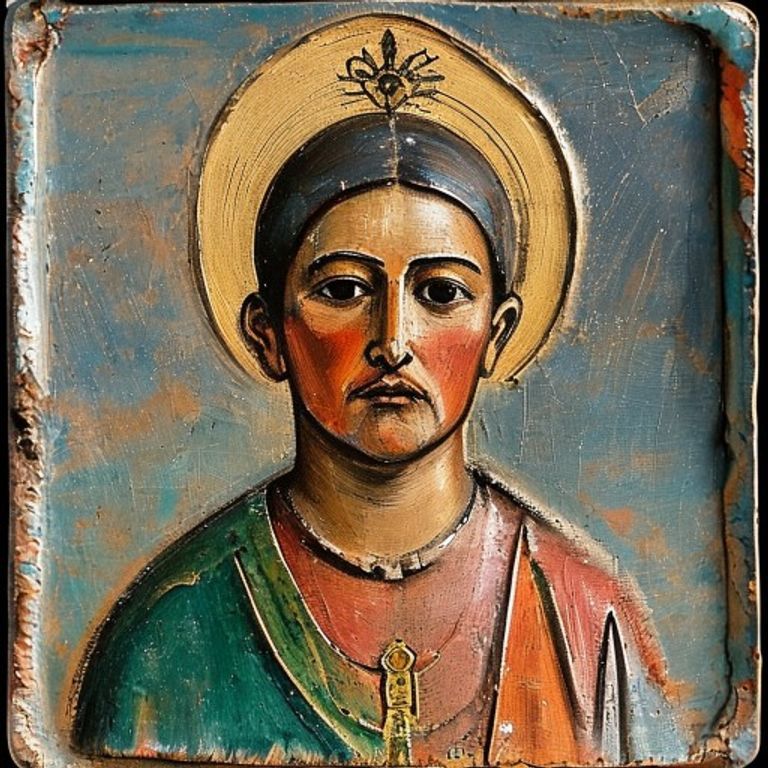
The prompt
Re-render this image as a Mexican ex-voto retablo: a small votive painting on tin panel (approximately 4 by 6 inches or 5 by 7 inches, portrait orientation), the style of rural Oaxaca or Guanajuato, 19th to early 20th century folk tradition. The subject rendered in flat naive perspective, proportions unidealized, the anatomy deliberately simplified so it reads as sacred rather than anatomical. Palette: saturated primary colors, hand-applied poster paint, no photorealism, the pigment laid flat against the tin with visible brushstrokes and paint irregularity. The figure or scene occupies the full composition with minimal background, the ground plane indicated by a simple colored stripe or geometric shape. If a narrative scene (healing, rescue, answered prayer), the saint or sacred figure rendered as a golden standing figure with a flat halo indicated by a thin gold-leaf outline or a pale gold circle. The tin surface itself visible at the edges, hammered and oxidized, the frame border a simple wood or carved tin edge. No legible text (if there is a dedicatory banner or scroll, leave it text-free, unfilled, or rendered as a color block). Surface finish: the warm, slightly irregular sheen of hand-applied tin and ancient paint, showing age-patina and minor wear as if the retablo has hung in a chapel for decades. Aspect ratio approximately 4:6 or 5:7 (portrait). Preserve the subject, pose, and composition of the source image exactly, change only the medium and rendering.
What it is doing
The Mexican retablo is the most radical form in sacred art because it makes no claim to beauty. A bargain is a bargain. The person who painted it was not a trained artist, the subject is ungainly, the perspective is wrong, and the color is cheap poster paint on a hammered tin plate. But this is why it works. The retablo does not ask for your appreciation. It asks for your recognition. Someone survived. Someone prayed. Someone kept their promise to the saint. The formal icon demands awe; the retablo demands solidarity. It lives in the village chapel, not the museum, and it is worth more to the person who painted it than any Raphael is worth to the collector who owns it. This is sacred art that has not yet learned to apologize for its own existence.
Ways to change it
Pick any of these in the gallery and the choice is added to the prompt you copy.
- Palette-intensity dial: vibrant primary flat color vs muted earth-tone palette vs gold-heavy with strong reds
- Perspective-dial: pure flat naive with no spatial recession vs slight landscape recession implied vs tilted-plane composition
- Figure-count dial: single figure dominating composition vs small figure with large saint figure vs narrative scene with 3-4 players
- Border-frame dial: simple wood frame, unadorned vs carved wood with minimal decoration vs tin frame edge with oxidized patina
- Age-patina dial: relatively fresh, paint bright vs moderate age-wear, color slightly faded vs heavy age-patina, paint yellowed and abraded
- Halo-treatment dial: thin gold-leaf circle, flat vs pale gold painted circle with no depth vs textured halo with engraved pattern
Style lineage
Learn the visual culture this draws from: Michener Art Museum.
Related prompts
See all 7 prompts in the Ex-Voto-Retablo-Devotional grammar