Ex-Voto-Retablo-Devotional / Style prompt
Catholic Holy Card Chromolithograph
The nineteenth-century devotional holy card: a saint rendered in soft chromolithography, sentimental and sweetly lit, mass-produced by the millions, carried in pockets, slipped into prayer books. Democratized sanctity.
Customize this prompt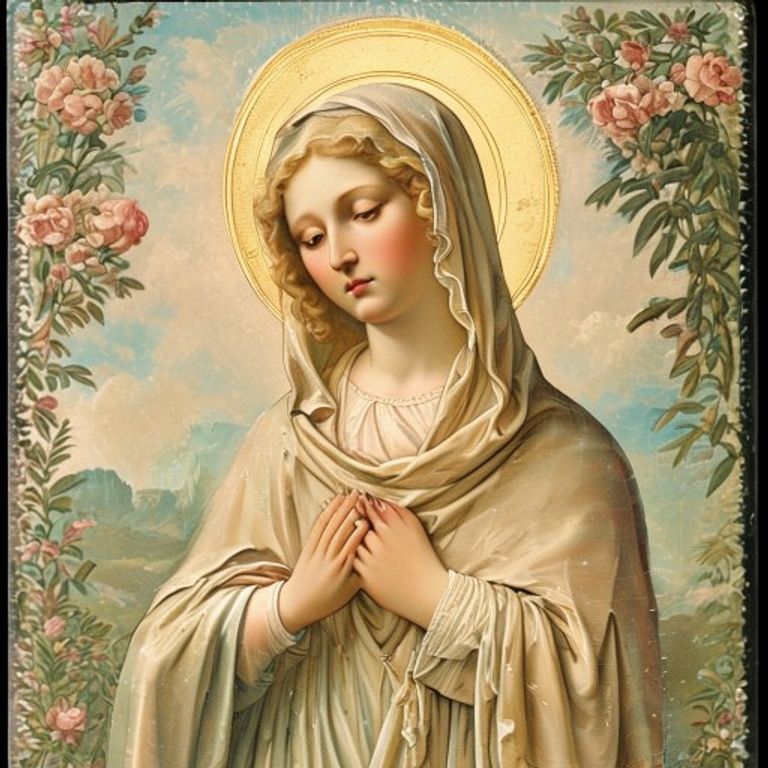
The prompt
Re-render this image as a devotional holy card in the Victorian chromolithography tradition (late 19th to early 20th century, European Catholic school, likely Italian or German publication). The card is small (approximately 3 by 5 inches, portrait orientation), rendered on white or cream cardstock. The central composition shows a saint, the Virgin, or a sacred scene rendered in a soft romantic style: the figure or figures are idealized but human-proportioned, the lighting is divine and sourceless, the color palette is pastel and harmonious (soft pinks, pale blues, cream, gold leaf used sparingly for the halo). The figure is rendered with gentle sentimentality: the face serene and beautiful, the eyes downcast or gazing heavenward (never directly at the viewer), the posture graceful and vulnerable. The halo is rendered as a soft gold circle or a subtle glow, sometimes with radiating rays. The clothing is rendered with attention to fabric texture: velvet, linen, brocade, all rendered in chromolithographic layers that create a soft, nearly photographic quality. The background is often a landscape (garden, sky, mountains) rendered in soft atmospheric perspective, or a neutral off-white ground. There may be symbolic botanical elements (roses, lilies, palms) rendered at high detail and botanical accuracy. The border is simple, often a thin printed line or a decorative gold-stamped edge. The text area (prayer, saint's name, feast day) is rendered as a color block with no readable lettering. The overall surface finish is the characteristic slightly waxy or silken quality of chromolithography, with soft color gradation and minimal visible dot-pattern. The card shows age-patina consistent with storage in a pocket Bible or prayer book: soft creasing at the edges, minor fading, sometimes a small hole where it was affixed with a pin. Preserve the subject, pose, and composition of the source image exactly, change only the medium and rendering.
What it is doing
The holy card is democracy made manifest. Before chromolithography, sacred images were expensive, hand-made, the property of the wealthy and the churches. After chromolithography, every Catholic child could carry a saint in their pocket. The card is sentimental in a way the folk retablo is not, because it is designed for mass consumption, designed to be mass-produced in the millions, designed to be disposable and replaceable. But it is also devout. The Victorian aesthetic of soft light and vulnerability is not fake piety; it is a genuine expression of nineteenth-century faith. The mother who gives her child a holy card of the Virgin is not less sincere than the person who commissioned an icon on gold leaf. The card is cheaper, but the faith is the same. This is why the holy card survives: because it is democratic and because the devotion is real. The card was made so that everyone could have access to the sacred. It is the form of democracy applied to religion.
Ways to change it
Pick any of these in the gallery and the choice is added to the prompt you copy.
- Sentimentality-dial: soft Victorian romantic, idealized beauty vs slightly more restrained classical proportion vs high sentiment with tears and vulnerability
- Halo-treatment dial: soft subtle gold glow vs clear gold circle with radiating rays vs elaborate radiant sunburst with geometric pattern
- Background-dial: soft landscape with atmospheric perspective vs off-white or cream neutral ground vs garden setting with flowers and botanical detail
- Color-palette dial: pastel soft pinks and pale blues vs warmer cream and golden tones vs cooler silvery whites and pale lavenders
- Symbolic-elements dial: figure alone, minimal botanical detail vs figure with roses or lilies vs elaborate botanical frame with multiple flowers
- Border-treatment dial: simple printed line vs decorative gold-stamped edge vs ornate embossed border
Related prompts
See all 7 prompts in the Ex-Voto-Retablo-Devotional grammar