Ex-Voto-Retablo-Devotional / Style prompt
Illuminated Manuscript Devotional Panel
The medieval illuminated page: a single devotional scene from a Book of Hours or monastic prayer manuscript. Gold-leaf border, gesso, vegetable pigments, the work of a monk in a scriptorum, prayer made into paint.
Customize this prompt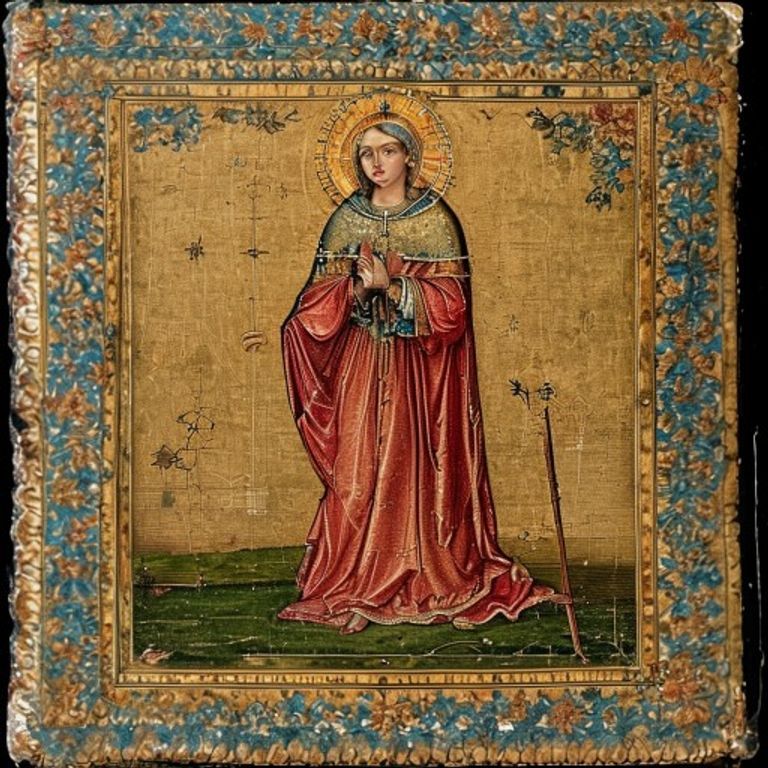
The prompt
Re-render this image as a single devotional page from a medieval Book of Hours or monastic illuminated manuscript (13th to 15th century Northern European tradition, Flemish or Franco-Burgundian style). The composition is a single panel (rectangular, approximately 4 by 6 inches, to fit a page), with a gold-leaf ornamental border surrounding the central scene. The border rendered in thin gold lines with fine pen-work details: vine scrolls, geometric interlace, stylized leaves and small flowers rendered in deep colors (ultramarine blue, vermillion red, gold). The central scene shows a devotional subject (saint, virgin and child, scene of martyrdom, moment of prayer) rendered in the miniature tradition: figures with refined, slightly elongated proportions, gold-leaf halos rendered with radiating pen-work or geometric rays, the faces rendered with precise detail (fine linear eyes, delicate features). The background is typically burnished gold or a richly patterned textile (checkered, brocaded, or hung as a woven tapestry behind the figures). The foreground ground plane is indicated by a simple tiled or grassed floor in perspective. Clothing rendered in subtle folds with fine pen-lines, the fabric appearing rich and formal. The technique throughout is gesso and tempera pigment, the surface quality slightly matte with the luminous quality of ancient egg-tempera, gold leaf is burnished to high shine at the borders and halos but slightly less reflective in the recessed areas. The page edges show minor losses and age-patina consistent with centuries of handling and prayer. Aspect ratio approximately 4:6 (portrait, vertical). Preserve the subject, pose, and composition of the source image exactly, change only the medium and rendering.
What it is doing
The illuminated manuscript is prayer made labor-intensive. A monk spent months on a single page. The finest pigments, gold leaf imported from workshops, gesso applied in layers, each letter of text a separate act of devotion. The margin decoration is not ornament, it is the monk's permission to breathe. He has spent all day rendering the Virgin, so in the margin he draws a small demon dancing, a mouse running, a monkey playing an instrument. These are the only jokes he gets to tell. The gold leaf is expensive enough that each page is considered an offering to God. The monk understands this. He is not making art for patrons; he is making prayer visible. This is why the faces are so refined and the folds so careful. This is why even the margins are never empty. The page is the contract between the monk and God. Every visible inch has been meditated upon.
Ways to change it
Pick any of these in the gallery and the choice is added to the prompt you copy.
- Border-complexity dial: simple thin gold-line frame with minimal vine scroll vs elaborate vine-scroll border with flowers and geometric interlace vs complex architectural frame with pillars and arched top
- Miniature-style dial: refined Flemish tradition with delicate proportions vs earlier Gothic with more angular proportions vs Italian proto-Renaissance with slightly more naturalistic detail
- Halo-treatment dial: thin gold circle vs gold circle with radiating pen-work rays vs geometric star or multi-pointed halo
- Background-pattern dial: burnished solid gold vs patterned brocaded textile vs checkered or tiled floor in simple perspective
- Figure-count dial: single saint figure centrally placed vs Virgin and Child with attendants vs narrative scene with multiple figures
- Pigment-brightness dial: vibrant saturated colors vs muted earth-tones with gold accents vs rich ultramarine and vermillion dominant
Style lineage
Learn the visual culture this draws from: V&A.
Related prompts
See all 7 prompts in the Ex-Voto-Retablo-Devotional grammar