Constructivism / Style prompt
Stepanova Textile: Geometric Repeat Pattern
Varvara Stepanova circa 1924, Constructivist textile and workwear design as printed geometric repeat.
Customize this prompt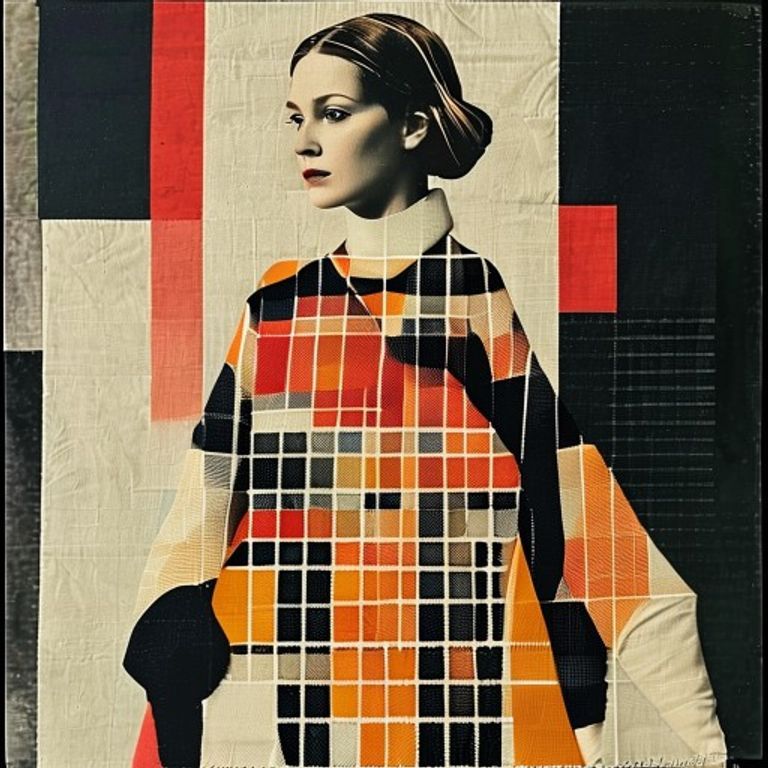
The prompt
Re-render this image in the visual register of Varvara Stepanova's Constructivist textile designs circa 1923 to 1925 produced at the First State Textile Print Factory. Render the subject as if printed on cotton workwear cloth, with a repeating geometric pattern of bold flat triangles, circles, parallel bars, and grid intersections covering the surface. Palette is restricted to two or three flat colors plus the cream cloth ground: classic combinations include red plus black, navy plus orange, ochre plus deep green. Pattern register is mechanical-perfect with slight cloth-weave texture showing through. Surface reads as block-printed cotton. Subject from the source is overlaid as silhouette filled with the pattern, or pattern fills the garment portions while subject face remains as halftone photograph. Strictly no on-canvas text, no legible lettering, no signature, no watermark, no logos. Preserve the subject, pose, and composition of the source image exactly, change only the medium and rendering. Aspect ratio matches source.
What it is doing
Stepanova believed the worker's body could be liberated by escaping the bourgeois clothing tradition. The textile she designed was beautiful and would mark its wearer permanently as a citizen of the new order. The thesis is that the State should be visible on the body at all times. Mao got the same idea, so did every uniform-loving regime since. The aesthetic of liberation was indistinguishable from the aesthetic of conscription because they were the same aesthetic.
Ways to change it
Pick any of these in the gallery and the choice is added to the prompt you copy.
- Pattern scale: small 2cm motif vs medium 5cm vs bold 12cm large repeat
- Pattern density: sparse field vs medium coverage vs near-saturated
- Color combo: red and black vs navy and orange vs ochre and deep green
- Motif type: triangle dominant vs circle dominant vs bar and grid dominant
- Era anchor: 1923 early designs, sparse bold triangles and circles in red and black vs 1924 factory run, dense small repeating bars and grids in navy and orange (signature) vs 1925 Paris expo showpiece, large interlocking geometric panels in ochre and deep green
Style lineage
Learn the visual culture this draws from: The Conversation.
Related prompts
See all 7 prompts in the Constructivism grammar