Constructivism / Style prompt
Rodchenko Diagonal Photomontage: Red-Black-Cream Command
Alexander Rodchenko circa 1923 to 1925, photomontage cut at extreme diagonals, red-black-cream Soviet agitprop register.
Customize this prompt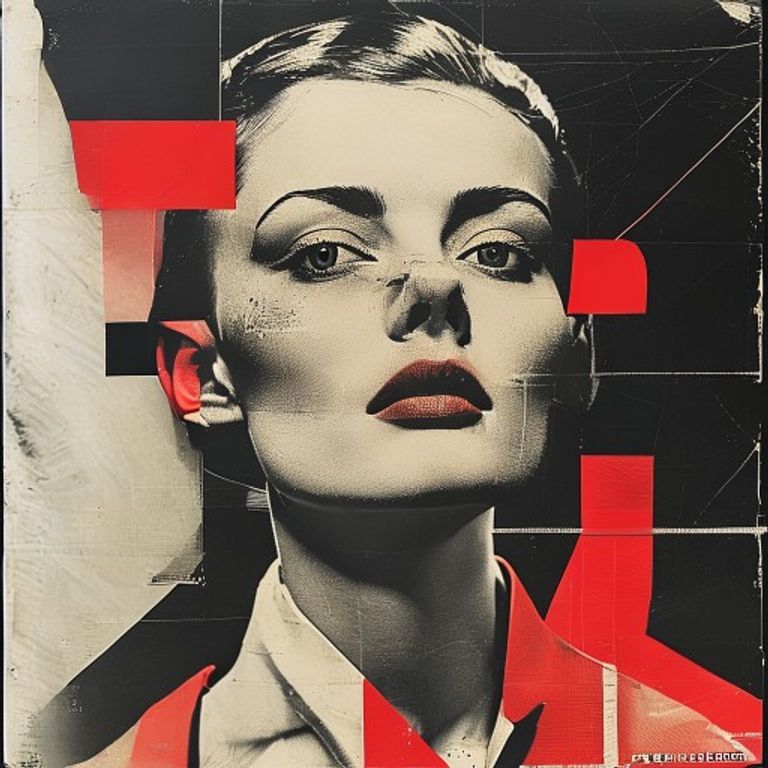
The prompt
Re-render this image in the visual register of Alexander Rodchenko circa 1923 to 1925, in the manner of his Lengiz publishing posters and his photomontage covers for LEF and Novy LEF magazines. Construct the composition as cut-paper photomontage: the subject treated as high-contrast halftone photograph clipped from newsprint, layered over and under bold flat geometric shapes. Severe diagonal compositional axis at 30 to 60 degrees from horizontal. Palette is strictly Soviet agitprop: ink black, vermilion red, cream-newsprint off-white, with one accent of pure white. Heavy black bar elements, circles, and arrows interrupt the picture plane. Halftone dot screen visible on photographic portions. Surface reads as lithograph poster on cheap paper, slight ink saturation bleed. Strictly no on-canvas text, no legible lettering, no signature, no watermark, no logos. Preserve the subject, pose, and composition of the source image exactly, change only the medium and rendering. Aspect ratio matches source.
What it is doing
Rodchenko's diagonal is not a stylistic choice, it is an imperative mood. The eye cannot rest, every line points the viewer where to look, what to feel, what to do next. Photomontage promises to cut up the bourgeois image and reassemble it as truth, but in practice it taught the State to cut up reality and reassemble it as instruction. The visual grammar of the five-year plan was already in place before the plans were written.
Ways to change it
Pick any of these in the gallery and the choice is added to the prompt you copy.
- Diagonal aggression: mild 20 degrees vs classic 45 degrees vs extreme 65 degrees
- Halftone coarseness: fine 200dpi vs medium 65-line newsprint vs coarse poster dot
- Red dominance: accent only vs balanced bars vs red-field dominant
- Bar intrusion: single bar vs three crossing bars vs dense black-bar network
- Era anchor: 1923 early collage, loose clippings, scrappy cut edges, sparse flat shapes vs 1925 LEF poster, tight diagonal grid, bold red and black bars (signature) vs 1928 industrial push, steep worm's-eye angles, machinery and girder fragments
Style lineage
Learn the visual culture this draws from: Studio International.
Related prompts
See all 7 prompts in the Constructivism grammar