Classical-Statuary-Marble / Style prompt
Hellenistic Bronze with Verdigris Patina
The Hellenistic bronze portrait, the metal that survived because it oxidized into armor. Deep green verdigris covers the surface, the patina of centuries turning what was bronze into a sculpture that breathes color and time.
Customize this prompt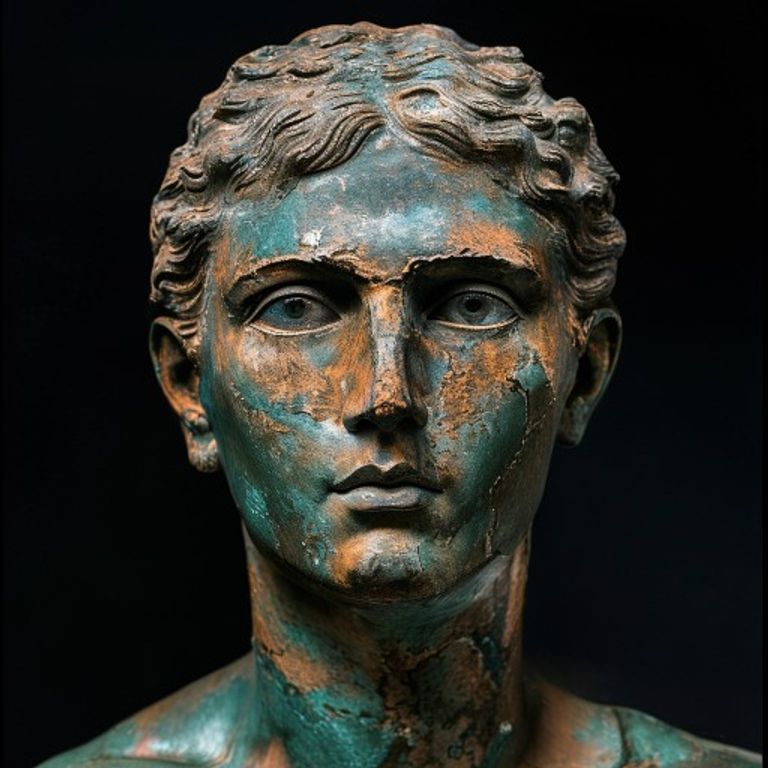
The prompt
Re-render this image as a Hellenistic bronze portrait head, likely from the 3rd to 1st century BC. The bronze is no longer the warm peachy metal it was when cast; it is now a deep green and blue-black verdigris patina, the oxidation so complete that the original metallic surface is invisible. The portrait itself shows Hellenistic dramatic characterization: the face is not idealized but psychologically present, the bone structure articulate and specific, the expression caught in a moment of reflection or resolve (the eyes slightly asymmetrical, the mouth neither smiling nor neutral). The hair is rendered with deep undercutting, the curls creating sharp shadows where the verdigris cracks and accumulates. The eyes are inlaid with stone (onyx, lapis, or simple marble) set into the bronze, the pupils dark and piercing, creating the uncanny sense that the figure is watching you. The surface shows the active patina of outdoor exposure: areas of brilliant peacock-blue verdigris on high points (cheekbone, nose), deeper forest-green in recesses, patches where the patina has flaked away showing copper-red beneath, the asymmetrical accumulation pattern that only happens over centuries of weather. The neck is substantial, the shoulders suggested beneath the surface. The hair at the nape shows the raw casting marks and the chisel-work used to finish the details. Museum lighting: dramatic directional side-lighting that exaggerates the topography and makes the verdigris glow. Aspect ratio 3:2 vertical. Preserve the subject, pose, and composition of the source image exactly, change only the medium and rendering.
What it is doing
The Hellenistic bronze portrait is alive in a way marble can never be. The eyes are inlaid stone, they follow you. The expression is not idealized, it is caught mid-thought. The verdigris is not decay, it is time made visible as color. Bronze oxidizes into green, and green is the color of living things. The ancient portrait looks at you with stone eyes and says: I was alive once and the proof is that I am still changing. Marble stays white. Bronze becomes verdant. The difference is that bronze had actual blood, actual eyes, actual skin until the moment it was cast. The portrait survives in that oxidation because the metal remembers being alive. The patina is not a flaw to be restored away, it is the proof of survival. When collectors strip the verdigris off ancient bronzes they are murdering the witness.
Ways to change it
Pick any of these in the gallery and the choice is added to the prompt you copy.
- Patina-color dial: brilliant peacock-blue verdigris (high-point oxidation) vs dark forest-green recessive patina (accumulated in protected areas) vs mixed red copper showing through patches (actively flaking and aging)
- Emotional-register dial: psychologically intense, mid-thought expression (high Hellenistic characterization) vs tragic mask, mouth slightly open (dramatic emotion) vs serene indifferent gaze (stoic resignation)
- Eye-inlay dial: stone eyes with visible pupils (lapis or onyx inlay) vs seamless bronze eyes with simple iris line (less elaborate) vs missing or damaged inlays (fragmentary museum state)
- Hair-detail dial: deep undercutting with individual curls casting sharp shadows (high technical skill) vs wave-pattern texture without individual locks (stylized simplification) vs simplified masses with patina filling recesses (time-worn reduction)
- Surface-weathering dial: variable patina with flaking and exposed copper (active ongoing oxidation) vs stable complete verdigris layer (aged equilibrium) vs encrusted with mineral deposits (found-in-earth condition)
- Scale-suggestion dial: life-scale or larger portrait head vs reduced scale bust with shoulders vs full-length figure suggested (shoulder and neck transition visible)
Style lineage
Learn the visual culture this draws from: Getty.
Related prompts
See all 7 prompts in the Classical-Statuary-Marble grammar