Vintage-Ad / Style prompt
Fast Food Hero Shot Hyperreal Food
The McDonald's, Burger King, regional fast-food chain, Taco Bell hero-shot register: where food stylists with tweezers, glycerin spray, and engine oil constructed an object that looked like food but was no longer food.
Customize this prompt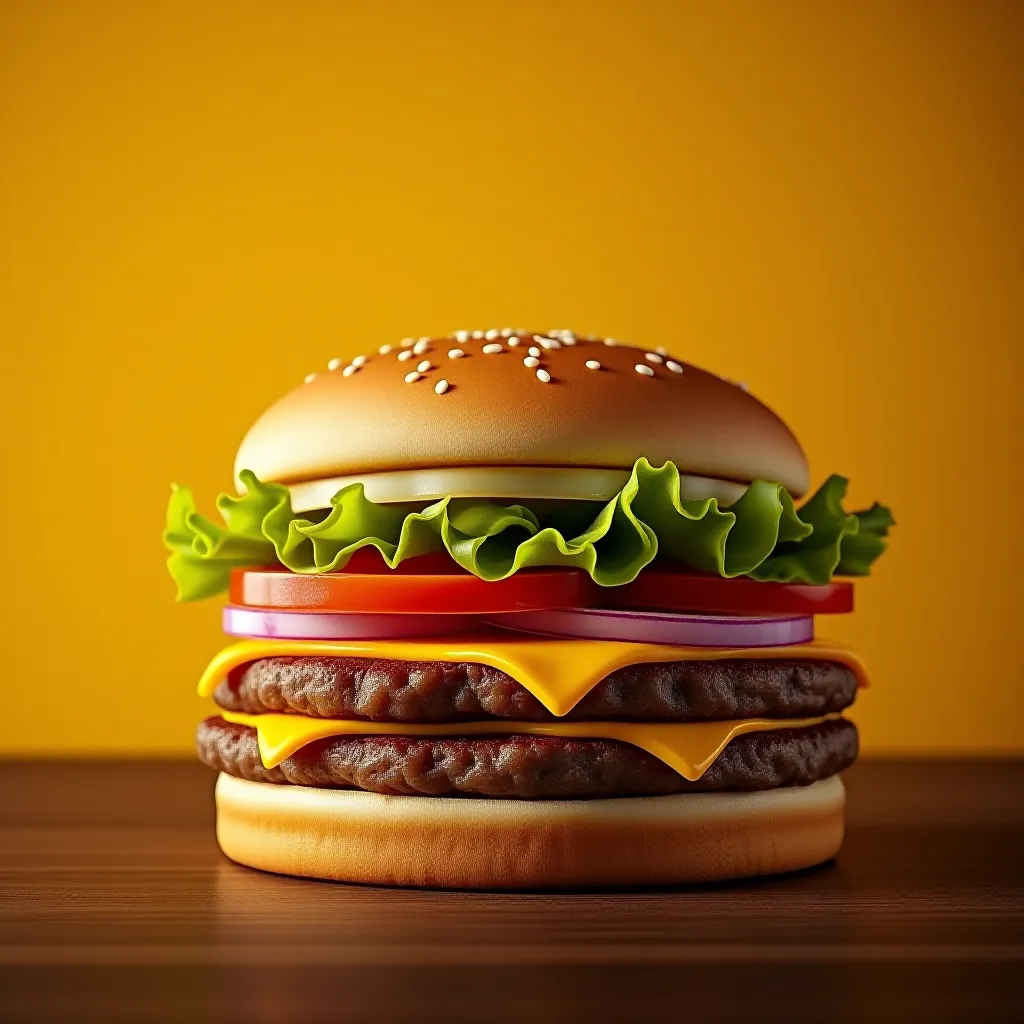
The prompt
Restyle the source image as a 1985 to 2010 American fast-food advertising hero shot aesthetic, the work of food photographers and stylists for McDonald's, Burger King, regional fast-food chain, Taco Bell, KFC, and Subway national campaigns. Render as a large-format studio product photograph with the hyperreal fast-food palette: saturated lettuce-leaf green (greener than any real lettuce), tomato-red brighter than ripe tomato, sesame-bun gold with controlled steam wisp, melted cheese rendered with directional glycerin gleam, beef sear marks brushed on with soy reduction. Lighting is multi-source studio: a hard key light from rear-left at 30 degrees creating crisp directional shadow, a soft fill from camera-front, a hair light backlighting any steam or fry crispness, gentle bottom-bounce eliminating harsh under-shadow. Composition is three-quarter elevated angle, subject hero-centered, shallow depth of field with rear elements soft. Every visible detail is intentional and styled: every sesame seed placed with tweezers, every condiment drop choreographed, every garnish positioned. Background is solid color sweep (often warm yellow, deep red, or matte black) or out-of-focus gradient. Surface texture is hyperreal, beyond what a phone or restaurant lighting could ever produce. Include zones at top, side, or lower-third for product name, price callout, and combo offer copy, but render these zones empty: no letterforms, no kerned type, no logos, no prices, no combo numbers, no menu code, no nutritional disclaimer. Preserve the exact subjects, food items, arrangement, and spatial layout of the source image without alteration; restyle the rendering only.
What it is doing
The fast-food hero shot is the most well-documented gap between advertised and delivered product in consumer history. Food stylists know that real food does not photograph: lettuce wilts, cheese congeals, ice cream melts, steam dissipates. The hero shot trades edibility for photogenicity (motor oil for syrup, mashed potato for ice cream, cardboard inside the burger for structure). The eater knows the burger in their hand will not match the photo. They buy it anyway. The persuasion mechanism is not deception, it is permission to participate in an aspiration the brand and the consumer both know is theatrical.
Ways to change it
Pick any of these in the gallery and the choice is added to the prompt you copy.
- Era beat: 1985-pre-digital-styling vs 1998-peak-stylist-craft vs 2010-digital-composite-era
- Food register: burger-hero vs taco-hero vs fried-chicken-bucket vs ice-cream-sundae
- Background: solid-warm-sweep vs dark-matte-drama vs out-of-focus-counter
- Garnish density: clean-product-only vs staged-side-elements vs full-meal-tableau
- Steam/sizzle: dry-static vs single-steam-wisp vs dramatic-glycerin-drip
Style lineage
Learn the visual culture this draws from: Digital Photography School.
Related prompts
See all 23 prompts in the Vintage-Ad grammar