Vintage-Ad / Style prompt
Pulp Magazine Back Page Mail Order
The 1930s to 1950s comic book and pulp magazine back-page register where Charles Atlas, X-Ray Specs, Sea Monkeys, and "throw sand in the bully's face" cartoons converted shame into postal money orders.
Customize this prompt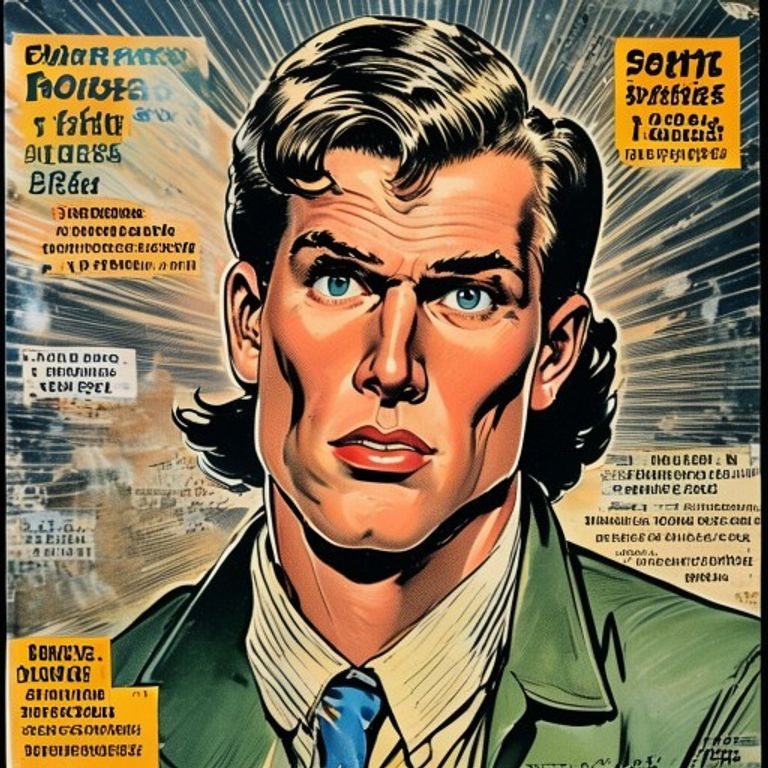
The prompt
Restyle the source image as a 1935 to 1955 American pulp magazine, comic book, or Mechanix Illustrated back-page mail-order advertisement aesthetic. Render as cheap newsprint halftone with visible dot screen, slightly mis-registered two-color printing (black plus one cheap spot color, typically muddy red, sickly yellow, or murky blue) on yellowed pulp paper. Composition is cluttered, multi-panel, with cartoon panels mixed into product photographs and tiny illustrated insets. Drawing style is crude commercial cartoon, bold contour line, exaggerated facial reactions (the 98-pound weakling humiliated, the transformed hero triumphant), dramatic action lines, sweat drops, motion clouds. Photographic elements are heavily retouched halftones with painted-in highlights. Negative-space zones for promised text, mail-order coupon, address, price (the "send only 10 cents" or "rush this coupon today" zones) are present as boxed empty rectangles and dotted coupon outlines, but render all such zones empty: no letterforms, no kerned type, no prices, no addresses, no logos, no order forms filled in. Layout density is maximal, exploiting every square inch of newsprint real estate. Preserve the exact subjects, faces, poses, gestures, and spatial arrangement of the source image without alteration; restyle the rendering only.
What it is doing
The pulp back-page ad ran the most refined shame-pipeline in American advertising. Charles Atlas's Dynamic Tension course did not sell exercise, it sold the cartoon of the bullied weakling on the beach, then offered postal-money-order redemption. The mechanism: a child reads a comic, sees themselves in the humiliated figure, mails ten cents. The cartoon is the wound, the product is the bandage, both shipped from the same address.
Ways to change it
Pick any of these in the gallery and the choice is added to the prompt you copy.
- Era beat: 1935-Depression-desperation vs 1947-postwar-novelty vs 1955-late-pulp-decadent
- Spot-color choice: muddy-red vs sickly-yellow vs murky-blue
- Layout density: cluttered-quarter-page vs dense-full-page vs single-product-callout
- Ad promise imagery: before-and-after muscle panels, flexing hero, humiliated weakling inset (signature) vs glowing eye-in-pyramid, robed mystic, rays beaming from an open book vs x-ray specs, sea-monkey castle, whoopee cushion insets with sparkle bursts
- Mis-registration severity: tight-registered vs noticeable-shift vs comic-shop-misaligned
Style lineage
Learn the visual culture this draws from: Hogan's Alley Magazine.
Related prompts
See all 23 prompts in the Vintage-Ad grammar