Video-Game-Case / Style prompt
Capcom Fighting-Game Roster-Splash Frame
The 1990s Capcom fighting-game cover. Roster splash, anime-pop ink, the cast as pantheon. Mastery displayed in body-archetypes.
Customize this prompt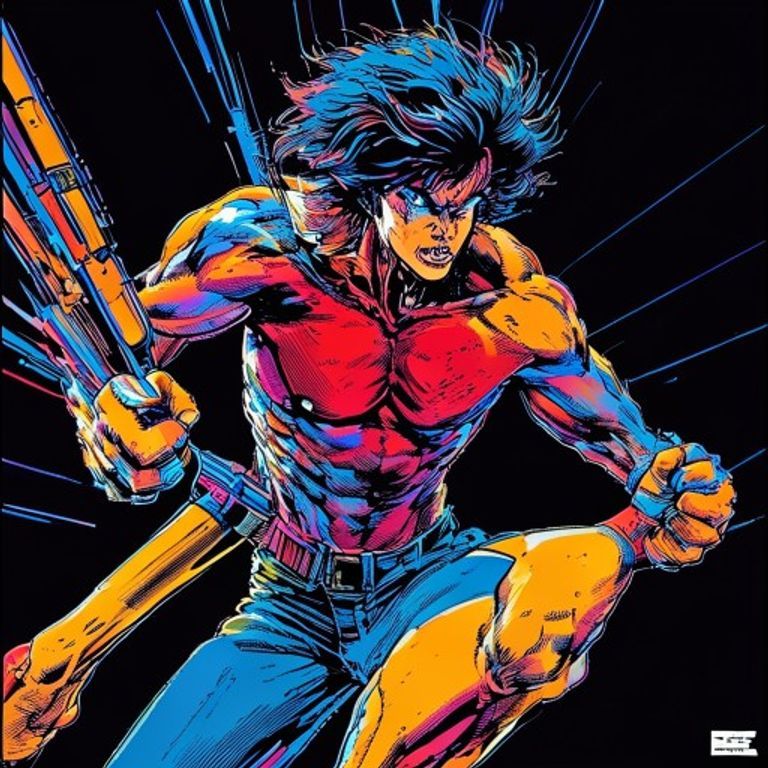
The prompt
Re-render this image in the visual register of 1990s Capcom fighting-game cover art and arcade flyer illustration, the canonical roster-splash composition used by the in-house illustration team: bold-outlined energetic poses, elegant character lines, and saturated jewel-toned colors. Medium: ink line over flat color and cell-shading, with selective airbrush gradient on muscle and metal surfaces, finished as printed package art. Line work: thick confident contour line in pure black, hard outlines around every form, internal anatomy line work using thinner strokes, the line itself doing structural work the way 1990s anime production drawings did. Color register: saturated flat fills (electric blue, hot red, deep purple, sunshine yellow), cell-shading in two values (base + one shadow), highlight in pure white, the late-1990s Japanese arcade-pop palette. Composition: dynamic action staging, the figure rendered with extreme dynamism, exaggerated forced perspective on a leading limb, the body in mid-motion. Background: bold solid color or radial gradient behind the figure, no environmental detail, the figure isolated against pure color the way arcade-flyer splash art treats a roster portrait. Surface treatment: glossy printed varnish on top of the painted illustration, slight gloss specular highlight on metal and skin, the package as polished arcade-import object. No on-canvas text, no franchise logos, no health-bar UI elements, no legible character-name plates. Mood: the body as discipline, the figure as one entry in an implicit roster of archetypes, the package as the cover of a pantheon. Preserve the subject, pose, and composition of the source image exactly, change only the medium and rendering. Aspect ratio is standard arcade-import package vertical portrait (roughly 5:7).
What it is doing
The Capcom fighting-game roster is a pantheon of disciplined bodies. Each character is a body-archetype trained into a single technique: grappler, shoto, charge, rushdown, zoner. The cover-splash treats the body as the visible expression of mastery, the technique as the visible expression of years of practice. This is the vitalist register: the body as the medium of discipline. The roster is the implicit thesis that mastery comes in flavors and each is worth respecting. Modern game covers hide the body inside armor; the Capcom splash showed the body and asked the buyer to admire the discipline.
Ways to change it
Pick any of these in the gallery and the choice is added to the prompt you copy.
- Illustrator register: thick-line heavy-shadow vs elegant-line softer-color vs refined-line jewel-palette
- Line-weight dial: thick black contour heavy (canonical) vs medium-line balanced vs thin-line elegant
- Palette dial: electric-saturated arcade (canonical) vs jewel-tone late-cycle vs pastel-neon Marvel-vs-Capcom-era
- Background dial: radial-gradient single-color (canonical splash) vs flat-color block vs painted-environmental hint
- Cell-shading values: two-value flat (canonical anime) vs three-value modeled (refined) vs airbrush-blended (variant)
- Pose-dynamism: extreme-forced-perspective (peak roster splash) vs confident-standing-portrait (alternate) vs mid-attack-frozen (motion-keyart)
Style lineage
Learn the visual culture this draws from: Wikipedia.
Related prompts
See all 26 prompts in the Video-Game-Case grammar