Trading-Card-Finance / Style prompt
Stock Certificate Guilloche Engraving
The subject rendered as a 19th-century stock certificate, intaglio steel-plate engraving with full guilloche security ornament.
Customize this prompt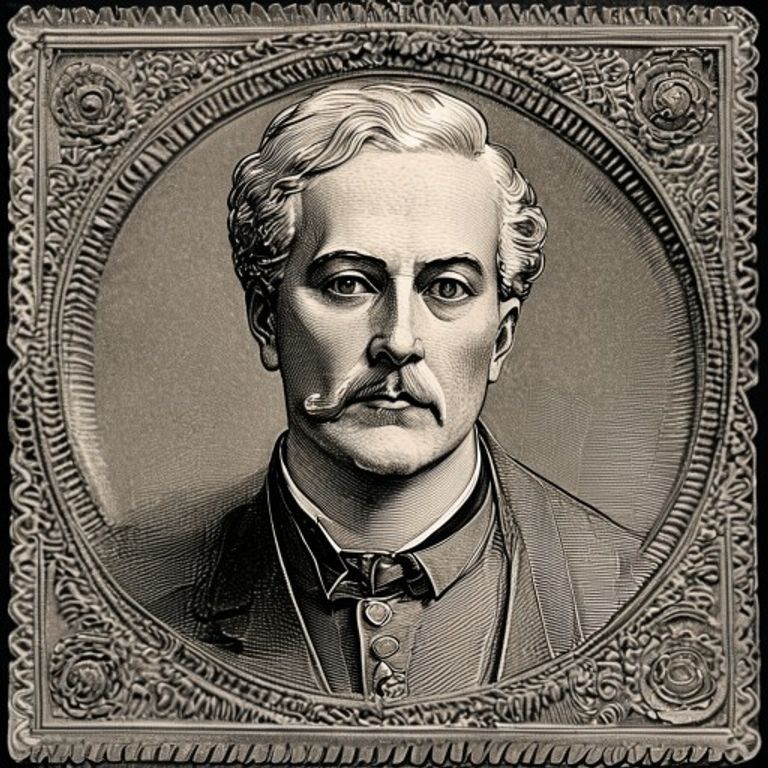
The prompt
Render the source in the visual lineage of late-19th and early-20th century American stock certificates, the steel-plate intaglio register used by American Bank Note Company and its peers. Subject rendered as a central vignette in pure line-engraving: parallel hatching, cross-hatching, stipple shadows, no tonal gradients, only line density variation. Surround the subject with an elaborate guilloche border of interwoven lathe-cut spiral patterns, looped rosettes at the corners, a heavy ornamental cartouche above and a banner ribbon below, all rendered as fine engraved line. Ground tint: a single muted color underlay (sepia green, claret red, slate blue, or banker's gold ochre) printed beneath the black engraving, with the suggestion of a watermark in the paper. Paper texture: heavy laid stock with deckle edges, faint fiber, evidence of age and handling. The cartouche and banner show texture suggesting embossed type but never resolve into legible letters. Color palette: ink black plus one muted security underlay tint, on cream rag paper. Mood: pre-electronic capital markets, the era when ownership of a thing meant holding a physical document signed by a clerk. No legible on-canvas text, no logos, no named hate-symbols, no real-person defamation. Preserve the subject, pose, and composition of the source image exactly, change only the medium and rendering.
What it is doing
The guilloche pattern existed to defeat the forger. It is the same impulse that puts a holo stamp on a trading card and a hologram on a passport. The ornament is a brag about trust, and the trust is what is actually being sold. The vignette of a railroad locomotive on an 1890 certificate and the holographic foil on a 1996 rookie card are the same gesture across a century: this thing is real because the printing was hard.
Ways to change it
Pick any of these in the gallery and the choice is added to the prompt you copy.
- Underlay tint: banker's green vs claret vs slate-blue vs gold-ochre
- Border density: restrained Federal-revival vs maximal Gilded-Age maximal
- Vignette style: allegorical-figure vs industrial-scene vs portrait-medallion
- Paper age: crisp-archival vs foxed-and-aged vs water-damaged
- Cartouche emphasis: heavy ornamental scroll vs simple banner vs none
- Plate impression: crisp first-pull vs softened-third-pull vs ghost-impression
Style lineage
Learn the visual culture this draws from: HoloTeam Security Printing Patterns.
Related prompts
See all 8 prompts in the Trading-Card-Finance grammar