Surrealism / Style prompt
Magritte Deadpan Paradox
Belgian flat oil rendering, overcast even light, simple impossibility presented as if perfectly normal.
Customize this prompt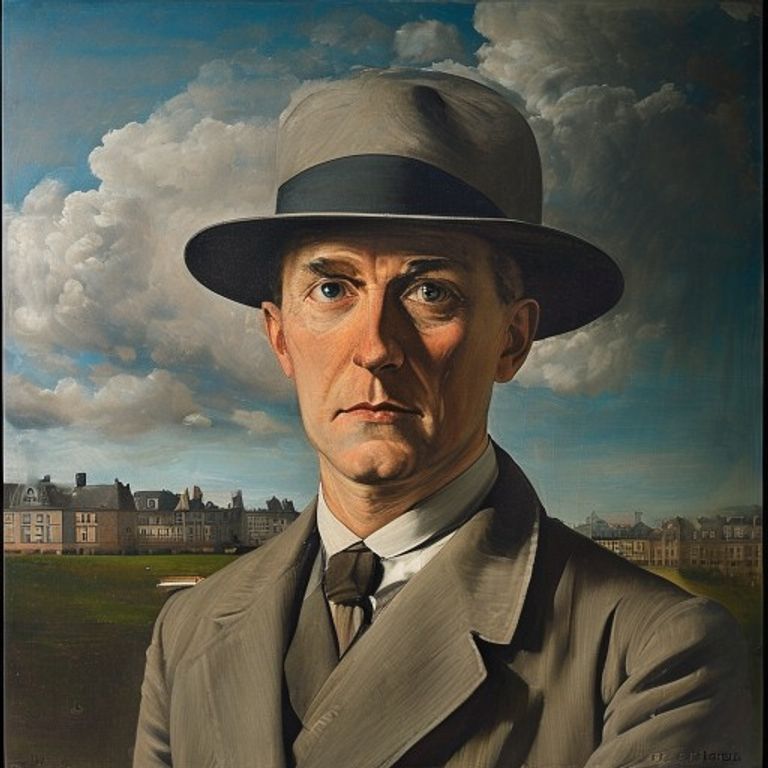
The prompt
Re-render this image in the visual register of a Rene Magritte 1928 to 1953 painting, as if oil-on-canvas in his uninflected illustrator's hand. The treatment is deliberately flat and competent rather than virtuoso: clean smooth surface, no visible brushwork, modeling sufficient to read volume but never showy. Lighting is the even diffuse grey light of an overcast Brussels afternoon, with soft shadow and no dramatic highlight. Palette: dove grey, slate, cream, a particular Magritte sky-blue with cumulus clouds, the dull wood brown of a bowler hat or bourgeois interior. Render the entire scene with the calm matter-of-factness of a furniture catalog illustration, allowing one logical impossibility (scale shift, object substitution, surface displacement) to occupy the image without any visual flagging that anything is unusual. Mood: polite, suburban, the calm of an apartment where something fundamentally wrong has been agreed to be normal. Strictly no on-canvas text, no legible lettering, no signature, no watermark, no logos. Preserve the subject, pose, and composition of the source image exactly, change only the medium and rendering. Aspect ratio matches source.
What it is doing
The flat illustrator's hand is the argument. Surrealism done with virtuosity (Dali) flatters the viewer; surrealism done with bureaucratic neutrality (Magritte) accuses the viewer of pretending not to notice. The painted pipe is the receipt for every representation you have ever accepted as the thing.
Ways to change it
Pick any of these in the gallery and the choice is added to the prompt you copy.
- Sky presence: no sky vs Magritte cumulus
- Bourgeois props: bare setting, no added furniture or objects vs a single bowler hat and green apple placed nearby vs full 1930s Belgian parlor with wood paneling, armchair, and mantel clock
- Impossibility scale: one small detail quietly wrong, like a shadow falling the wrong way vs a green apple floating in front of the face, hiding it vs bright daytime cloud sky above a dark, lamplit night street below
- Lighting flatness: gentle modeling vs full bureaucratic flatness
- Color temperature: cool overcast vs warm interior
Style lineage
Learn the visual culture this draws from: The Art Story.
Related prompts
See all 8 prompts in the Surrealism grammar
Read the full free book. All thirty-six chapters and the companion 657-prompt image library are free.