Propaganda / Style prompt
Goya Disasters of War Etching (1810-1820)
Goya proved the etching outlives the king. The anti-regime register that the regime itself cannot suppress without admitting what it is.
Customize this prompt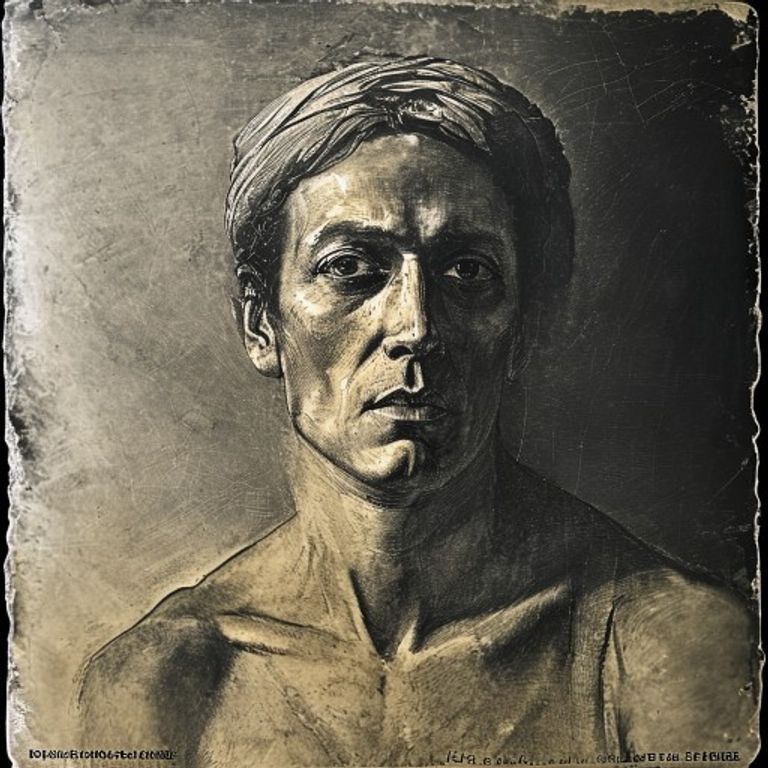
The prompt
Re-render this image as a Francisco Goya etching in the lineage of "Los Desastres de la Guerra" 1810 to 1820. Aquatint etching on cream-aged paper, fine line work cross-hatched into deep blacks and clouded grays, no color, no halftone, only ink-black against paper-cream tonal range. Composition: stark, almost stage-lit isolation of the subject against an undefined gray atmospheric ground that bleeds into white at the edges. The subject is rendered with unflinching anatomical specificity, the body as evidence, no idealization, no heroic posture, the figure caught in the actual physical truth of the moment. Faces partially shadowed or turned away, refusing the comforting frontal address. Surrounding negative space carries weight equal to the figure, a sense of vast indifferent emptiness pressing in. Plate-mark visible at the four corners of the etching, slight foxing on the paper edges. Mood: witness without rescue, the truth presented for the historical record, no captioned moral, no consolation, the image is the indictment and the indictment is unanswerable. No text, no caption, no Spanish inscription, no specific period costume detail beyond what the subject reference supplies. Preserve the subject, pose, and composition of the source image exactly, change only the medium and rendering. Aspect ratio matches source.
What it is doing
Goya's Disasters of War were unpublishable in his lifetime. The Spanish regime that committed and the French regime that perpetrated the atrocities both fell. The etchings outlived both regimes and continue to indict. Applied to any present-day institutional atrocity, the register asserts: the image will outlive the regime that creates it, and the regime knows it.
Ways to change it
Pick any of these in the gallery and the choice is added to the prompt you copy.
- Atrocity register dial: aftermath (body in landscape) vs during (action) vs witness (figure looking at off-frame horror)
- Specific plate emulation: Plate 18 "Bury Them and Be Silent" composition (aftermath) vs Plate 39 "Heroic Feat With Dead Men!" composition (witness-of-atrocity) vs Plate 79 "Truth Has Died" (allegorical)
- Crowd dial: single figure isolated vs cluster of three or four figures in tableau vs distant crowd as gray mass on horizon
- Plate condition dial: pristine first-state proof (clean) vs late-state worn plate (more grainy and immediate)
Style lineage
Learn the visual culture this draws from: Smarthistory.
Related prompts
See all 32 prompts in the Propaganda grammar
Read the full free book. All thirty-six chapters and the companion 657-prompt image library are free.