Propaganda / Style prompt
Caravaggio Counter-Reformation Chiaroscuro
The original propaganda machine. Counter-Reformation Rome invented the use of dramatic light as theological argument. Tier-1 KEYSTONE.
Customize this prompt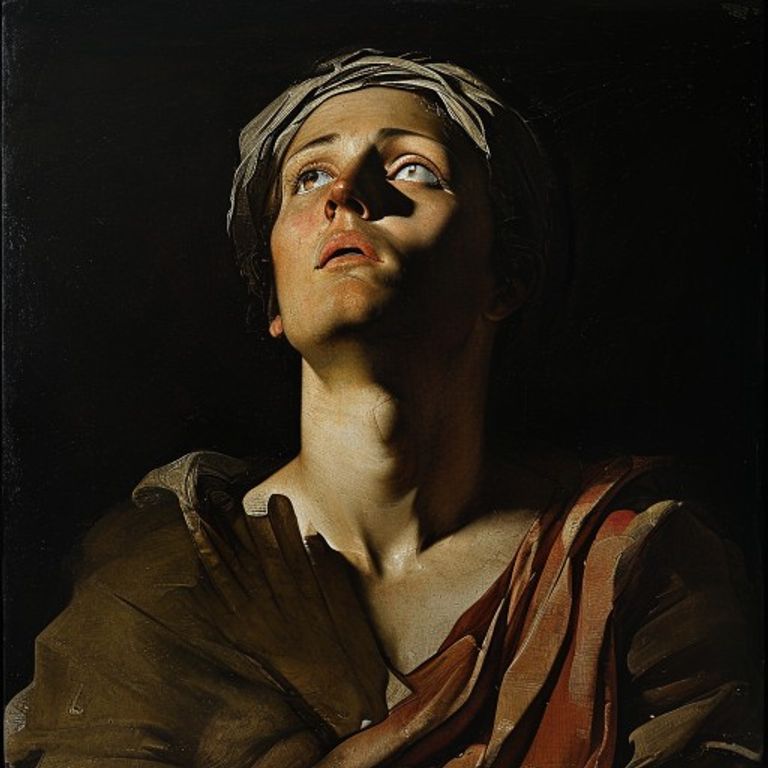
The prompt
Re-render this image as a Caravaggio oil painting in the lineage of the Roman period 1600 to 1610. Tenebrist composition: 70 percent of the canvas in deep impenetrable black, the subject illuminated by a single hard directional light from upper-left at approximately 45 degrees, light source unseen and unexplained. Skin rendered with humid Mediterranean naturalism, slightly olive midtones, visible pulse of blood under skin, no idealization. Drapery rendered as heavy fabric with sculptural folds. Hands enlarged slightly and rendered with anatomical specificity, every tendon visible. Mouth slightly parted as if interrupted mid-breath. Eyes catching the light source with a single specular highlight. Background: total negative-space black, no architecture, no horizon, no setting. The figure exists alone in the void with the unexplained sacred light. Oil paint on stretched canvas, visible brushwork in the lit areas, smooth glazes in the shadow transitions, slight craquelure of 400-year-old varnish. Mood: sacred rupture of the profane, the moment grace breaks into ordinary time, no nimbus, no halo, the holiness is in the light alone. No text, no inscription, no religious iconography (no cross, no halo, no scripture). Preserve the subject, pose, and composition of the source image exactly, change only the medium and rendering. Aspect ratio matches source.
What it is doing
Caravaggio invented the visual grammar of sacred rupture. The Counter-Reformation needed images that proved the sacred could break into ordinary life. Applied to a 2026 sovereign subject, this register asserts that ordinary lived experience can contain transcendent gravity, against the managerial-flat register that insists nothing is sacred and nothing is profane.
Ways to change it
Pick any of these in the gallery and the choice is added to the prompt you copy.
- Light source dial: upper-left 45 degrees (Calling of Saint Matthew) vs directly overhead (Conversion of Saul) vs from below the table edge (Supper at Emmaus)
- Period dial: early Roman 1600-1606 (more idealized) vs Neapolitan exile 1606-1610 (rougher, more violent)
- Wound dial: add single small wound or scar, painted with anatomical realism for the Caravaggio body-as-evidence move
- Companion figure: add secondary figure in shadow at edge of frame, partially lit, witnessing for the witness-composition lock
Style lineage
Learn the visual culture this draws from: Britannica.
Related prompts
See all 32 prompts in the Propaganda grammar
Read the full free book. All thirty-six chapters and the companion 657-prompt image library are free.