Pokemon-Card / Style prompt
Japanese Exclusive Promo Glossy-Mirror Register
A Japanese-exclusive promotion card rendered in high-gloss finish. The subject captured with mirror-geometry that makes the familiar strange, glossy surface as cognitive doubler.
Customize this prompt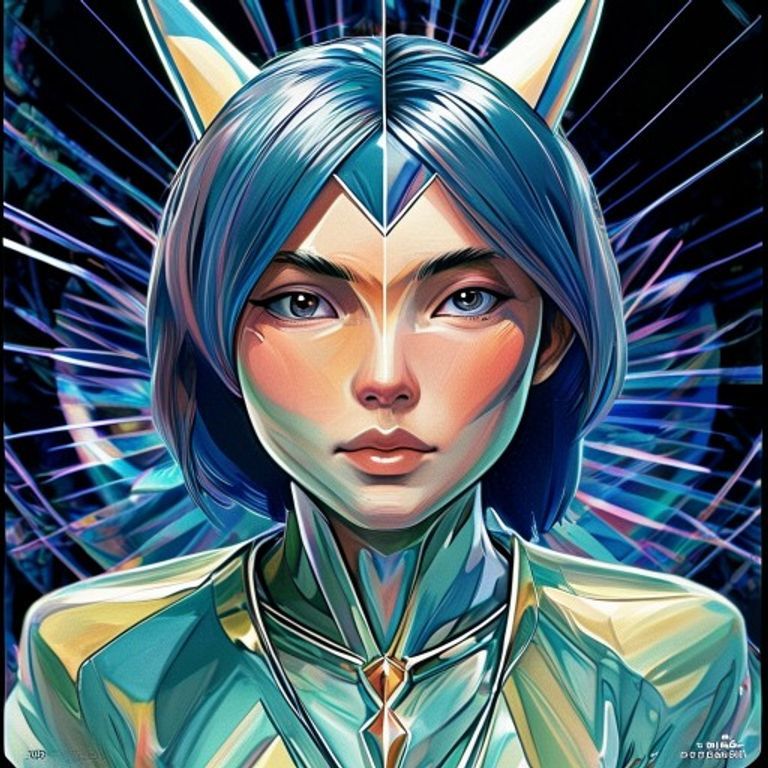
The prompt
Re-render this image as a Japanese Pokémon Trading Card Game exclusive promotional card in the glossy-mirror register popular in 2000s-2010s Japanese gacha and special-edition releases. Card format: standard TCG portrait (2.5:3.5), front-surface treatment with ultra-high-gloss finish creating mirror-like reflectivity. Illustration composition: subject rendered with bilateral or rotational symmetry creating a mirror-geometry effect (subject split vertically down center-line with mirrored pose on each side, OR subject rendered with rotational 180-degree doubling creating kaleidoscope pattern, OR subject repeated in diminishing scale radiating from center). The glossy surface treatment makes the subject appear to exist in two states simultaneously: the painted illustration AND its mirror-reflection within the glossy finish. Subject: Pokémon rendered in detailed illustrative register (watercolor or early-digital painting technique with soft color-transitions and painterly surface), with high anatomical specificity. Mirror-geometry creates visual intrigue: the familiar subject made strange through doubling or symmetry, unsettling the viewer's immediate recognition. Background: the mirrored or symmetrical space filled with abstract pattern or secondary environmental detail (fractal-like geometry, botanical pattern, crystalline structure) that reinforces the mirror-logic. Colors: saturated but cool (jade, sapphire, amethyst, pearl tones common in Japanese promos), with metallic accent highlights that catch and reflect light on the glossy surface. Card-frame elements: set-symbol and promo-badge clearly visible in bottom-right corner (Japanese version has distinct symbol), border rendered in solid color (often silver, gold, or pearl gradient), no traditional yellow Western-frame. Glossy texture is load-bearing: the surface acts as cognitive multiplier, the reflection creates the doubling effect, the subject appears to exist both in illustration and in the glass mirror. Lighting: even flat lighting without strong shadows (signature of glossy-finish cards which minimize texture), slight specular highlight running across entire card surface from light-catch. Mood: the subject made alien by its own reflection, symmetry creating hypnotic intrigue, the glossy surface as the technology that enables the doubling. No legible text legible on card, no card-name or attack text readable, set-symbol suggested as shape. Preserve the subject, pose, and composition of the source image exactly, change only the medium and rendering.
What it is doing
Japanese exclusive promos of the 2000s-2010s discovered a cognitive hack: gloss + mirror geometry = the subject becomes its own stranger. The card you hold reflects you AND the subject, the mirrored composition makes the familiar alien, and the glossy surface multiplies what you see. Applied to any subject undergoing radical reflection or self-confrontation, the register asserts: symmetry is a tool for making the identical uncanny. Mirror-geometry is how you make the viewer see what was already there but never visible until doubled.
Ways to change it
Pick any of these in the gallery and the choice is added to the prompt you copy.
- Mirror-type dial: vertical bilateral split (classic Japanese promo signature) vs rotational 180-degree doubling (kaleidoscope) vs recursive scale-diminishing from center (fractal-rare)
- Glossy-surface dial: mirror-gloss finish ultra-reflective (signature Japanese promo) vs pearl-gloss semi-reflective matte (variant) vs holographic-mirror with color-shift (premium Japanese exclusive)
- Symmetry-variation dial: perfect bilateral symmetry (hypnotic) vs near-symmetry with one detail broken (unsettling) vs full rotational 4-fold symmetry (mandala-like)
- Secondary-pattern dial: abstract fractal or crystalline fill (signature) vs botanical or organic pattern repeat (nature-mirror) vs empty negative space (austere Japanese minimalism)
Style lineage
Learn the visual culture this draws from: Bulbapedia.
Related prompts
See all 31 prompts in the Pokemon-Card grammar