Pokemon-Card / Style prompt
Pokemon Card Trophy-Tournament Pikachu Grail Frame
The Pikachu Illustrator and Trophy-Pikachu lineage. Never sold at retail. Awarded only to tournament finalists or illustration-contest winners. The grail of grails. Print run measured in dozens. Sovereign-object zero.
Customize this prompt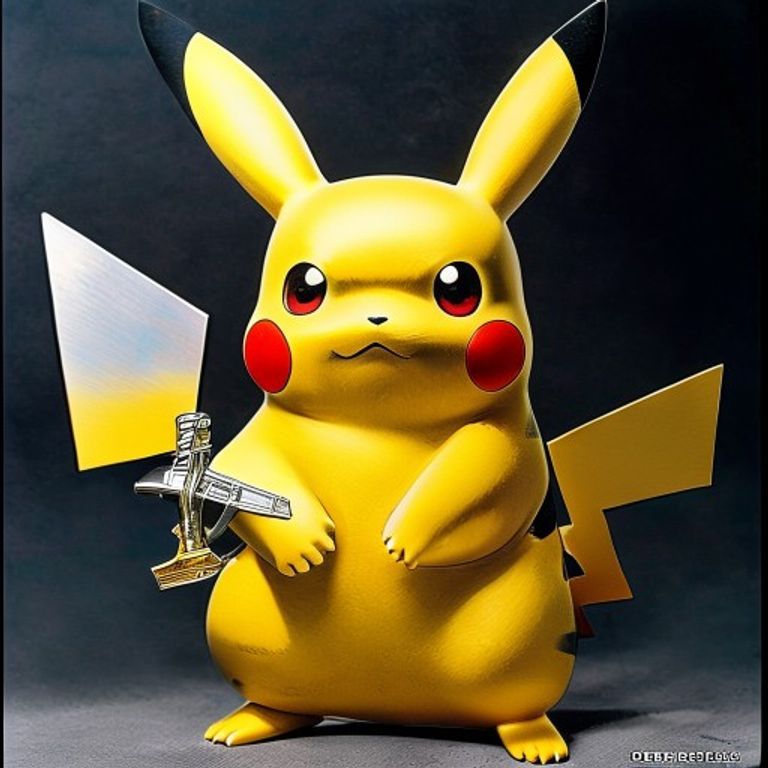
The prompt
Re-render this image in the style of a Trophy Pikachu or Pikachu Illustrator Pokemon TCG card, the no-retail-print no-booster-pack tournament-and-contest-promo lineage circa 1997 through 2010 (Pikachu Illustrator 1998, World Championship trophy cards 2004 through ongoing). Medium: physical trading card photographed under high-end museum or auction-house soft-key lighting on neutral-gray or black-velvet background, photographic detail at catalog-quality with subtle foil-shimmer along edges. Card framing: standard Pokemon-card vertical rectangle aspect ratio, yellow card-border characteristic of vintage Pokemon-TCG, distinctive trophy-card visual signatures: silver, gold, or bronze foil-stamp marker indicating tournament-placement award status positioned near card header or in lower card-bar, OR the unique Pikachu Illustrator badge-pattern (the small pen-and-brush iconography in the lower-left where retreat-cost would normally appear). Foil treatment: subtle full-card holographic or cosmos-foil rendering across the card surface with restraint (trophy cards are not maximally-foil-loud, they are quietly-foil-confident), foil catches light along card edges. Pikachu illustration: hand-painted Pikachu in pose specific to trophy-card lineage (illustrator-Pikachu: holding paintbrush and palette; world-championship-Pikachu: holding trophy or with championship-medal element; alternative-trophy-Pikachu: with crown, ribbon, or microphone-cup-trophy detail), illustration occupies upper third to half of card face with deliberate attention to expression and prop-detail. Card-game information: HP value upper-right area, attack-info middle area, weakness-and-retreat-cost lower area, BUT specific tournament-card or contest-card naming convention in card header (e.g., "Illustrator" subtitle, "World Champion" subtitle, "Trainer Promo" subtitle), all text rendered as standard TCG-layout typography but specific lettering not focus-readable. Surface condition: pristine factory-mint, PSA-10-quality presentation with no surface flaws, sharp corners. Color palette: yellow card-border, subtle foil-rainbow on background, Pikachu in canonical yellow-with-red-cheek palette, gold or silver trophy-stamp accent. Mood: collector-grail reverence at the highest tier, the artifact that was never sold but only awarded, the witness-currency that converts attendance-at-a-specific-event into permanent ownership of an impossible object. Composition leaves quiet space around the card for caption insertion via background. No legible specific text other than unavoidable card-layout typography, no studio watermark, no graders-slab. Aspect ratio matching source. Preserve the subject and composition of the source image exactly, change only the medium and rendering.
What it is doing
The Pikachu Illustrator card is the ultimate collectible because it was never printed for sale. It was awarded to 39 winners of a 1997-98 Japanese illustration contest, full stop. Trophy Pikachus extend the lineage: awarded to World Championship finalists, never released to the secondary market through retail. The Baudrillard simulacra at maximum saturation: the card has no use-value, no retail-value-anchor, no game-utility expectation. It exists ENTIRELY as the certificate of a specific event having happened. The buried thesis is that the ultimate collectible is the one that was never offered for sale, only awarded as proof of witness-presence. Trophy Pikachu is the perfect keystone because it makes the scarcity-as-content argument unfalsifiable: there is nothing else there to fall back on.
Ways to change it
Pick any of these in the gallery and the choice is added to the prompt you copy.
- Variant dial: Pikachu Illustrator 1998 signature (paintbrush-and-palette) vs World Championship trophy (trophy-and-medal) vs staff Pokemon-Center promo (with stamp marker)
- Foil dial: subtle cosmos-holo restrained vs confident holo with edge-shimmer vs minimal-foil non-holo with prestige-paper-stock texture
- Background dial: black velvet auction-house standard vs neutral gray photo-studio vs wood collector-desk warm
- Stamp-marker dial: gold foil-stamp prominent vs silver foil-stamp subtle vs bronze foil-stamp third-place register
- Card condition: pristine mint card, razor-sharp corners, flawless glossy surface, perfectly centered borders (signature) vs lightly handled card, faint corner whitening, one hairline scratch across the foil vs well-played card, rounded corners, edge wear, creases, scuffed dull foil
- Lighting dial: museum-soft preservation register vs auction-house spotlight dramatic vs collector-bedroom soft-warm intimate
Style lineage
Learn the visual culture this draws from: Kanto Shark.
Related prompts
See all 31 prompts in the Pokemon-Card grammar