Pokemon-Card / Style prompt
Worn Childhood Card Macro
Macro photograph of a heavily-played childhood Pokémon card. Whitening edges, creased corner, faded ink. The relic of attachment. Wear as proof of love.
Customize this prompt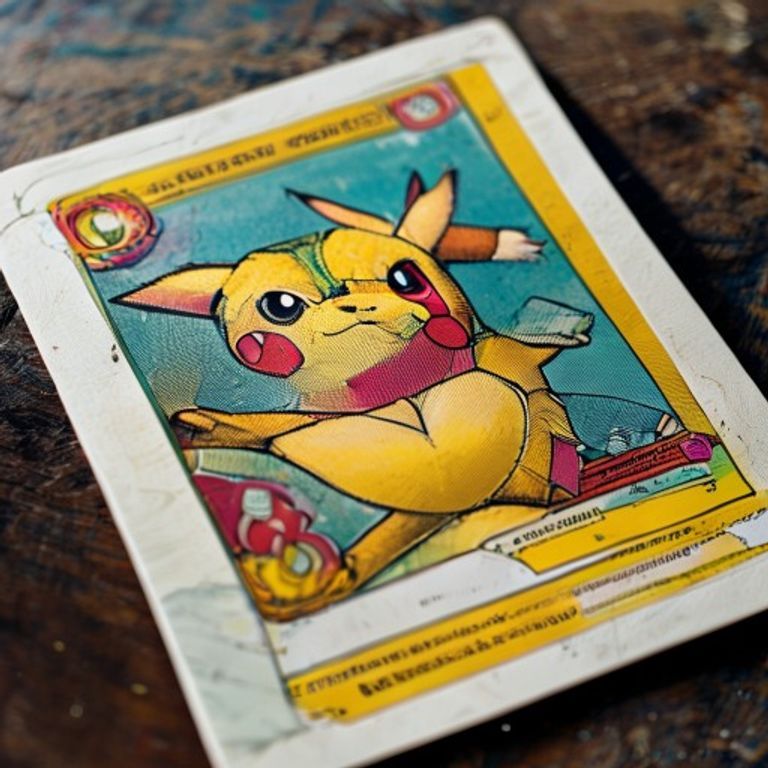
The prompt
Re-render this image as a macro photograph of a heavily-played Pokémon Trading Card Game card showing extensive wear from childhood use. Card laid flat or held at slight angle by fingertips at frame-edge (fingertips soft-focus, not subject). Wear-evidence rendered with specificity: corner-whitening visible at all four corners with the lower-right corner most-worn (consistent with right-handed shuffling-wear), edge-whitening along all card-edges where cardstock fiber has been exposed through gloss-coating, at least one visible crease or bend-line across the illustration window or card-frame, slight surface-scratching visible across the illustration where the card was slid against other cards in a deck or sleeve, possibly a small ink-rub spot where text-area has lost printed ink, slight yellowing or discoloration on the white card-back if visible at edge. Illustration window: subject illustration still readable but slightly faded from UV exposure (if kept in window-lit room) or oil-rubbed (if held in hands without sleeve), colors slightly desaturated from new-condition baseline. Card-frame: yellow-border (assume base-set era) showing significant edge-whitening, set-symbol bottom-right slightly worn, illustrator-credit area slightly rubbed. Cardstock texture: visible paper-fiber where coating has worn through, micro-fuzz at edges. Surface lighting: soft directional natural light from upper-screen-left, no harsh shadows, light catches the wear-pattern revealing topography. Background: blurred warm-tone interior (carpet, wooden floor, soft-focused binder-page, edge of cardboard box, or the corner of a bedroom desk), shallow depth-of-field on the card surface with everything else soft-blurred. Mood: wear-as-proof-of-love, the card that was played-with not archived, the relic of childhood attachment that out-values mint-condition by emotional-weight even as it under-values it by market-price. No specific card-name legible, no trademark text, no current-price-sticker. Preserve the subject composition exactly. Aspect ratio matches source, prefer 1:1 macro or 3:2.
What it is doing
The most market-undervalued and emotionally-overvalued Pokémon card is the played-condition childhood card. Whitened corners, creased middle, faded ink, all the evidence of love. The PSA-10 mint card was archived, the played card was played-with. The register asserts: wear is proof of use, decay is evidence of attachment, the relic out-values the artifact in every register except the market. Applied to any contemporary subject that carries visible wear-from-use, the register encodes the love-as-wear mode against the preservation-as-love mode.
Ways to change it
Pick any of these in the gallery and the choice is added to the prompt you copy.
- Wear-severity dial: light-played near-mint (modest wear) vs played condition visible corner-whitening (signature childhood) vs heavily-played edge-crease ink-rub (relic-tier) vs damaged with tear or fold (extreme relic)
- Surface-context dial: bedroom-carpet background (signature childhood) vs wooden-floor texture (older-relic) vs kitchen-table or homework-desk (everyday-use)
- Wear-pattern-source dial: shuffling-wear corners (deck-use) vs binder-page edge-wear (collection-use) vs pocket-or-backpack wear with bend-line (carried-everywhere)
- Card era and wear: yellow-bordered 1999 card, heavy whitening, deep crease, faded colors (signature) vs silver-bordered 2010s card, moderate edge wear, scuffed glossy holo vs crisp modern card, light corner nicks, fresh scratches on bright print
Style lineage
Learn the visual culture this draws from: Price Charting.
Related prompts
See all 31 prompts in the Pokemon-Card grammar