Photography / Style prompt
Saul Leiter Color-Street Reflection
Re-render as a 35mm Kodachrome frame seen through rain-glass, fogged window, or partial obstruction. The photograph as small painting.
Customize this prompt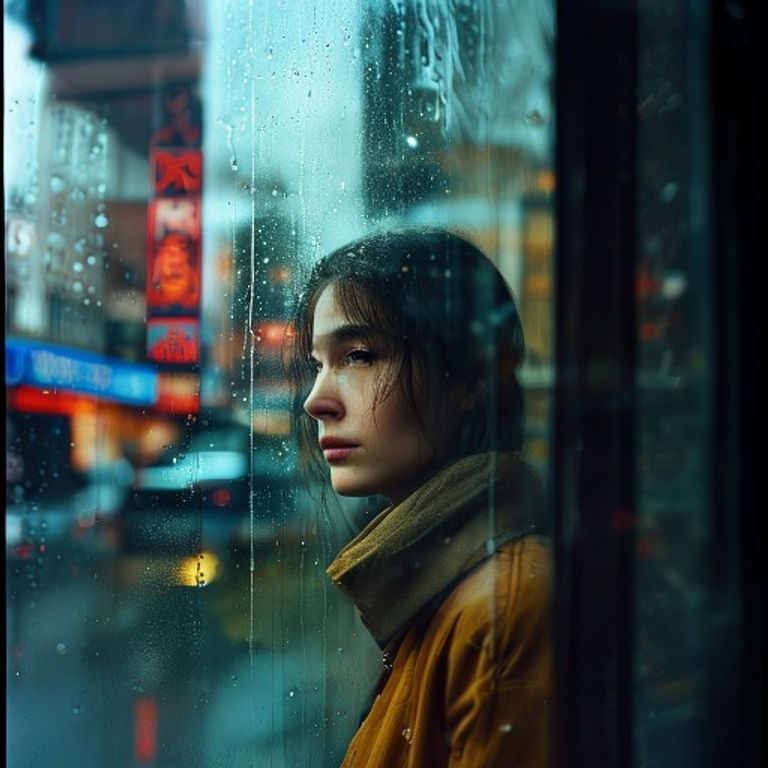
The prompt
Re-render this image as a 35mm color photograph in the manner of Saul Leiter, exposed on Kodachrome 25 or Kodachrome 64 through a Leica with a 50mm or 90mm lens at moderate aperture (f/4 to f/5.6), the subject viewed through a partial obstruction (rain-streaked window glass, fogged cafe window, scaffolding plastic, a tarp slot, a doorway crack, the reflection of a shop window superimposing two scenes, an awning shadow cutting the upper third). Palette: muted but saturated, the characteristic Kodachrome reds and ochres and dim mustard yellows against deep blue-grays and warm browns, never the digital-saturation candy palette, always slightly under-exposed so colors come from density rather than highlight. Light: low winter sun, overcast afternoon, dusk window-glow, snowfall diffuse, the New York School quiet hour. Composition is painterly rather than reportorial: a large area of frame may be deliberately blocked by a dark architectural element (column, awning edge, umbrella) so the subject is glimpsed in a small lit window of the frame, treating the obstruction as a Rothko-style colorfield. Mood: melancholy, patient, the photographer as flaneur, the city as a slow painting. Subject often partial, cropped, seen sideways or from behind, never confrontationally posed. Grain: fine Kodachrome grain visible only in shadow. Print quality: small format print or magazine reproduction, not gallery-large. Forbid: HDR saturation, digital-blue sky, AI candy palette, any visible text or watermark or logo, any sharp foreground-to-background corporate-photo flatness. Preserve the subject, pose, and composition of the source image exactly, change only the medium and rendering.
What it is doing
Leiter taught street photography that obstruction is not a failure to capture the subject, it is the capture. The window between us and the subject is the photograph. This is a thesis about urban distance, about being a viewer rather than a participant, and it converts any phone snapshot into a small standing painting.
Ways to change it
Pick any of these in the gallery and the choice is added to the prompt you copy.
- Obstruction dial: rain-streaked glass vs fogged window with hand-wiped clear spot vs awning shadow upper third vs scaffolding plastic partial
- Palette dial: Kodachrome 25 muted vs Kodachrome 64 slightly warmer vs Ektachrome cooler blue-shift
- Light dial: low winter sun late afternoon vs overcast diffuse vs dusk window-glow against twilight street vs snowfall soft
- Cropping dial: subject in lower third, large dark mass above vs subject in small clear window center vs subject at frame edge, mostly negative space
Style lineage
Learn the visual culture this draws from: About Photography.
Related prompts
See all 10 prompts in the Photography grammar
Read the full free book. All thirty-six chapters and the companion 657-prompt image library are free.